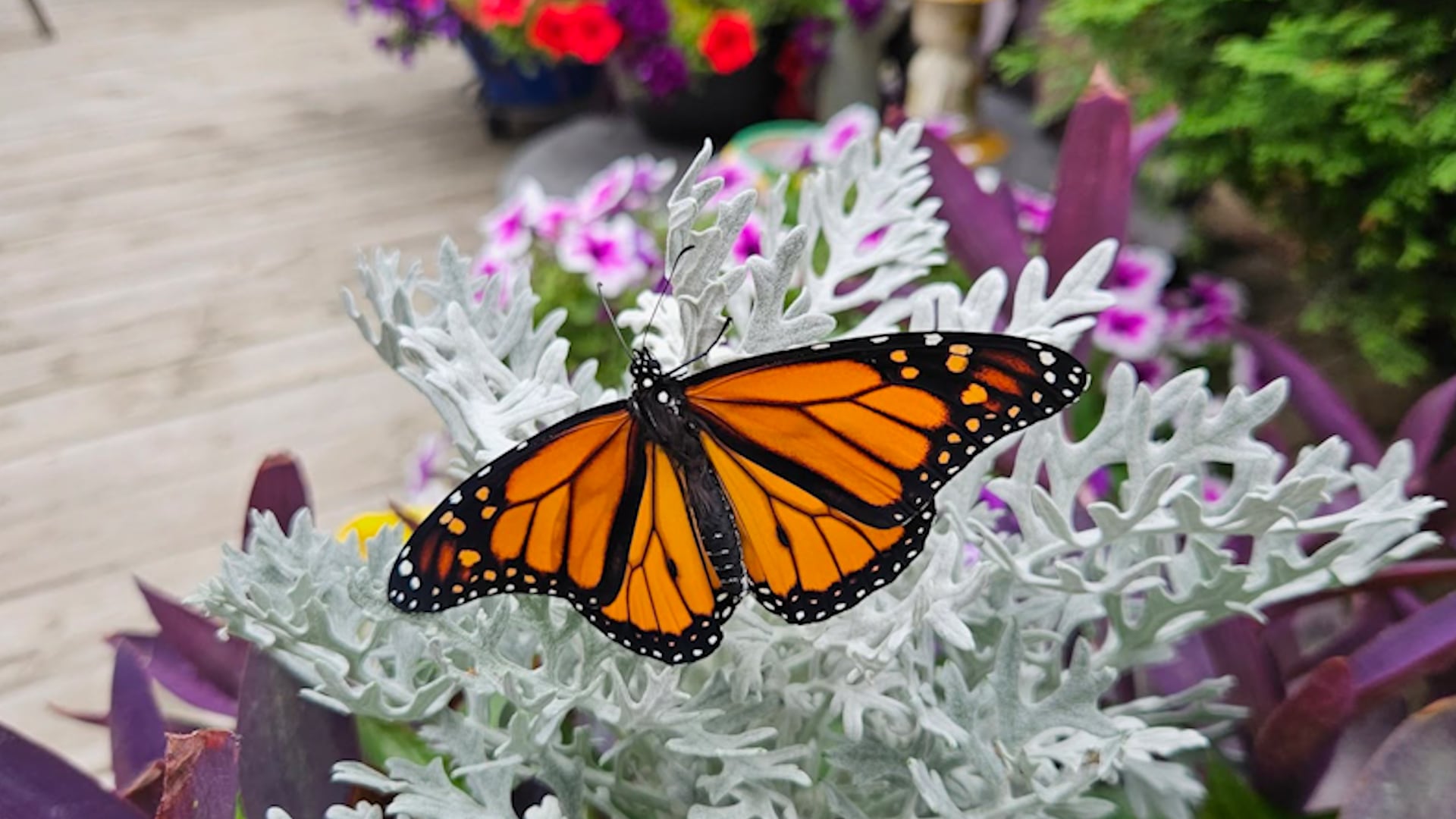
SASKATOON -- Monarch butterflies are not common in the Canadian Prairies, but a Saskatoon ecologist is noticing an increase in the endangered species this summer. Tyler Flockhart, who researches monarch butterflies, said there seems to be more than usual fluttering across Saskatchewan. “It is not entirely unexpected,” he told CTV News. Insect populations tend to fluctuate year to year based on environmental conditions such as weather and temperature. There is also a growing interest in monarchs among the public, according to Flockhart, which means there are more people reporting sightings than there were in the past. “In some years, you are just going to have more monarchs around,” he said. The monarch is considered an endangered species in Canada. An apparent butterfly boom this summer does not necessarily mean population numbers are improving, Flockhart said. “Detecting a population increase is quite tricky in any animal, but particularly in insects when their populations naturally fluctuate,” he said. “It makes it really, really challenging to understand if the population is responding to conservation efforts or not.” Even with the fluctuating numbers, Canadian Wildlife Federation’s James Pagé said monarch populations are still considerably low and remain a fraction of historical highs. “Even though we are seeing a boost right now, it is a boost of an already low population,” said Pagé, a specialist for at-risk species at the CWF. “The science is showing that there were declines of more than 50 per cent of the total population over the previous decades.” Researchers believe the loss of breeding habitat, including milkweed, is the main reason behind the decline. Tracking their journey Every year, monarchs travel thousands of kilometres south for the winter. Their resilience is what drew Flockhart to the species. “You have an insect that weighs as much as a quarter that can fly from southern Canada all the way to Mexico and then back in the spring. It is pretty remarkable,” he said. Flockhart is part of a larger international team trying to tag the butterflies before they begin migrating. He has to capture the butterflies then attach a tiny tag on them, which will allow scientists to track their flight path in real time. Flockhart said there are two benefits to doing this. Researchers will be able to see the exact areas butterflies use during their migration, which can help identify conservation areas. “This will help to understand how we might manage those landscapes and the plants that butterflies use,” he said. The second benefit comes from better understanding what the insects do in areas where they are not common, such as the Prairies. “It gives us information to understand how important the Prairies are to the monarch population as a whole,” he said. “What can we contribute to population recovery and what are we likely to contribute in the future if butterflies use the Prairies more often than they have in the past.” Some monarchs have already started migrating south. Flockhart hopes to tag 30 butterflies in the province before the season is over.