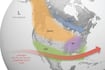
Every few years, the weather phenomenon known as “El Nino” starts to be felt in different parts of the world. This year, however, a “super El Niño” is expected. On Aug. 13, the U.S. Climate Prediction Center noted that “El Niño is strengthening, with a greater than 90 per cent chance of a very strong event during the Northern Hemisphere fall and winter 2026-27.” So, what does that mean, and how will it impact the weather in Canada? CTVNews.ca spoke to two weather experts to learn more. What is a super El Niño? According to the U.S. National Oceanic and Atmospheric Administration, El Niño is a global climate phenomenon that shakes up weather patterns around the world. Kent Moore, professor of physics at the University of Toronto, explains that the event usually happens every two to four years, when the warmest water in the tropical Pacific intensifies as it moves eastward. “The shift where the warm water is starts now,” he told CTV News. “El Niño typically peaks in the Northern Hemisphere winters.” El Niño is measured by the magnitude of this warming. However, a “super” El Niño occurs any time it’s above 2 C. The forecast peak this year is estimated to be about 3.5 C, which means it is a super El Niño. What are El Nino’s current impacts? Moore said for the last month, many climate scientists who have been tracking El Niño and weather patterns have noted that the last month has gotten a lot warmer. “We’re all pretty certain we’re going to see the warmest El Niño in historical record,” he said. “It’ll probably be about 4 C in its peak. To put that into context, the 2015 El Niño took it to about 3 C, so, this is a whole degree warmer than the previous record.” How would a super El Niño be felt in Canada? A super El Niño event tends to bring warmer winters across Canada, Moore explained. “Everything is supercharged,” he said. “Everything is bigger. So, the warmth will be higher than during a usual event.” The milder weather will be most felt in western and central Canada. In the Caribbean, Moore said El Niños tend to supress hurricanes, which will mean a milder hurricane for the regions in Canada where they occur. “Maritime Canada, which does get occasional hurricanes coming up the east coast, probably won’t see any of those events this year,” he said. What impacts does a super El Niño have on the environment? Environment and Climate Change Canada climatologist David Phillip said that we’re already beginning to see some marine effects of super El Niño in Canada, like a species of dolphin spotted in British Columbia, which aren’t normally found there. “We often see fish patterns change,” he said. “New species appear that you’ve never seen before, so it’s a great sightseeing kind of adventure for people to spot marine life, and fish species that they normally don’t see at those particular latitudes.”