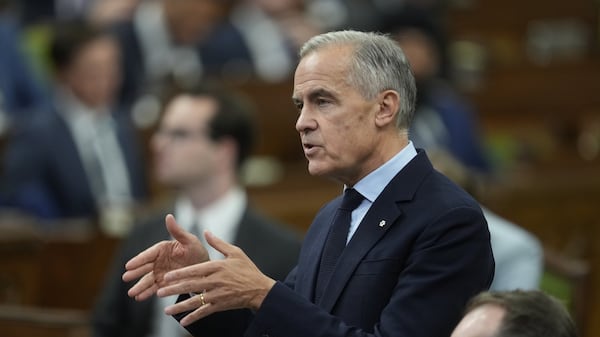
MONTREAL - If Quebec party leaders stick to their promise, the final stretch of the province’s election campaign will be a busy one. Parti Quebecois Leader Paul St-Pierre Plamondon has been leading in the polls for three years and is now eyeing a majority in the National Assembly. “Put the pedal to the metal, isn’t that what they say in NASCAR?” said Plamondon. “Yeah, we go all the way.” With a majority, Plamondon would have the green light to go ahead with his promise of holding a referendum in his first mandate. He has been working to convince Quebecers not to fear the prospect of independence. “I think they shouldn’t be afraid of that,” Plamondon told reporters at a stop in Ulverton, Que. “Hundreds of nations are governing themselves with their own government and their own institutions, and they’re doing it very well.” But he also said that the decision before Quebecers now is not whether the province should be a country, but who should lead the province after the Oct. 5 election. Nik Nanos, founder and chief data scientist at Nanos research, says while the PQ continues to lead when it comes to popular support, there seems to be a shift in the rest of the political landscape. “The Liberals are up, and the Conservatives are starting to do a little better,” said Nanos. “The big news is that the CAQ, the incumbent party, is on the decline, and the question is where are those voters going to go?” CAQ Leader Christine Frechette faced a barrage of questions on her handling of issues related to potential U.S. interference in the election. Frechette confirmed Monday that a staffer handed two essays from an American think tank to some journalists. The blogs discussed supporting sovereigntist parties and efforts to destabilize the Canadian federation. Both essays had been online for months, and other parties and analysts questioned the CAQ’s motives. “The team met and we discussed what happened,” Frechette told journalists. “Unfortunately, someone sent a document, a public document, it was not a confidential document, to some journalists before talking to me about that.” Analysts say a significant driver of voter support includes a desire for change after eight years of a CAQ government led by former premier Francois Legault. Quebec’s Liberal party made a pitch that it can lead the province in a new direction. “We are still seven days from the final decision of Quebecers,” said Quebec Liberal Leader Charles Milliard. “If Quebecers are listening to us now and want change but do not want a referendum on the separation of Quebec, which is something that could be in the making in seven days from now, they need to hear me out. They need to join us and make sure that we can form the government.” The Quebec Conservatives believes it could hold the balance of power after the election, and leader Eric Duhaime told CTV News in an interview that he is ready to collaborate with other parties on a wide range of issues, but not sovereignty. “There is no way, form or shape that there’s going to be a referendum in Quebec if we have the balance of power,” said Duhaime. “We don’t want to have it, because 70 per cent of the population doesn’t want to have anything to do with a referendum. Right now, we have huge economic issues to deal with, and it is not time to split Quebecers between a ‘yes’ and a ‘no’ camp.” All parties say with seven days to go, there is still plenty of time for Quebecers to make their final choice, and that they will continue to criss-cross the province.