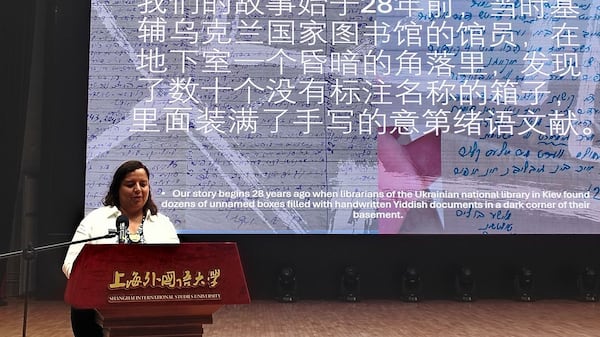
The Refugee and Immigrant Self-Empowerment program for health and wellness (RISE) celebrated the culmination of its tenth year of helping immigrant and refugee students adapt to a new community through the power of collaborative research. “In this curriculum, what we’re trying to teach them is social determinants of health, mental health, physical health, but also research and advocacy skills and presentation skills,” said RISE program manager Didem Erman. The RISE program began in 2016 at the University of Calgary’s Cumming School of Medicine, and it’s a program led by immigrant students for immigrant students. While there is oversight from U of C faculty members, like Erman, the goal of the program has always been to have high school and university students mentor other high school students in the world of health research. “It’s entirely a team that’s full of people who are passionate about immigrant and refugee health and empowerment. Many of the students come from that background, or they have family that are from that background, so it’s a very personal topic to them as well,” said Muskaan Pamery, a U of C student and RISE mentor. The research is comprehensive, with students diving into complex topics such as genetics and socioeconomic factors in hypertension risk, the varying effects of neuroplasticity on immigrant and refugee resettlement, and more. 17-year-old program participant Safina Pamery was part of the group studying neuroplasticity. “We made sure to base our data on Canadian research papers, but also made sure to contribute factors globally. We made sure to include bilingualism, PTSD, depression, anxiety, and really how it can influence the refugee and immigrant communities in Canada,” Safina explained. The RISE program lasts all summer, giving students the chance to fully dive into their topics with the help of mentors. Beyond the obvious benefits of learning more about your topic and understanding how to properly research a topic, the program aims to build other skills to help newcomers adjust to a different country and culture. “Coming into a new country, there’s a lot of things to adapt to. And I think having a clear two-month program that tells you how you need to do certain things specifically, clearly, it really encourages us to be the best versions of ourselves. And I think it’s done that for all of us, for sure,” Safina said. “Our job is to make sure that they leave this program confident enough to navigate that foreign world that they are just coming into, to equip them with the resources, with the skills and knowledge and the leadership qualities, so that they can navigate this world alone by themselves and also teach their parents as well,” said Nussaiba Fairuz, a high school mentor in the program. The program has steadily grown, with Erman saying she is increasingly impressed with the students’ ability to understand and explain complex topics. Beyond that, she, and others involved in the program, are also happy to see how those involved in the program build other life skills like confidence and English proficiency. “What we see is the youth feels more empowered and they feel like they are a part of the community and they feel like they can make a difference. Also, what they have been telling us, is that they have become more successful in school and they feel more ready,” Erman said. “I think when immigrant and refugees first come to Canada, they have a lot of trouble navigating the education system, post-secondary. And they wonder — like they have big dreams coming into Canada — they want to become healthcare professionals, they want to be high-achieving individuals. We try and make that process a little bit more easier for them and show them that there is a way to get into this environment,” Muskaan added. The RISE program takes place over the summer, and culminates in final presentations towards the end of August where students present their research topics to all other program participants.