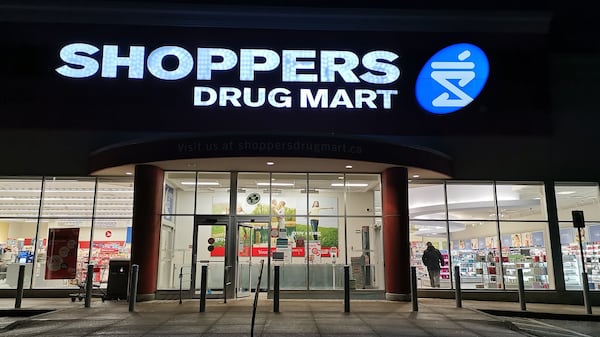
While Nova Scotia and P.E.I. have been leading the country for melanoma rates, Dr. Richard Langley says trying to bridge the gap between a concerning lesion and a diagnosis is an important step. The lineup that formed at the pop-up on the Halifax waterfront on Saturday proved demand is there for people wanting to be seen. “If you have something that’s new, that’s changing, that looks atypical, it’s got asymmetry, irregular border, different colours, large diameter,” says Langley, a dermatologist and professor of medicine at Dalhousie University, “Its evolving, change is the most important. “That’s something that’s worthy of being checked. I think that’s the main message, is that whatever you call it, if you see it, do something about it. “The sooner you do it, the better,” he says. SPOT, Suspicious Photo Overview and Triage, is the working research title for the newly- approved project. “What we’re trying to do is examine any, spot or lesion that a patient might have,” Langley says. The SPOT team uses a camera to photograph concerning lesions and captures a dermoscopic image to magnify and see beneath the skin. The results will be reviewed by a dermatologist, and patients will be directed for follow-up. It’s supported by medical students at Dalhousie University, like Taylor Wilson and Mary Lukindo. “That dissonance of time being the factor of life where someone can have a full life or have a few years of life, it really brings to perspective why initiatives like this are important,” Lukindo says. “I think it just shows the kind of lack of access that people have right now and how important it is to get early diagnosis,” says Wilson of the lineup of people waiting to be seen. “People just want to have their skin looked at,” she says. “I think it’s really important to be able to detect these earlier and just be able to triage it. And if you do have (skin cancer), be able to see a physician sooner.” That feeling is all too familiar for Bill MacKinnon, who stopped by the clinic. “I had (melanoma) once; I had a piece cut out of my chest, and I’ve got four brothers that also had some melanoma, so I thought this would be a good chance to get a checkup.” SPOT will also lean on an artificial intelligence model to determine if that can be relied on to help diagnose conditions. The goal is to bridge the care gap one photo at a time. “Any of us that have ever had something we’re worried about in our health, and if we have a delay, whether it’s a couple of days, a couple of months, in some cases, couple of years, it plays on people and it affects their quality of life,” Langley says. “It affects their sleep, people tell me, they get anxious about it.” “I think it’s super great,” MacKinnon says. “I think everybody, if they’ve got any marks or moles or anything like that they’re not sure of, it’s free. I mean, it’s right there. There’s no waiting time here.” The SPOT program hopes to launch in some pharmacies in the coming weeks as part of another pilot. For more Nova Scotia news, visit our dedicated provincial page