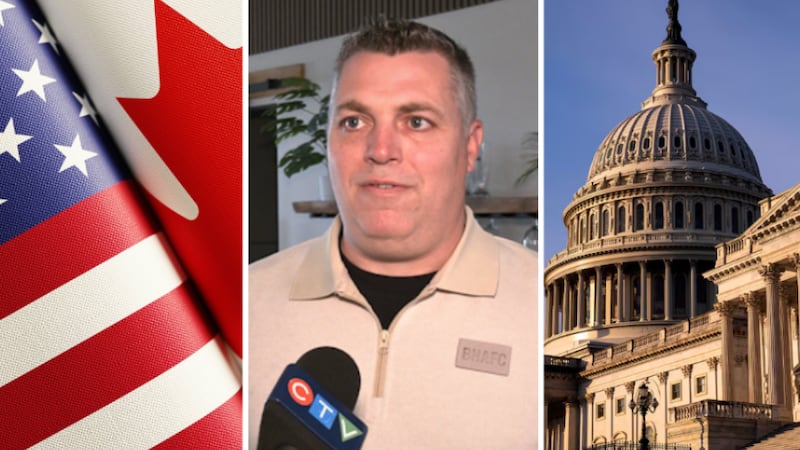
The United States woke up to a blue wave on Wednesday. In rejection of President Donald Trump’s second term, Tuesday’s midterm elections saw American voters shift control of the U.S. Congress to the Democrats. The midterm also saw the Democrats flip the U.S. House of Representatives and the Senate. Other historic moments in Tuesday’s midterms include the election of the first Muslim senator and the first Black speaker of the House of Representatives. “It’s kind of hard not to see this as a rebuke of these last two years of the Trump presidency,” said Bryan Peeler, a University of Manitoba assistant professor of political science, in an interview with Your Morning Winnipeg on Wednesday. “The Senate is flipped. Places like Kansas, North Carolina, South Carolina, and Texas [all flipped].” As far as Trump’s reaction, Peeler questioned if the election would make the president even angrier. He said it’s also left people wondering whether this is going to lead to more strikes on Iran. “Presidents in these sorts of situations when they don’t have control of the Congress lean into things like foreign policy,” Peeler said. “The next few weeks are going to tell us how he reacts.” In terms of what this all means for Canada, Peeler said nothing will happen until the new congress is seated in January. He added that Canadians should watch for the Senate Democrats’ “End Trump’s Tariffs Act.” “I think the tariffs are actually going to stay, to be perfectly honest with you,” Peeler said. “They may pass a bill, but the president would probably veto it and then it’s going to need 60 votes in the Senate to override that.” Peeler said Canadians will have to wait and see, adding that he’s “somewhat pessimistic” about the tariffs.