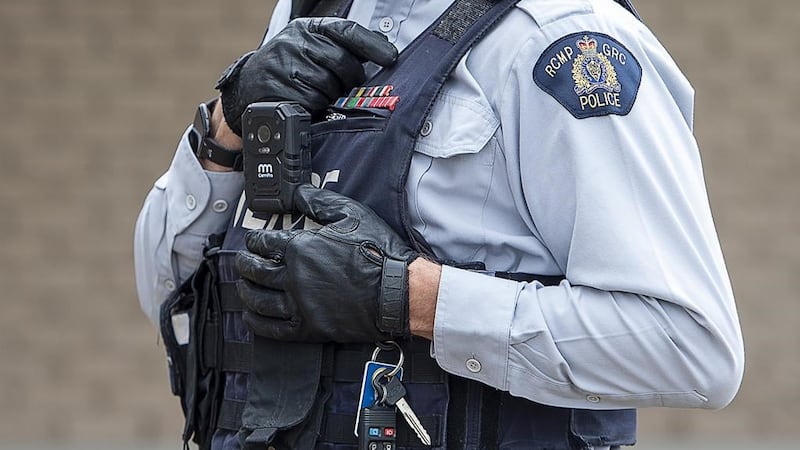
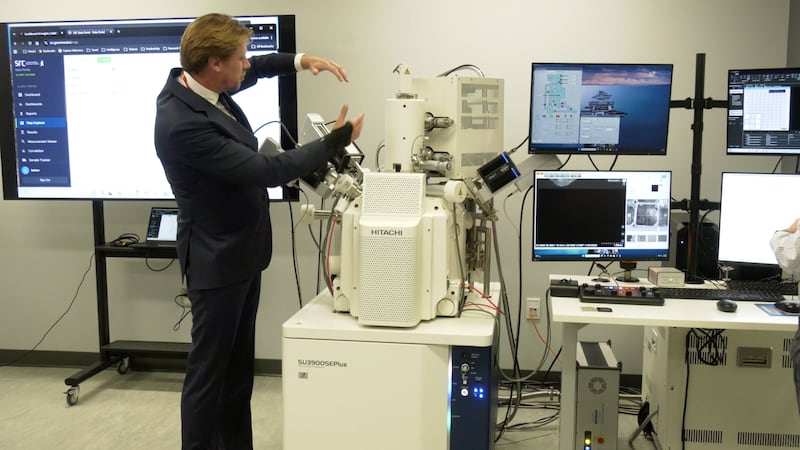
Montreal police (SPVM) are defending their plans to more than double the number of surveillance cameras in its fleet, including new automatic licence plate readers (ALPRs), as critics raise concerns about the implications of mass surveillance. Insp. Yannick Desmarais, chief of the operational planning division at the SPVM, confirmed to CTV News that a call for tender is out for the purchase of 66 traditional surveillance cameras and 30 ALPRs. The locations of the cameras are not yet known. The bid was first reported by La Presse on Tuesday. The force currently has 46 urban security surveillance cameras installed across the island of Montreal, and their locations are publicized on the SPVM website. It also has at least 30 ALRPs fitted on top of patrol cars. If the bid is successful, the number of cameras would jump from 76 to 172. Desmarais said these tools help officers with their investigations, pointing to the example of a kidnapping, where an ALPR can scan for a suspect’s vehicle and help investigators track its location. Those types of cameras are similar to the AI-powered Flock cameras used by police forces throughout the United States and have come under fire amid privacy concerns. In one case in Kentucky, a police officer was arrested after he allegedly used the surveillance camera system to track his ex-girlfriend more than 2,000 times and harass her. But Desmarais said Montreal police don’t use Flock cameras and don’t intend to acquire them. The use of urban security cameras is governed by “very strict standards,” Desmarais said, including Montreal’s digital data charter and the Quebec Access to Information Commission. “And of course, every query made to our data is logged. So we’re able to identify which police officer accessed our databases, and all of this information is stored on our secure servers within the SPVM,” he said. Still, civil liberties groups say these new kinds of camera systems raise several concerns. The Ligue des droits et libertés (LDL) believes that these cameras “must be used solely in the context of investigations, in accordance with legal requirements: reasonable grounds to believe or suspect.” “Just because we’re not doing anything wrong doesn’t mean the things we do don’t have a right to remain private,” Dominique Peschard, an activist with the LDL, told Noovo Info. The rise of these cameras was the subject of a documentary that aired on Crave on Tuesday. He argues the laws regarding these devices haven’t been updated to comply with Quebec’s charters, which poses a problem. “We have the right to move about anonymously, and the idea that we’re monitoring everyone just to catch the few people who might eventually commit a crime goes against the spirit of democracy,” Peschard added. “It’s not as if we’re living in a situation where, if you step out onto the street, you risk being murdered at any moment. We’re not in a situation where a security emergency justifies giving up our freedoms.” ‘We’re right in the middle of 1984′ During a visit to Albany, N.Y., Noovo Info spoke to Leyla Kiosse, a lawyer and civil liberties activist who denounced the presence of Flock cameras in her city. One light post could be seen with nine cameras. “We’re right in the middle of 1984,” Kiosse said during an interview. “Do you want the government to know where you are all day, every day?” The activist laments that the authorities can see “our faces, our entire bodies, and identify our specific features... This isn’t just about capturing images of licence plates,” she said. Some cameras also record audio to detect gunshots. “How about we get rid of the guns instead?” Kiosse said. Desmarais at the SPVM said he’s aware of the concerns about privacy south of the border, but maintains that the situation is different in Montreal, emphasizing that access to the camera database is logged for security reasons. “Even within the SPVM, police officers do not have access to investigation files from other divisions,” he said. SPVM dismantled camera in August In August, Montreal police dismantled a Flock-style surveillance camera installed on a streetlight on a median on Henri-Bourassa Boulevard in the Rivière-des-Prairies neighbourhood. The force took it down hours after a Radio-Canada report revealed where it was. In an email to CTV News at the time, the SPVM said it was installed “to support targeted investigative work on a temporary basis.” The SPVM says the information collected is limited to “those responsible for the investigation” and that more cameras might be installed depending on the needs of the investigation. “One camera was removed in order to safeguard our ongoing investigative strategies,” wrote spokesperson Mélanie Bergeron, adding that the force avoids as much as possible revealing its investigative techniques to protect the integrity of its investigations. The new tender for more cameras is required to be compatible with software made by Genetec, according to the La Presse report on Tuesday. The Montreal-based software company specializes in this type of technology and operated the ALRP camera that was dismantled in Rivière-des-Prairies in the summer. ‘Genetec is not Big Brother,’ company says Genetec has defended itself against accusations that it is jeopardizing citizens’ safety. “Genetec is not Big Brother,” Christian Morin, vice-president of product engineering at Genetec, said in an interview with Noovo Info. These cameras, however, do more than just film licence plates. During a demonstration of the system, Genetec’s head of software development, Samah Mansour, showed how the product can identify a vehicle’s make, colour, and model. The police can access real-time footage from dozens of cameras. “We’re present in several municipalities and cities,” Mansour added. In an emergency, the police could access surveillance cameras installed in schools and other public places. “It could be a stadium, it could be an arena,” Morin added. “The police will contact the stadium, or the stadium will contact the police, depending on the situation, in order to share information and, ultimately, improve public safety. ” With files from CTV News’ Max Harrold and Noovo Info CTV News and Crave are platforms owned by Bell Media, a division of BCE.