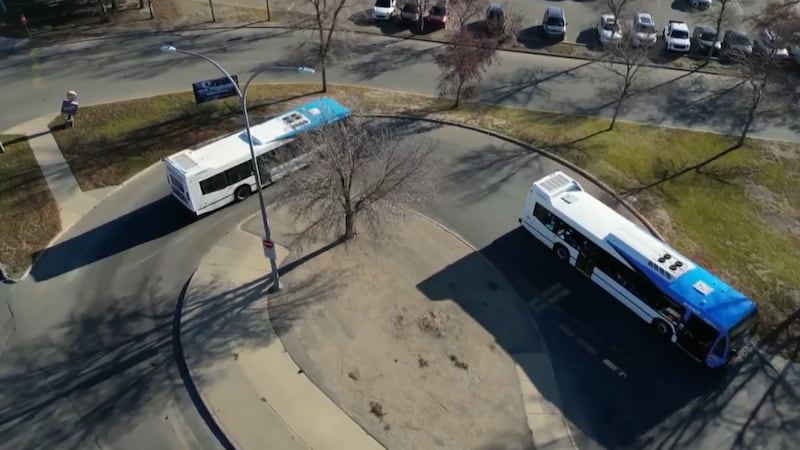
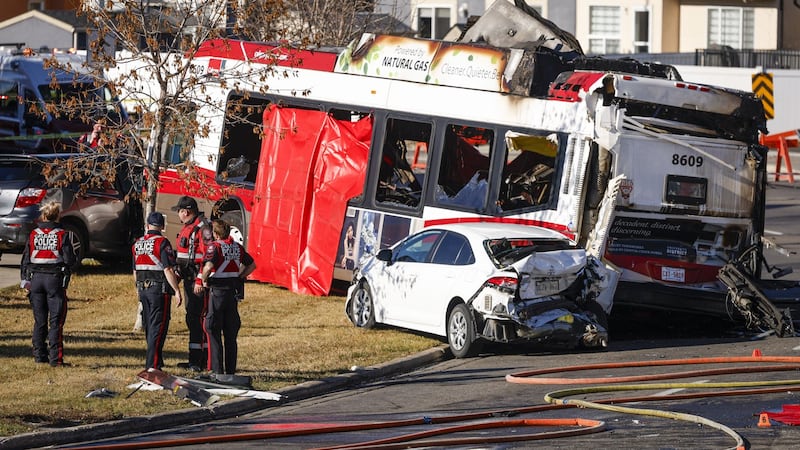
Langford firefighters are preparing for the possibility of a worst-case transit emergency, with new training scenarios planned in the wake of a deadly collision involving a natural gas-powered bus in Calgary. Langford Fire Rescue Chief Chris Aubrey says the department expects to incorporate lessons from the Calgary investigation into upcoming training, including situations involving a fully loaded bus engulfed in flames or an explosion. The collision, which happened in Calgary on Oct. 15, involved eight vehicles in a chain reaction crash. Three people died and 16 were injured after a compressed natural gas-powered Calgary Transit bus caught fire. “If there are lessons learned from this particular incident in Calgary, we will be applying them to our drills,” Aubrey said. The incident has renewed attention on how emergency crews respond to fires involving alternative fuel technologies, including the compressed natural gas buses used throughout the Capital Region. Langford is home to a BC Transit facility where the agency refuels 133 compressed natural gas buses serving the region. Aubrey says collaboration with transit officials has helped firefighters understand the technology behind the vehicles and how it could affect emergency response. “When transit introduces new technologies into its fleet, they will invite regional fire departments to its yard to familiarize itself with those new technologies,” he said. “We have been very fortunate to be able to work with transit over the last decade or so. They have been amazing partners.” Calgary Transit has said it will conduct a safety review of its fleet of nearly 350 natural gas-powered buses. Despite the devastating outcome in Calgary, experts say compressed natural gas buses are generally considered safe. The cylinders used to store the fuel are designed to withstand extreme pressures and undergo extensive testing. “There is a lot of regulations that are in place and design standards that are applied to these high pressured cylinders,” said Gordon McTaggart-Cowan, an engineering professor at Simon Fraser University. For firefighters, however, understanding how new technologies behave in an emergency is essential to preparing for the unexpected. Aubrey says the same challenge is emerging with electric vehicles, which rely on lithium-ion batteries and can present distinct firefighting challenges. “EV fires are still very much an evolving response from fire services all over North America in how we fight these fires,” he said. As vehicle technology continues to change, Aubrey says fire departments must adapt their training and response strategies accordingly. The findings of the Calgary investigation could help Langford firefighters better understand the risks associated with compressed natural gas buses and how to respond if a similar emergency occurs on Vancouver Island.