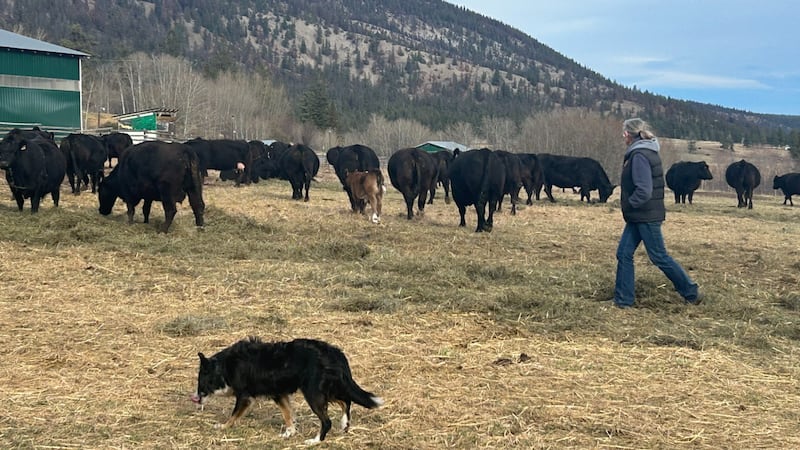
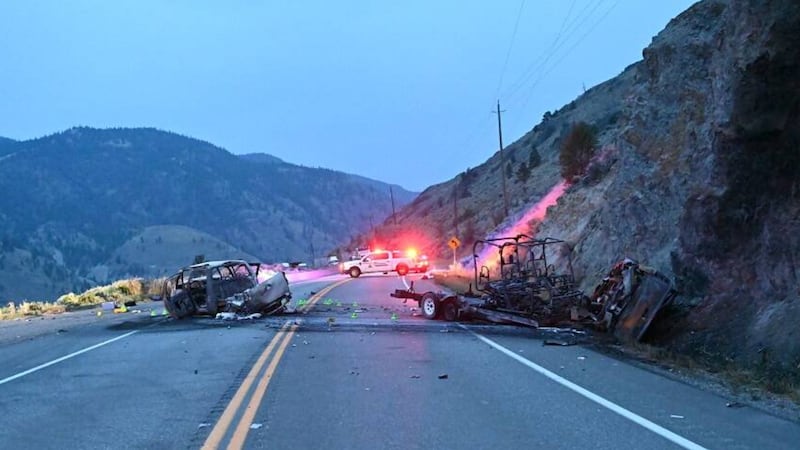
Months after the Pear Lake wildfire in B.C.’s Cariboo region, rancher Dori Hampton still checks her cattle daily, watching for any signs of illness related to smoke or the stress of her herd being moved as the fire raged toward her property. She lost two calves and two cows from sickness after they returned, and she doesn’t want it to happen again. Like other ranchers in her area, just outside of Clinton, the losses from the fire continue to mount. “We lost 600 bales in our hay corral. We lost our guest home. We lost 83 per cent of our range and probably 90 per cent of our fencing,” explained Hampton, who has lived at 42 Creek Ranch for 30 years. “With losing our guest home, we’re probably over half a million we’ve lost, so far. So, I don’t even want to think about it … not going to get emotional. It’s bad. Bad for everybody.” And she knows hers isn’t the only ranch that’s hurting. “It’s going to be a really tough winter for ranchers,” said Norene Parke, a rancher liaison manager with the B.C. Cattlemen’s Association. “I know a rancher just down the valley that sold a complete cow herd. Their fences were all burned. Their range is all gone. They lost their hay and they just sold the cows.” According to Parke, about 11,000 cattle were moved out of harm’s way as the fire approached last July. However, reports continue to come in of cows that didn’t make it. “We know one rancher that lost 49 cows in the fire, 49 pair. So, that’s a substantial loss for him,” Parke explained. The total number of cattle that died in the fire isn’t yet known, as the animals continue to return from the range. The Pear Lake fire grew to become the largest in B.C. this year, damaging 120 properties in the Thompson-Nicola Regional District. Ranchers are still waiting to hear what help might be available to them through an agriculture recovery program. But the toll isn’t only financial. “So many losses, I think, first of all, mental health being a big one,” said Parke. Back at 42 Creek Ranch, Hampton doesn’t yet know what her insurance will cover. She’s scrambling to find enough feed to get through the winter, and isn’t certain where her cattle will graze while the scorched land recovers. She’s also concerned about the increased risk of flooding due to wildfire destruction. “It’s devastating. We don’t know what’s ahead of us yet. We won’t know the financial loss until this is all over, so you just have to bear with it, and I guess get tough,” she said. Though she worries about losing her livelihood, Hampton, who is 67, has no intention of giving up. “My husband is 85 years old. He’d like to retire. I’m the stick in the mud that says I want to keep going,” she said.