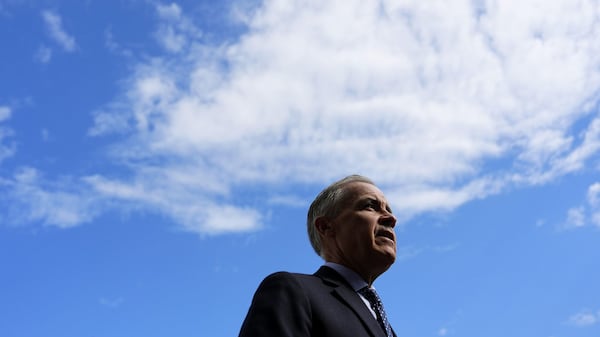
The Canadian Army is undergoing one of the largest reorganizations in decades as it transitions away from regional command structures toward duty-specific divisions dedicated to future conflict operations at home and abroad. The Department of National Defence announced the change Thursday as it introduced three new divisions, each with a primary focus on large-scale combat and crisis response, domestic defence and infrastructure support. The announcement coincided with a ceremony in Edmonton, where the 1st Canadian Division—also known as the Manoeuvre Division—was introduced as the army’s new primary fighting force. The division brings together multiple capabilities under one roof, including mechanized brigades of armour and artillery, infantry and engineers. The 2nd Canadian Division, based in Montreal and known as the Defence of Canada Division, will be responsible for domestic territorial defence, and will command Canada’s reserve brigades and the Canadian Rangers. A third division, the Canadian Army Support Division, based in Kingston, Ont., will be responsible for administrative and institutional support. Lt.-Gen. Michael Wright, the commander of the Canadian Army, says the shift away from geographic commands was a long time coming “because, frankly, our relevance and our credibility was at stake.” Wright, who announced his plan to modernize the army last year, said the effort will allow the army to rapidly deploy and sustain high-intensity conflict with multi-domain capabilities organized under a single headquarters. “What we have done is to make sure that we are reorganizing the Canadian Army to be able to defend Canada, to be able to contribute to those alliances and partnerships, and also to ensure that we’re providing agile, scalable, high-readiness forces,” Wright said in an interview with CTV News. The restructuring enables the army to prepare to mobilize large-scale combat forces for NATO operations in Europe, while simultaneously prioritizing domestic territorial defence at home. The transformation represents largest restructuring of the Canadian Army since at least the end of the Cold War, possibly since the Second World War, Wright said. Maj.-Gen. Wayne Rutland, commander of the 1st Canadian Division, said the move will shape the future of the Canadian Army. “This is the beginning of delivering to Canada a true warfighting capability at the divisional level,” Rutland said in a statement. “We’re not just organizing brigades under a new headquarters. We’re building the army our country needs and our allies expect.”