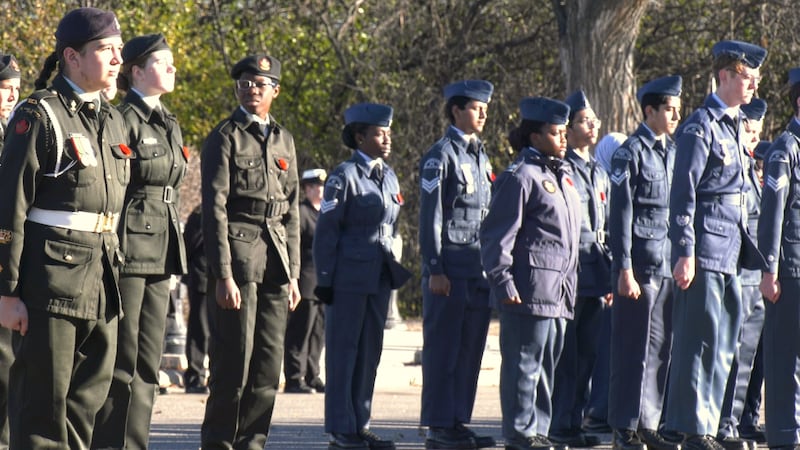
Indigenous veterans, their families and community members gathered in Saskatoon Sunday to honour those who served and remember their sacrifices. Dozens attended a fireside chat at Remai Modern hosted by traditional knowledge keeper Lyndon Linklater to mark National Indigenous Veterans Day. The ceremony began with the arrival of guests of honour. A drum group performed an Indigenous flag song and a victory song, followed by a recording of the Last Post and a moment of silence. Veterans and their families then shared stories of service and sacrifice. Among them was Steven Ross of Montreal Lake Cree Nation. Ross said he served in the Canadian Armed Forces from 1965 to 1968, including a six-month peacekeeping tour in Cyprus. He spoke about the restrictions First Nations people faced during the First and Second World Wars, including limits on their movement off-reserve and their right to vote. “Those were the restrictions that we had. But still, people signed up to defend this country … and they thought about the treaties, what will happen if we lose the war,” Ross said. He said Indigenous veterans were “not afraid to speak up” after returning home. “When our people came back, they were disciplined, they were sharp, they knew how to talk to other people,” he said. Ross said Indigenous veterans and elders came together after the war to advocate for their rights, helping lay the groundwork for what is now known as the Federation of Sovereign Indigenous Nations. Jeanette Stevenson said both of her great-grandfathers served in the Second World War, with one serving as a code talker. She also trained in Dundurn more than 30 years ago through the Bold Eagle program, a six-week summer training program that combines traditional Indigenous culture with Canadian Armed Forces training. During her time as a Navy League cadet in Prince Albert, Stevenson heard stories about residential school students who had been allowed to leave once a week to participate in cadet activities. “They were able to leave the residential schools once a week and to escape, and then they continued on in the army after to serve,” she said. Linklater spoke about how First Nations people were exempt from conscription under treaty agreements, but many volunteered to serve. “When World War I and World War II happened, we went anyways. We volunteered, we waived that exemption and we signed up,” Linklater said. He also spoke about how Cree-speaking soldiers were recruited as code talkers during the Second World War, translating sensitive military messages into Cree to prevent the enemy from understanding them. Retired RCMP officer Barry Ledoux of Muskeg Lake Cree Nation spoke about the recognition of RCMP members as veterans and the history of National Indigenous Veterans Day. The day was first recognized in Winnipeg in 1994, when Indigenous veterans were not being recognized during Remembrance Day activities. Ledoux also pointed to the federal government’s acknowledgement that Indigenous veterans did not receive the same benefits as their non-Indigenous counterparts. At the end of the celebration, the microphone was passed around, allowing those in attendance to share their gratitude for Indigenous veterans.