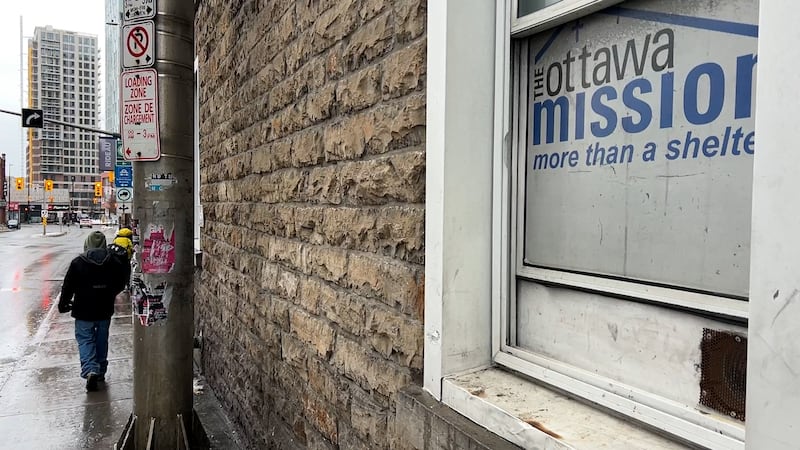
Officials have seen an increase in overdoses in Ottawa following the provincial government’s decision to close supervised consumption sites across the province earlier this year. Ottawa Mission CEO Peter Tilley says staff at the shelter on Waller Street have been carrying 10 times more naloxone kits than before the last consumption sites closed in June. Tilley says the Mission is also picking up more needles, pipes and other drug paraphernalia than ever before. “That’s quite a strain on our resources and quite difficult on the stress level and anxiety of what we’re having to deal with,” he said in an interview on Newstalk 580 CFRA’s Ottawa Now with Kristy Cameron. The four consumption sites operating in Ottawa were shut down after the Ontario government said it would no longer provide funding for their services and would shift its focus to recovery and treatment through HART Hubs. Some advocates and public health officials previously warned the closures of the sites could lead to an increase in overdoses and public drug consumption. “Without those [sites] there, people are going into back parking lots, people are going into porches, people are going wherever. And our frontline staff are having to be more vigilant to check behind there,” Tilley said. “We’re just very fortunate the drug supply hasn’t been as toxic as it could be.” Ottawa police chief Eric Stubbs confirmed to CFRA that police have seen a renewed spike in overdoses linked to toxic drugs and an increased vulnerable population after a two-year decline, though he did not provide exact numbers. “Unfortunately, you know the numbers were creeping down there for a couple years, but this year our stats show you know they are spiking again, and it it’s unfortunate for sure because obviously those are then people in trouble,” he said. “It’s unfortunate for sure because obviously those are people in trouble. It’s also consuming the time of a lot of police officers and paramedics and those responding to that as well too.” Ottawa Public Health’s dashboard shows paramedics responded to 87 suspected overdose calls last week, compared to 81 made during the same week last year. Stubbs says the service’s Downtown Safety Plan has seen positive improvements in parts of the core with sustained hotspot patrols and targeted action against prolific offenders but acknowledged those actions alone cannot solve the issues of drug use and homelessness. “We could double or triple our resources in that area to really make a difference to work even more with our partners. But unfortunately, there are limits to our proactive work that we can do in the area,” he said. Centre 507, a drop-in centre on Bank Street offering services to those experiencing homelessness, says it has seen more open drug use and “negative behaviours,” including some violent incidents this year. Executive director Richard LeBlanc says staff are encountering overdoses on a daily basis. “The amount of people struggling with poverty is at numbers we’ve never seen before, and numbers we frankly never thought we’d see and so, I think we would definitely prefer to have a lot less people walking through our doors.” Exclusive polling for CTV News Ottawa found nearly half of selected Ottawa residents believe helping those experiencing homelessness should be the top priority for candidates running in this month’s municipal election. When asked how things can be improved downtown, 48 per cent of residents said to help people experiencing homelessness, followed by public safety at 30 per cent.