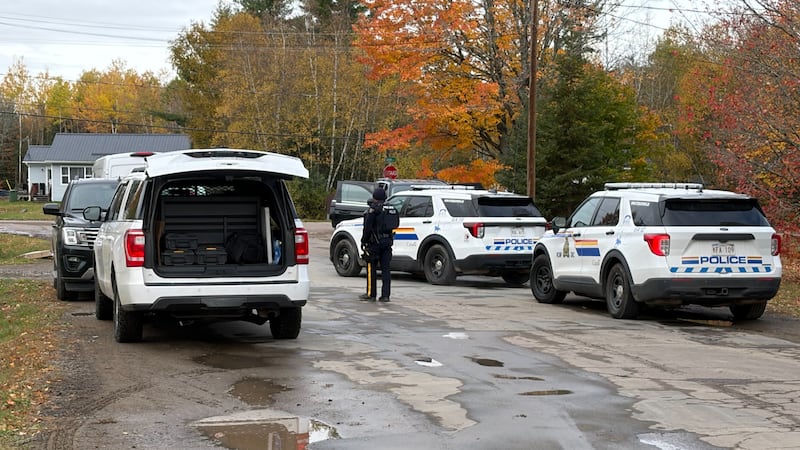
Warning: Graphic content A U.S resident charged with conspiracy to murder persons in a foreign country in connection with the mass shooting in Tumbler Ride, B.C., will remain behind bars. James Cody Bryant, 30, was arrested last week in Washington state as part of the investigation into Jesse Van Rootselaar’s murders of eight people. Van Rootselaar killed her mother and sibling in the family home, before opening fire at the local high school. On Tuesday, a Seattle judge denied Bryant’s release. The criminal complaint filed by the FBI alleged Bryant regularly corresponded with Van Rootselaar online in the months leading up to the mass killing, providing advice, money and assistance ahead of the shooting at Tumbler Ridge Secondary. Bryant was also accused of planning to help Van Rootselaar live stream the murders. The United States Attorney, in a motion, had argued Bryant should be detained on the grounds of “risk of flight and danger to the community” and that “Bryant played an important role in the conspiracy that led to these heartbreaking murders by aiding Van Rootselaar in various essential ways.” Argument for release Public defenders representing Bryant had argued in favour of release. A response to the motion to keep Bryant in custody noted that Bryant “goes by the name Melody and uses she/her pronouns.” It argues Bryant should be released with conditions which “may include home detention, a mental health assessment, and strict limitations on her use of the internet.” Investigators first contacted Bryant two days after the Feb. 10 murders and did not make an arrest until months later. “The government’s memorandum argues that Ms. Bryant’s chats with Van Rootselaar reflect the danger she would pose if released. But the government has had those chats for eight months and chose not to arrest Ms. Bryant,” the public defender’s response said. “As horrible as Van Rootselaar’s crimes were, and as cold as many of Ms. Bryant’s chats appear, there is no evidence—much less clear and convincing evidence—that she would pose an unmitigable danger to the community.” The public defender’s response also noted Van Rootselaar’s use of ChatGPT, which has spurred lawsuits against OpenAI filed by victims of the shooting and the B.C. government. “Investigation revealed Van Rootselaar had shared violent fantasies with others, including ChatGPT, but that no one, including OpenAI, had alerted law enforcement,” the court document said. ‘Multiple potential defenses’ The information in the criminal complaint, according to the public defender, also raised questions about the strength of the evidence underpinning the conspiracy charge against Bryant. “As the absence of criminal charges against ChatGPT demonstrates, refusing to prevent another person from committing a crime does not establish agreement with that conduct. And for better or worse, the First Amendment protects awful speech, even when it incites non-imminent violence,” the response said. The document also said the criminal complaint “acknowledges that Ms. Bryant repeatedly tried to dissuade Van Rootselaar from committing mass murder.” The fact the allegedly planned livestream never occurred also raises questions about how integral Bryant was to Van Rootselaar’s plans. “The government is demonstrably incorrect that Van Rootselaar would not have committed these crimes without Ms. Bryant’s offer to stream them: the shooter murdered her family before contacting Ms. Bryant and committed the remaining murders, knowing the livestream was not operational,” the response said. “The evidence is at least uncertain and, insofar as it suggests multiple potential defenses, may weigh in favor of release.” The strength of the evidence is only one of four factors a court must consider when deciding whether to grant a detention order, the others are the nature of the offenses, the accused’s history and characteristics and the danger the accused could pose to the public.