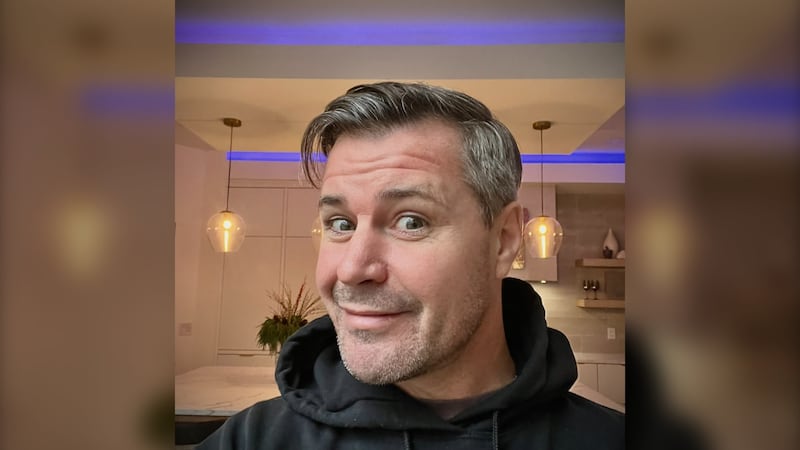
A northern Ontario woman is seeking answers in the United States for an unknown tissue-destroying condition after seeing multiple specialists across the province. Kaarina Gorham has been a chiropodist for 20 years, formerly running Azilda Family Foot Care. For three years, Gorham has lived with a progressive, unidentified condition that is destroying the tissues in her face. Despite consulting more than 30 specialists and being admitted to six different hospitals across Ontario, she remains a “medical mystery” in her own province. “From the very first day I went for help, it was like, ‘there’s nothing we can do,’” Gorham told CTV News. “It has been like that steady with multiple hospitals and doctors. They either don’t know what it is, or they don’t know where to send you.” The physical and emotional toll eventually became too much to manage alongside a business. Four months ago, Gorham was forced to close her clinic, ending two decades of service to the Sudbury community. “I tried everything to make it act like it didn’t affect me because I was trying to protect my kids through this and my family,” she said. According to the Canadian Organization for Rare Disorders, Gorham’s experience is a “norm” for those living with rare diseases. The organization’s president, Durhane Wong-Rieger, said that there are 7,000 to 10,000 known rare diseases. “On average, patients with a rare disease get five to seven misdiagnoses,” she said. “The clinician looks at and says, ‘okay, I think is this because this is based on my experience,’ so they get a diagnosis, they may get treatment and of course it’s not the right one.” Wong-Rieger said that the gap in Canada lies in a lack of knowledge, resources and finances. “In Canada, we don’t have rare disease centers. A lot of countries do. In the U.S., there are 30,” she said. “The other thing we need is we need to do integrated diagnostic testing, so that they’re all connected and someone doesn’t have to undergo the same test multiple times.” Desperate for a breakthrough, Gorham’s hope lies with the Cleveland Clinic in Ohio, a world-renowned facility for complex medical cases. Ontario’s Ministry of Health does have an Out-of-Country Prior Approval Program, designed to fund treatment for patients whose needs cannot be met within the province. Gorham said her doctor submitted a 400-page document to the ministry to prove her case and secure funding. The application was denied. In a statement to CTV News, the ministry said all applications are reviewed on a “case-by-case basis” and require a physician to identify that a patient requires services unavailable in Canada. For Gorham, the “case-by-case” review has resulted in $30,000 in out-of-pocket expenses for tests and travel – money raised largely through an online fundraiser set up by a family member. “This is not how care should be available to the people of Ontario,” says NDP Health Critic France Gélinas. “It has to change. Rare disease strategies exist in other places that we could copy and paste... Why doesn’t Ontario?” Gelinas said she is calling for a ‘Rare Disease Strategy’ to be implemented in Ontario, a roadmap designed to speed up life-saving diagnoses and stabilize funding for specialized treatments. “The statistics will tell you that up to one in 13 people in Ontario face a rare disease,” Gelinas said. “As I say, some of them have some access to care. For many of them, they’re left on their own.” Despite the financial burden and the pending status of a second application to the Ministry, Gorham recently returned from Cleveland. While she waits for the results of the tests, she said she is sharing her story to encourage other patients to advocate for themselves when it comes to their own health. “I still feel like I’m not done yet and I do have hope coming back from Cleveland,” Gorham said.