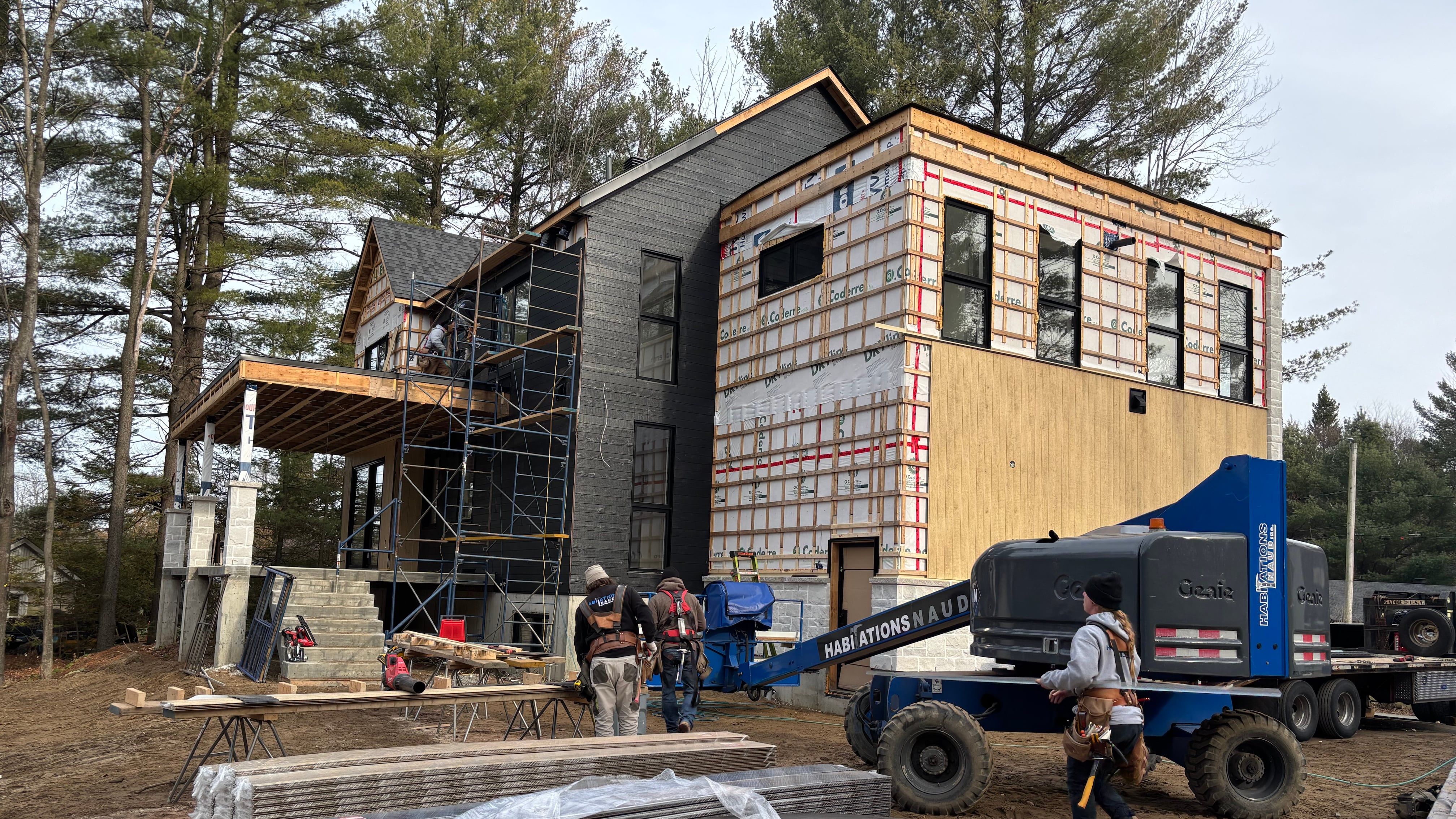
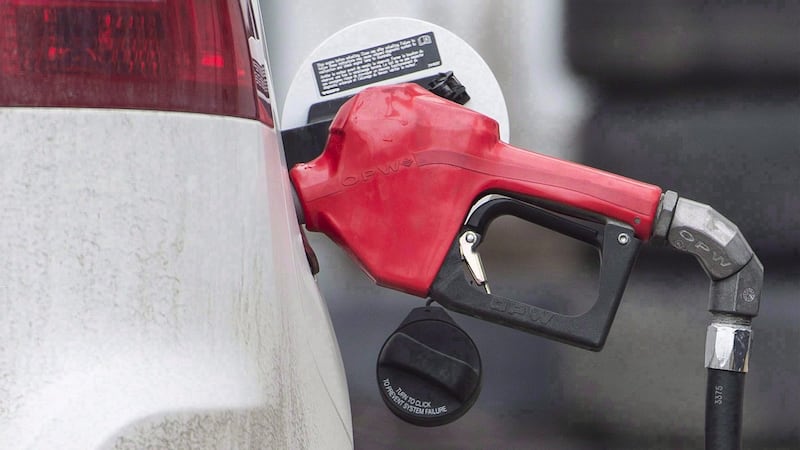
A Mascouche man preparing to move into his newly built home has learned that Hydro-Québec will have to expand its grid in the area before he can get electricity – and it may take months before that happens. Samuel Bernard’s new home is a work in progress: siding is going up, shelving units are in boxes in the living room, and there are wires everywhere. There’s also one very long extension cord that leads down a small hill and straight to his neighbour’s shed. That’s how Bernard is getting electricity to his home. “We had to get more power and especially heat because it’s getting colder and colder. Unfortunately, we had to ask the neighbours,” he said. They had never met -- and now they’re building a powerful new friendship. “Well, now we know each other. We’re good neighbours,” said Bernard, adding that he’s paying his fair share. Bernard’s electrician called Hydro-Québec in the summer to get the house hooked up to the grid, but was told the system in his neighbourhood is already under strain. The transformers are able to provide for four to five houses, and right now there are eight houses [hooked] up to it. So it’s overloaded and it’s been overloaded for a while,” explained Bernard. Hydro-Québec gave him a window of between Nov. 28 and April 14 to connect his power. The issue is the current five-and-a-half apartment Bernard and his family currently live in will soon be rented. They have to move next week.“So we wanted to build our dream house,” he said. “I mean, it needs to be warm, right?” Hydro-Québec told CTV News in a statement: “There has been no delay in processing this request. We received the connection request on July 7 and we have quickly informed the customer’s electrician that major grid work would be required before the connection could be completed,” adding, “The work includes replacing poles and adding transformers. For connections requiring prior grid work, the average timeline is typically six to ten months. We therefore recommend submitting connection requests for new construction projects as early as possible, ideally at the start of construction.” The Crown corporation also added that an overtime strike by technologists is limiting its ability to accelerate the timeline. With few solutions, Bernard may need to rent a generator to heat and power his house and hook up his water pump, which also means added fuel costs. “If I spend $100 on gas – I mean, it’s going to probably cost that amount of gas every day. If I run on a generator, times 30 days, that’s $3,000 a month,” he said.