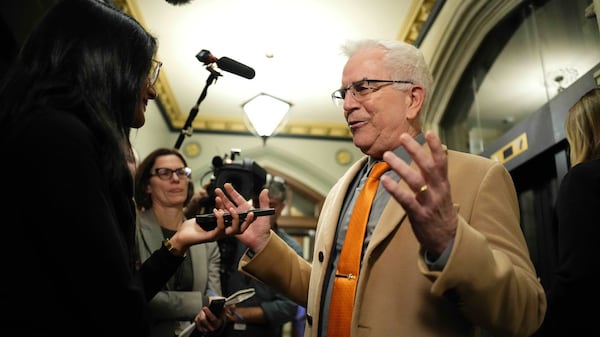
Thanks to the federal government’s Unsheltered Homelessness and Encampments Initiative (UHEI), Regina is expected to go from having more than 100 emergency shelter spaces to over 200 by next winter. Under the agreement with Ottawa and the province, Regina is expecting a grant of $1,480,358 to support projects aimed at increasing shelter space in the city. “The program itself speaks to essentially programs, services and spaces that ultimately could allow individuals experiencing homelessness to leave encampments,” explained David Slater, manager of community well-being for the City of Regina. “It keeps it quite wide open to possibility.” The City previously received $3,519,214 in UHEI funding over two years between 2024 and 2026 from the Government of Canada. Based on the requirements for the grant in 2027, administration selected two projects which are both ready to proceed and also align with the overall UHEI strategy to support community members experiencing homelessness. The city chose the Newo-Yotina Friendship Centre’s Seven Fires Warming Centre and All Nations Hope Network’s Awasiw space as the recipients. “Both organizations spoke to these are projects that were already in discussion and could have sort of [make] immediate impact, especially during the winter months.” Seven Fires has just 25 warming spaces, but with the funding could see that grow to 85. Awasiw is operating an emergency shelter at a temporary location with 35 spaces. Their grant will support renovations at its home location, allowing for 100 people to access services. Along with Regina Treaty/Status Indian Service’s New Beginnings shelter on Halifax – which has 55 beds – and other spaces around the city, 2027’s UHEI funding is expected to more than double Regina’s available cold weather spaces. “That’s important, but it’s not a solution,” Mayor Chad Bachynski said following Wednesday’s council meeting. “This is a stopgap, an emergency need. So I think it’s great that we’re hitting a need to help people survive.” The allocation of funds received unanimous support from councillors, however some felt the need for better collaboration between organizations was necessary for the success of the cold weather strategy. “I appreciate the work being done on this and the list of organizations expected to be available when it’s -42 outside, but we’ve seen a shortfall,” Ward 7 Coun. Shobna Radons said. “We [the city] consider ourselves as that coordination body,” Slater responded. “We’ve been having ongoing conversations with the active warming centers – and we do that throughout the winter. Yes, that coordination is happening.” While welcoming of the grants to support the city’s plans this winter, other believed shelters are not the solution to solving the grander issues with homelessness. “I’m grateful that we can ideally keep people from freezing to death,” Ward 3 Coun. David Froh said. But as we have this conversation and as it gets worse, we need to remind ourselves every chance we get to call on the provincial government to stop thinking shelters and warming spaces will solve homelessness. Relying alone on shelters will make it worse.” “We should not have to be seeing the growth of folks who are suffering in the streets because there is no housing and supportive housing available to them at the scale of the problem that we have,” added Victoria Flores, councillor for Ward 6. “I hope beyond this, we can continue to work to find supportive housing measures for people in our community.” Administration’s next steps will be to enter into the agreement with the other levels of government to receive the funding by next spring. The grants must be used by the organizations by the end of 2027. “Ultimately, what we’re trying to do is get people to a place of stability long term,” Mayor Bachynski said. “Not just in the moment and not just for overnight stays. It’s a good thing to acknowledge we need those emergency spaces, but it definitely doesn’t solve the gap that we see today.”