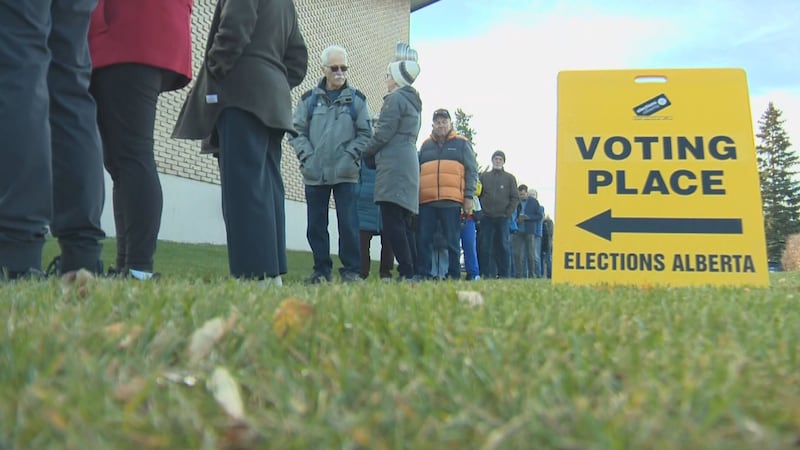
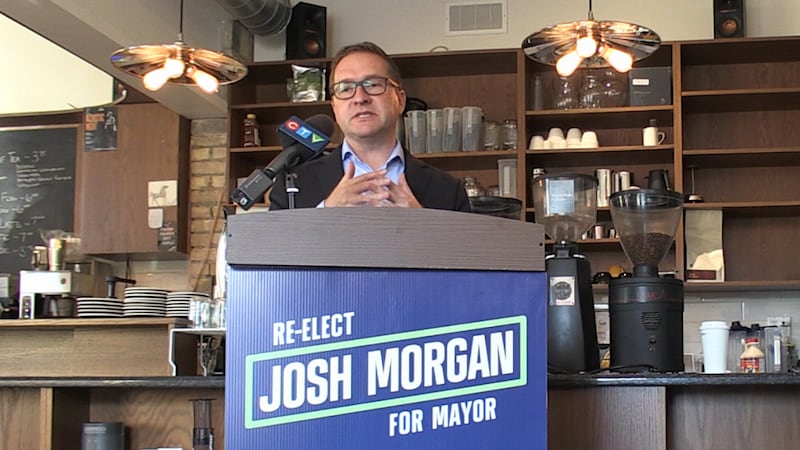
Incumbent mayoral candidate Josh Morgan unveiled the next phase of his homelessness strategy on Monday, urging Londoners not to let the crisis be used “to score political points or divide people” ahead of Election Day. “Fewer people are dying. We have avoided preventable deaths on our street,” Morgan said, emphasizing progress made through the city’s current approach between 2022 and 2024. The next phase of Morgan’s plan to address homelessness would include: “We need a new advocacy campaign with Queen’s Park and we need to push hard,” Morgan said. “We need more treatment beds in our city. We need more room in the HART Hub, and we need Ontario Works and ODSP to pay a rate that allows people to stop falling into homelessness.” Morgan argued London’s response to homelessness must remain focused on humanity, not politics, “Every person living outside is someone’s daughter, someone’s brother, someone’s son. It’s not something you score political points off-- it’s people who you need to help.” While he avoided naming opponents directly, Morgan pushed back against statements made by other leading candidates for mayor, “The truth is, you need the province as a partner. You can’t solve homelessness in just one city. And anybody pretending to do that isn’t telling the truth.” Contacted by CTV News, mayoral candidate Susan Stevenson responded that the current plan hasn’t accomplished enough to address deteriorating conditions on London streets, “Deaths were up in 2025. Homelessness is up. Open public drug use is up. Crime and safety concerns are up in terms of broken windows and theft from retail stores. All of these things are because we are focused on making it easier (and) safer to use illegal drugs in our city.” Morgan directly addressed workers at shelters who have heard campaigning from some of his challengers, “I apologize that there are candidates in this race who villainize and degrade their work in the city. It’s important work, it’s meaningful, and I will always stand beside them. I will always stand beside the people who are homeless to find them a pathway.” However, Stevenson argues the city’s strategy must better align with the provincial government’s support of treatment-based care, “We just brought forward a taxpayer-funded shelter policy that said illegal substances are to be allowed inside our taxpayer-funded shelters. I was able to have that removed, but the mayor said right after that, the shelters could still do whatever they want because we didn’t explicitly disallow it. Our highly supportive housing explicitly allows illegal drug use inside those $100,000 per apartment programs.” Also speaking at the campaign event inside Motive Espresso on Pall Mall Street were incumbent candidates Skylar Franke in Ward 11, and David Ferreira in Ward 13, who both endorsed the mayor’s homelessness plan. Franke said, “We are not policing our way out of a housing crisis, and we cannot expect people to get back on their feet if they cannot afford a house.” Ferreira added, “I don’t think that politicking, fear mongering, or misinformation is really what this city, society, country and province needs right now.” Morgan warned against calls to start over again, “We don’t need to stop, review, and start again. Starting over is a really nice promise to make during a campaign, but it is at a cost that our community will pay in the long run.” “Any candidate can tell you what’s wrong in our city,” he concluded. “The question on Oct. 26 is who will actually have a plan to fix that? Who has proven that they can bring people together? Who has shown that they can access and advocate to the province and the feds?” Ten other candidates are running to be Mayor of London, John Feher, Lawrence-Zachary Howe, Barry Douglas Jacklin, Tariq Khan, Kirsten Krose, Dan Lenart, Bronagh Joyce Morgan, Christine Rosehart, Jeff Yam, and Mustafa Zeboon. Election Day is Oct. 26.