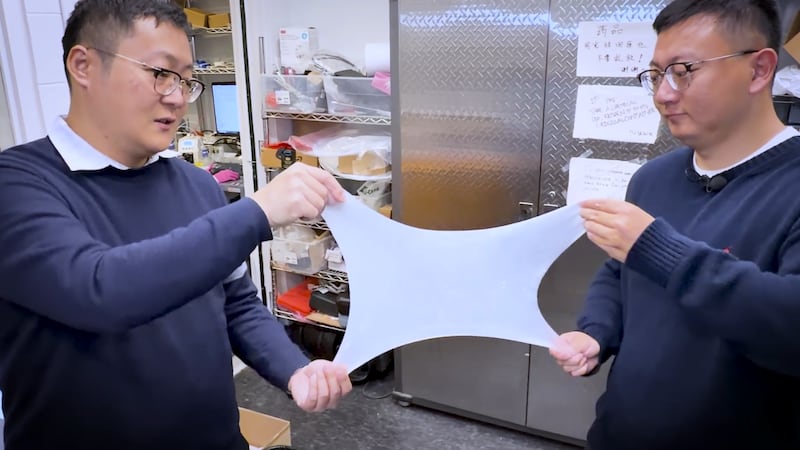
A gelatin-based material inspired by sea cucumbers could one day help people recover from tendon injuries, offering a potential alternative to traditional surgical stitches. Researchers at the University of Waterloo have developed a gel designed to support the growth of new tissue in damaged tendons. The material mimics a marine sea creature’s ability to change the stiffness and flexibility of their body. The substance, which looks like stretchy slime, could eventually provide a temporary framework for damaged tissue to regenerate, potentially improving healing and reducing the risk of recurring injuries. “We get inspiration from sea cucumbers,” said Yimin Wu, a mechanical engineering professor at the University of Waterloo. He said traditional tendon repairs often rely on sutures, which can contribute to recurring injuries and prevent patients from fully recovering their function. The research team is exploring a different approach - using gelatin. “We can use it and mix with the water to make it as a gel. After that we use salt solution to modify,” said Youchao Teng, a postdoctoral researcher who worked on the project. The resulting material is designed to provide a temporary structure that encourages cells to grow and organize as the damaged tendons heal. “The cells really like it because the mechanical properties really match the surrounding tissues,” explained Wu. In a study involving rats with tendon injuries, researchers found the gel helped the new tissue grow in a more organized pattern than stitches alone. Another potential advantage is that the material is designed to break down naturally in the body. “This can degrade in human bodies in eight weeks and we don’t need to do secondary surgeries to take it out,” Wu said. However, the technology is still in the early stages of development. “The next step is doing big animals likes pigs or horses and then after that, we will do clinical trials and then finally get FDA approval,” Wu said. Researchers believe the gel’s relatively low production cost could also make it a promising option if it eventually becomes available for human treatments. For now, further testing will be needed to determine whether the sea cucumber-inspired material can safely and effectively improve tendon healing in people.