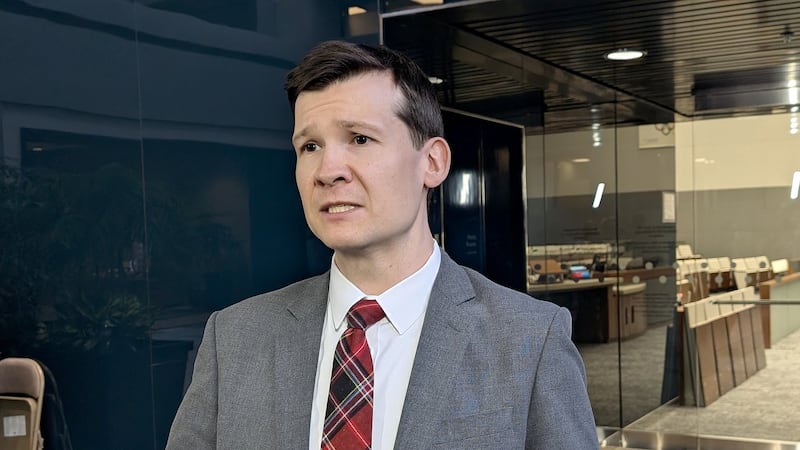
Edmonton is replete with infill developments in varying stages of completion, but with a new mandate from the province to reverse its high-density approach, it’s so far unclear what those projects will look like in three months’ time. University of Alberta housing scholar Damian Collins says Edmonton’s infill policy has attempted to achieve housing needs as the city’s population grows. “It’s actually been very successful at adding housing to our established neighbourhoods, and in doing so, reducing the need for sprawl around the edges of the city,” he said. But Premier Danielle Smith announced on Thursday that the City of Edmonton has been instructed to revert its high-density infill plans to pre-2024 parameters to address what she called “unintended pressures on utilities, water supply, parking, [and] other municipal services like transportation and waste removal.” “These need to be considered in a thoughtful and balanced approach,” she told media at a press conference. Certain neighbourhood groups have long been fighting Edmonton city council’s zoning bylaws and policies, specifically in mature areas where high-density buildings replace single-family homes and, according to them, contribute to overcrowded parking lots and other services. On Thursday, Edmonton Neighbourhoods United, one of those independent community organizations, said the change was an “opportunity to address residents’ concerns and develop a more responsive approach to infill through meaningful community engagement.” Collins expects the rule changes to alter developer interest and investment in Edmonton, with a “negative effect on developers and people who were already committed to building more houses in our established neighbourhoods.” “The goal of the City of Edmonton is to have 50 percent of new housing within the established neighbourhoods, and a lot of that is achieved through infill,” he told CTV News Edmonton. “If that’s no longer possible, the new housing will almost by default end up being in the green fields on the edges of the city, contributing to suburban sprawl and the costs that puts on both taxpayers and people who live in those outer areas, who, almost by necessity, will find themselves living a very car-driven lifestyle.” Public engagement concerns Ward Métis Coun. Ashley Salvador says many points of contention have already been addressed in public engagement sessions through the years – and that Edmonton has had infill housing on its collective mind for nearly two decades. “Over the last 15 years, the City of Edmonton has been taking incremental steps to ensure that we are building enough housing to keep up with demand … To have the provincial government coming in with an unprecedented step, a directive, to tell us to reverse course after all of the work has gone into this is completely unacceptable,” she told CTV News Edmonton. Complaints over the years from concerned residents and working groups have included a lack of notice before construction began in their neighbourhoods. In the two years since Edmonton’s current zoning bylaw took effect, neighbours say they have been surprised and upset by the size, design and volume of multi-plexes in mature areas. Alleys have also become cluttered with waste carts as populations increased. A city spokesperson called the public consultations for zoning bylaw in the last several years “the most comprehensive level of engagement the city has ever done before or since.” But Smith said many people don’t notice construction until it’s happening. Salvador agrees – but says that’s not new to infill. “That is how neighbourhoods change and evolve over time,” she said. “We spent five years engaging on the zoning bylaw, we delayed approving the zoning bylaw for an additional year to allow for further consultation and engagement.” Council had also been cutting back on the sizes of multi-plex units allowed in neighbourhoods, changing height and site coverage rules after hearing more feedback, a city spokesperson added. Waste, water supply and parking concerns As for waste carts, Salvador acknowledges there were growing pains, but says council was addressing the problems with a new bin-sharing system in neighbourhoods. And water supply was also addressed, she said: Epcor requires all infill developers to provide water infrastructure to serve a new development or upgrades to an existing area, per its website. Parking and space concerns – also major hot points for neighbourhoods worried about street parking availability – are not necessarily the result of a post-2024 update. Edmonton became the first major Canadian municipality in 2020 to eliminate minimum parking requirements across the city. The change, which is called open option parking, means businesses and landowners are allowed to choose the amount of on-site parking they believe will meet their needs. City data shows about four parking spaces are built on average for every eight-plex. ‘Erosion of local democracy’ Salvador pointed to some of the comments from the premier as an example of a “misguided” approach that was not based on facts or data. Smith, for example, told reporters she had heard of 32-unit rooming houses with no parking and no consideration for impacts on the neighbourhood. Council passed new restrictions on rooming houses last month. “We are witnessing the erosion of local democracy in real time,” Salvador said. “This is a continued pattern of overreach and another redirect attack on the local autonomy of duly elected local councils. Today it’s infill. Tomorrow, bike lanes, libraries, safety, photo radar.” Starting in January, the city has 18 months to re-write its zoning bylaw, including new engagement with community and industry. Both Salvador and Edmonton Mayor Andrew Knack have said the step back will cost the taxpayer. Knack expects to call an emergency council meeting next week on what comes next. With files from CTV News Edmonton’s Jeremy Thompson and Chelan Skulski