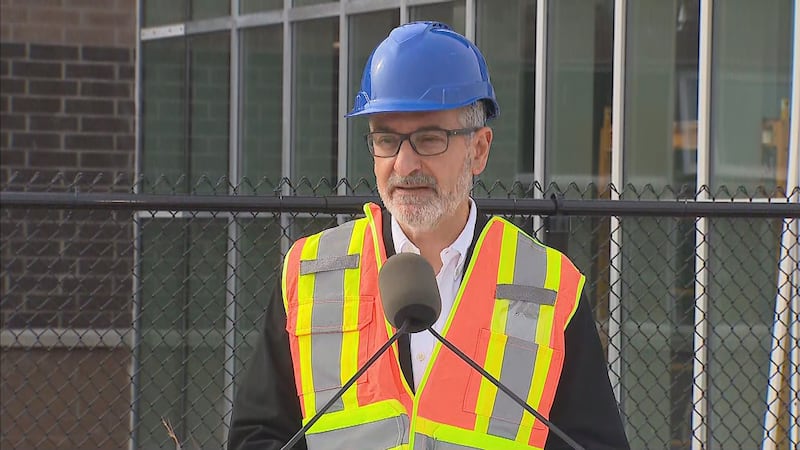
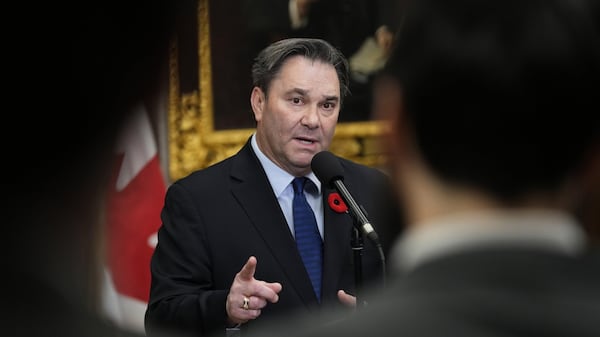
Edmonton’s mayor says despite a record amount of rain the last two months, the city has been better prepared to face problems caused by excess water than in years past because of its long-term flood mitigation projects. The City of Edmonton and utilities provider Epcor began a 20-year, $1.6-billion program in 2019 to build out dry ponds, bolster drainage and more to reduce the impact of flooding in neighbourhoods prone to it. Knack said flood mitigation projects completed so far have been effective. He said areas such as Parkallen and Mill Woods, which have seen such projects finished in recent years, aren’t seeing nearly as much flooding as they would have in the past. “We’re at the point where the water table is at the highest point it’s ever been, where we aren’t getting enough of a break, and the water absorption is incredibly low because it’s very well-saturated, and yet a lot of the money that we started investing back in 2019 to allow Epcor to do a citywide flood mitigation program, we’re starting to see the benefits of that work,” Knack told reporters Tuesday at city hall. “It’s still a 20-year program. We’re only in year seven, so there’s more work to do, but it’s been good.” The city and region has seen record rainfall over the last two months. This year, the city has been deluged by 580 millimetres of rain since the start of June, according to Environment Canada, beating the civic record of 417 millimetres from June through August of 1953. And July 2026 still has four days to go. Frequent storms have produced heavy rain, resulting in widespread flooding and disrupting travel, with roads and underpasses across the city often ending up under water, not to mention soggy basements of homes and other buildings, including Edmonton police headquarters downtown, which saw minor flooding on its lower level on Monday. City manager Eddie Robar said the impact of the heavy rain so far this year on the municipal budget is between $20 million and $30 million. That estimate doesn’t include damage from Saturday’s severe thunderstorm, which Knack called a one-in-200-year weather event that dropped 30 millimetres of rain on the city over two hours, or Monday’s thunderstorm that saw 20 more millimetres of precipitation. The city says the tax rate will not go up as a result of the storms. Robar said the city will treat the excessive rain as an anomaly for now, as this sort of weather hasn’t been experienced here for decades. “If that’s something that continued on, then we would look at making adjustments,” he said. With files from CTV News Edmonton’s Jeremy Thompson and The Canadian Press