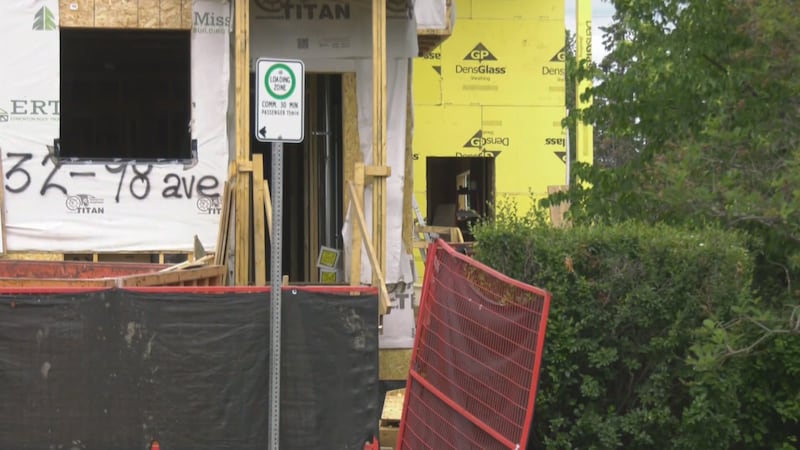
Some 270 multi-unit infill applications have been filed in the first month since the province ordered Edmonton to change its infill strategy, the city says. Builders normally file around 20 to 30 permit applications per month for review, according to a presentation to city council on Friday afternoon. City staff expect to have the nearly 300 permits – a more than 1,200 per cent increase in a month – reviewed by January. The province directed both Edmonton and Calgary to recalibrate their infill approaches on Oct. 8. Municipal Affairs Minister Dan Williams at the time said he had heard concerns from multiple residents about multi-unit infill plans intruding on mature neighbourhoods. City of Edmonton staff have since been tasked with reverting their infill policies by Jan. 22 while making new infill regulations that follow provincial directives. Friday’s presentation included new suggested updates like removing rowhousing being built mid-block in mature neighbourhoods. Under new provincial rules, certain buildings zoned as residential could be bigger than before – 12 units as opposed to the previous maximum of eight. There’s a big caveat, though: parking. The provincial directive reverts the city back to pre-2020 parking provisions: Developers must have one parking stall for every housing unit. This means that, while new guidelines may allow for more units built in certain infill sites, location and parking availability will affect how many units can actually be built. Coun. Erin Rutherford said the new plan was “the best” staff could do “with what they have.” Staff warned there would be no time for a full public engagement process on the provincially ordered amendments. Instead, a public hearing would likely be held, and the new rules would be voted on then. Residents can expect to see a draft of the new infill rules on the city website in December. “The opportunity to debate and discuss will happen at the public hearing,” a city staff member told council. “When the public hearing date is set, we will advertise in accordance with legislation, posting in newspapers and the city website. “The new regulations will be effective immediately upon approval at public hearing.” After that point, all new development permits must meet new standards. The zoning bylaw will then be re-reviewed in 18 months. But staff also warned that the minister does have the authority to dispense with a public hearing on the changes, which Edmonton Mayor Andrew Knack estimates would take five days. Not having a public hearing would save money on staff’s time. City council intends to invite Williams to the public hearing in order to keep the province in the loop with new changes.