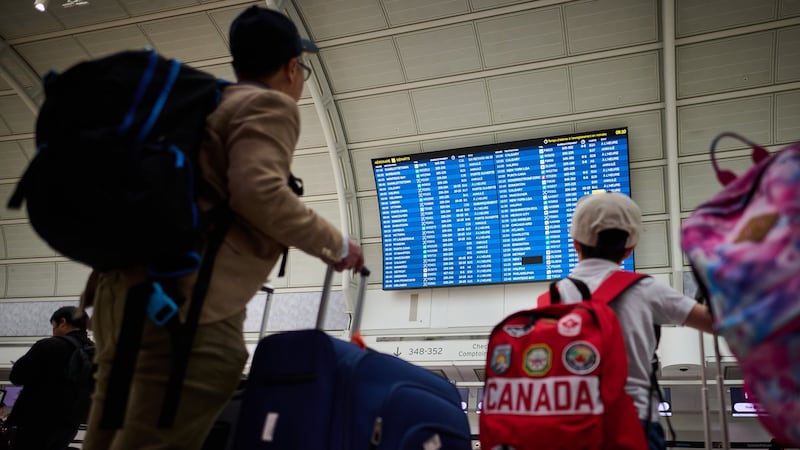
Canadians are skeptical of the federal government’s proposed plan to privatize some of the country’s major airports, according to a new Nanos Research survey for CTV News. According to the data, more Canadians oppose allowing private investors to operate Canada’s four largest airports than support it. “Very cautious. It’s a mixed bag,” said Nik Nanos, founder and chief data scientist at Nanos Research. When asked for their views on the government’s proposal, 28 per cent of respondents said they oppose it and 19 per cent somewhat oppose it, while 26 per cent somewhat support it and another 12 per cent support the proposal. “There’s going to need to be a lot of explaining from the government in terms of protecting the public good,” Nanos said. “So this could be a very tricky political issue for the Carney government to navigate.” Last month, Prime Minister Mark Carney announced the federal government is seeking private investment to run Canada’s four major airports: Toronto-Pearson, Montreal-Trudeau, Calgary and Vancouver. Under the proposal, private investors would operate Canada’s largest airports under long-term leases while the federal government retains ownership of airport land and assets. Transport Canada would continue to regulate the airports. The specific rules governing airport fees and charges have not yet been announced. “One of the things that Canadians really need to hear about is what will this mean for the cost of travel,” Nanos said. “All Canadians are thinking about right now is the cost of living. And if there’s any initiative that is seen as increasing the cost of travel, this will make it even more difficult politically for the Carney government.” With files from CTV News’ Spencer Van Dyk and Stephanie Ha Methodology Nanos conducted an RDD dual frame (cell and landlines) hybrid telephone and online random survey of 1,057 Canadians, 18 years of age or older, from Sept. 27 to 29, 2026, as part of an omnibus survey. The sample included both cell and landlines across Canada. The results were statistically checked and weighted by age and gender using the latest Census information and the sample is geographically stratified to be representative of Canada. Individuals randomly called using random digit dialing with a maximum of five call backs. The margin of error for this survey is ±3.0 percentage points, 19 times out of 20.