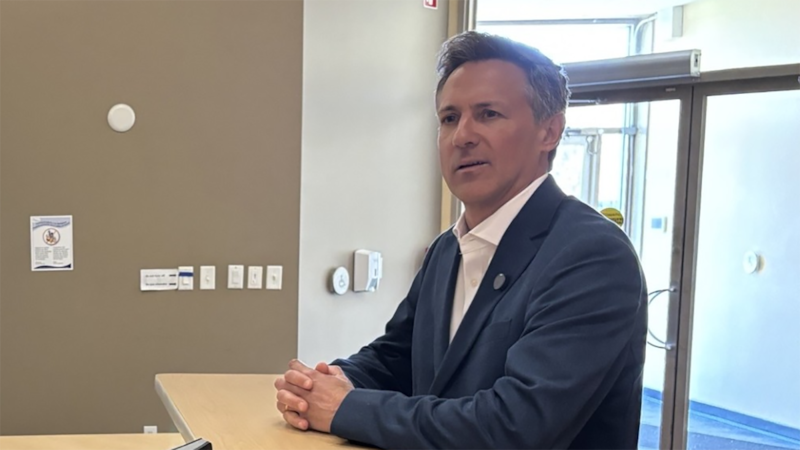
YELLOWKNIFE, N.W.T. -- About 30 colourful homes dot the ice on Great Slave Lake in Yellowknife. Through frigid winters and mild summers, people live here year-round and have seen firsthand the impacts of climate change in the North. “It’s been huge,” says Darren Boutilier, who has lived on the water for the last decade. “We’re a dry, arid area anyway. But we’ve had so much less rain in the last few years. The lake has actually dropped anywhere from four to six feet.” The Arctic is warming three times faster than any other part of the planet, according to the Arctic Monitoring and Assessment Program (AMAP). This is causing dramatic sea ice loss, thawing permafrost and more extreme weather. Environment Canada says Arctic waters could be nearly ice-free in summer by the 2050s. Rising temperatures are already intensifying geopolitical competition with the opening of new shipping routes and increased access to resource development. “The biggest thing is the disappearance of the ice,” says retired colonel Pierre LeBlanc, former commander of Canadian Forces Northern Area. “(It) will generate increased harvesting of natural resources in the North as well as maritime traffic.” According to Canada’s Arctic foreign policy, climate change is considered “the most pressing threat to Canada’s security in the Arctic and the people who live here.” Experts say more surveillance is needed, not only from a military perspective, but in monitoring environmental changes as well. “If we have a strong knowledge base, we’re in a position of strength to make decisions,” says Steve Kokelj, a permafrost scientist with the Northwest Territories Geological Survey. Kokelj says it’s impossible to make decisions around security, infrastructure and resource development without knowing how the environment in the Arctic is changing. “We need to anticipate that these changes are going to happen,” he says. “It’s critical that we not only monitor but that we innovate.” While climate change is expected to bring new economic opportunities to the Arctic, it comes with significant environmental risk that experts say must be factored into decisions. “Opening up corridors in the North, opening up opportunities for development... can be perceived as very good things,” Kokelj says. “But you’re also opening up an environment that is inherently susceptible to change and will change if (the) climate continues to warm. So, I think it underlines this need for a knowledge base within Canada to prepare for that.” Among the concerns is how both climate change and development will impact fragile ecosystems and the indigenous communities who live in the north. “As more and more traffic comes into the Arctic, there are risks associated with that,” says Col. Leblanc, who says pollution is a concern, as is the possibility of an oil spill. “Canada must maintain good control of all the waters inside of the Arctic Archipelago.”