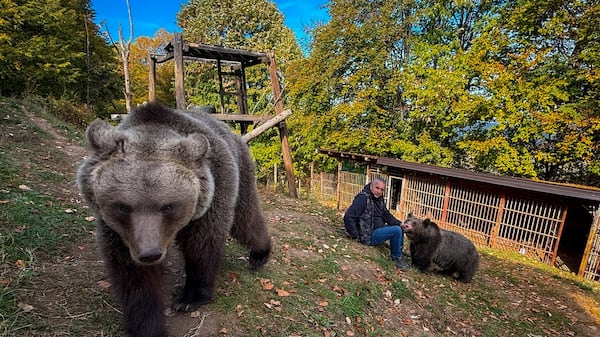
Parks Canada is ending its 55-year search-and-rescue dog program in Banff National Park as the federal agency also prepares to reduce its workforce by about 500 full-time-equivalent positions nationwide amid government budget cuts. The decision comes as 2,917 Parks Canada employees are set to receive notices that their positions may be affected by workforce adjustments, part of a nationwide review intended to align the agency’s operations with available funding. Mike Henderson, a former Parks Canada dog handler, says the program provided a specialized resource for locating missing people, finding avalanche victims and supporting law enforcement operations. He acknowledges the need for government departments to reduce spending, but questions whether the agency fully considered the consequences of eliminating the program. “It’s very much, let’s be super careful here,” Henderson told CTV News. “We have a really unique resource, and we should be really careful about just getting rid of it because once it’s gone, it doesn’t come back.” Krysty Thomas, regional executive vice-president for the Prairie Region of the Public Service Alliance of Canada (PSAC), said the broader workforce adjustments are creating uncertainty for employees and raising questions about how Parks Canada will maintain its services. “Folks not knowing whether or not they’ll have a job in a few months’ time” is causing frustration, stress and anxiety," Thomas said. Parks Canada says its focus is now on visitor services, conservation and protecting national parks remains unchanged as it reorganizes its operations. Cut raises concerns about emergency response capacity Parks Canada’s search-and-rescue dog program began in the early 1970s, with specially trained dogs working alongside park wardens in Banff and other national parks. The dogs have helped locate missing hikers, find avalanche victims, track suspects and locate evidence during criminal investigations. They have also supported other emergency responders, including local police. Henderson worked as a park warden and dog handler in Banff from 2001 to 2019. He said his dogs responded to more than 1,000 calls for service during his career, including more than 100 avalanche calls. They were involved in 10 avalanche recoveries involving people who did not have transceivers. “There are some really good volunteers out there who help out with these incidents, but it would be irresponsible to put it all on them,” said Henderson. He added the program also played a role in training and knowledge-sharing with the RCMP and the Canadian Avalanche Rescue Dog Association, helping advance techniques used in avalanche response. Unlike a resource dedicated to one task, Henderson said, the dog-and-handler team could support both visitor safety and law enforcement. The cancellation also comes shortly after the latest Parks Canada dog completed months of training at an RCMP kennel facility and passed the required assessments to become operational. Henderson said the programs’ last dog hander, Logan Bennett, had to return the dog to the kennel after Parks Canada ended the program. He also pointed to a recently outfitted vehicle designed to transport the animal, questioning the decision after the investment in training and equipment. “It doesn’t seem like it’s a budget smart thing to be investing a bunch of money and then flushing it down the toilet, essentially.” Meanwhile, Talbot, who spent 38 years with the RCMP, said she relied on police dog teams in roles ranging from patrol and specialized investigations to critical incident command. She said the dogs help locate missing people and evidence while protecting officers during dangerous operations. “I don’t think that they even have the capacity now to try to advance and pick up what calls for service are going to come,” Talbot said, while noting she could not speak on behalf of the RCMP. She warned the loss of the resource could affect public safety in the mountain region. Parks Canada to implement ‘organizational changes’ Parks Canada confirmed to CTV News that an affected-status notice does not automatically mean an employee will lose their job. It signals that a position could be changed or eliminated as Parks Canada reviews its organizational structure and future needs. “Over the coming months, Parks Canada will implement organizational changes to align with available funding, modernize operations, strengthen field-based decision-making, and ensure it remains well positioned to deliver on our mandate into the future,” the agency said in a statement. Parks Canada said employees directly affected by decisions will be informed by their director or field unit superintendent. According to the Treasury Board of Canada Secretariat, Parks Canada employed 4,773 people as of March 31, 2026. The latest notices follow an initial round of workforce adjustments in June. Parks Canada previously confirmed that 15 full-time employees were affected in that phase and notified on June 4. None worked in Banff, Yoho or Kootenay national parks. Thomas said PSAC is concerned about the potential effect of reductions across parks and historic sites nationwide. Workers maintain trails, roads, campgrounds and other facilities, monitor wildlife, respond to wildlife conflicts and support enforcement and emergency response, she said. The concerns come after Parks Canada offered free admission and discounted camping through the federal Canada Strong Pass from June 19 to Sept. 7. Parks Canada reported increased summer visitation, while Banff National Park attracts about 4.5 million visitors annually. “More visitors mean more demand on maintenance, wildlife management, facilities, and public safety,” Thomas said. She said the union supports making national parks accessible but wants to ensure staffing and resources are sufficient to meet the resulting demand. Henderson is also concerned about the cumulative effect of staffing reductions on employees who remain responsible for visitor safety, emergency response and law enforcement. He noted that reducing staffing too close to operational minimums could put additional pressure on workers, particularly those handling lengthy rescue operations or complex incidents. “When you make your staff volume smaller, it starts to wear for sure,” he said. Federal spending review drives cuts The workforce adjustments stem from the federal government’s 2025 budget, released last November, which outlined plans to reduce the public service by 28,000 positions by 2029. The plan includes eliminating 16,000 full-time-equivalent positions through a comprehensive expenditure review. As of Aug. 5, a total of 25,368 employees and 1,146 executives across the federal public service had received workforce adjustment notices, according to the Treasury Board of Canada Secretariat. The secretariat also reported that 9,438 federal public servants had been approved for early retirement packages. Parks Canada faces $145 million in direct spending reductions over three years, with additional savings associated with lapsed funding. The agency’s targets are $24.6 million in 2026-27, $45.3 million in 2027-28 and $75 million in 2028-29. The annual savings target is expected to remain at $75 million beyond that point. Thomas said PSAC recognizes governments must make financial decisions but wants the effects on employees and the public to be considered. “We want Parks Canada to be transparent about which positions are being reduced, how these decisions were made, and the alternatives that were being explored to protect jobs,” she said. She also warned that the loss of experienced workers could mean a loss of institutional knowledge needed to maintain services. “When experienced workers leave, we’re losing a lot of institutional knowledge that goes out the door with that,” Thomas said. She pointed to workers in communities such as Banff and Jasper, where employment can be closely tied to the ability to afford to live locally. Some Jasper residents are still rebuilding after the 2024 wildfire while facing uncertainty about their jobs, she said. What happens next? Parks Canada’s workforce review will continue over the coming months as the agency determines which positions and activities will change, remain in place or be eliminated. The full impact on individual parks and services is not yet clear. The decision to end the Banff dog program has raised questions about how the specialized work will be handled moving forward, particularly with avalanche season approaching. Henderson said he understands the need to manage public spending but believes the agency should carefully assess what could be lost before eliminating a resource with decades of experience. For him, the concern is not simply about the end of a long-running program, but whether its absence could leave gaps in emergency response and law enforcement. “It’s a little piece of a very big budget that actually provides a lot of value,” Henderson said. “Let’s make sure that we’re taking the correct course of action.”