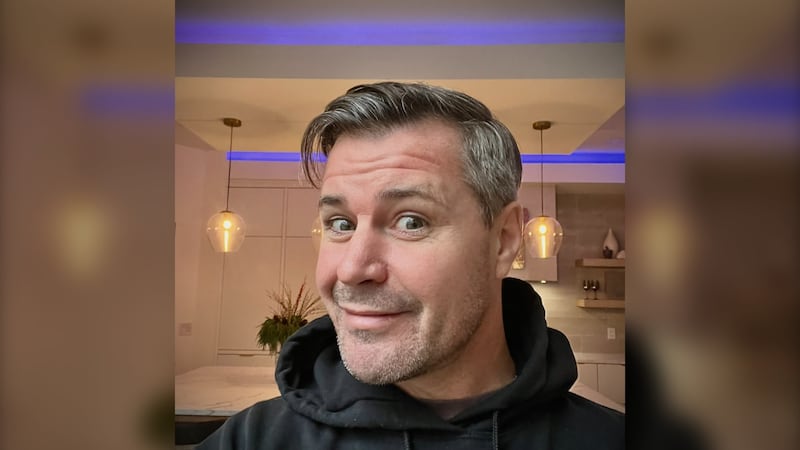
From witnessing a vehicle go off the road with people unable to reach 911, to hearing his concerns echoed by neighbours, Christopher Quigley knew he had to act. “This past week, a couple of gentlemen lost the front wheel of their truck and couldn’t call emergency service to get them,” Quigley says. “They had to go to somebody’s house to be able to get cell phone service.” He moved to a community near Mahone Bay, N.S., three years ago, but has never experienced cell signal issues to the extent he does now, when he relies on Wi-Fi to use his phone. “It’s absurd,” he says. “Without any Wi-Fi, we have no cellphone service.” That’s a problem known all too well by many people living and working in rural Nova Scotia, and it’s why Quigley wanted to hear those stories. He launched an online survey asking for feedback and people’s experiences with cell service, which has already been answered by hundreds of people. His goal is “to gather information, to either get some level of regulatory pressure or some change to happen.” Quigley raised the issue at a local property owner’s association meeting last month. “I brought it up saying, ‘Hey, this is an issue for me. Does everybody else have the same issue?’ And every hand went up.” Women’s shelter echoes concerns He also received a letter of support for his endeavour for change from Harbour House, a women’s and children’s shelter in Bridgewater known as the South Shore Transition House. “Some of our most vulnerable citizens across Nova Scotia are women and children experiencing harm in the home,” says Kelly Ann Hamshaw, the executive director. Citing the domestic violence epidemic in the province, she says change is needed. “I feel that it’s critical for citizen safety, and particularly for our vulnerable individuals like women and children experiencing domestic violence, to have reliable infrastructure that meets their needs. “I feel that geography should not limit access to essential services. It’s also a well-known fact that isolation is a tactic used by abusers.” Province hearing complaints “I would love to be able to just provide coverage right across the province, immediately,” says David Benoit, the president and CEO of Crown corporation Build Nova Scotia. But it’s not that easy or that quick. The Tim Houston government touts the largest-ever spend on cellphone infrastructure, aimed at improving service. But they need telecommunications companies on board. “We are trying to deliver this as quickly as possible,” Benoit tells CTV News Atlantic. “Some of the partners would like us to take more time, but we don’t have more time to take.” Build Nova Scotia has received hundreds of letters and even more people pinging their location as needing improvements. “We had 8,000 data points from our citizens about where the coverage is poor or non-existent.” Benoit says officials review all feedback sent in through the Crown corporation’s website. The Cellular for Nova Scotia Program has an overall goal of expanding coverage for basic phone call service to 99 per cent of the province “where Nova Scotians live, work, learn and travel on primary roads.” That means service for more than 20,000 unserved civic addresses and 1,010 kilometres of primary roads. But that goal could be a long way away, as it’s phase two of a two-part project. The first phase, which began in early 2025, will see only about 20 per cent of the objective reached by the end of 2026, providing service to 27 areas that went without. That would cover about 4,800 civic addresses and about 200 kilometres of primary roads. Benoit says it would be “unfair” to give a timeline for the entirety of the project because it’s an open procurement. “At the end of the day, the telcos are those are the ones that will, you know, deliver on phase two. Quigley will be sending his survey results to politicians and telecommunications companies. “Communities from all over the province have been reaching out saying, ‘Hey, I have this is a problem here, too.’” For more Nova Scotia news, visit our dedicated provincial page