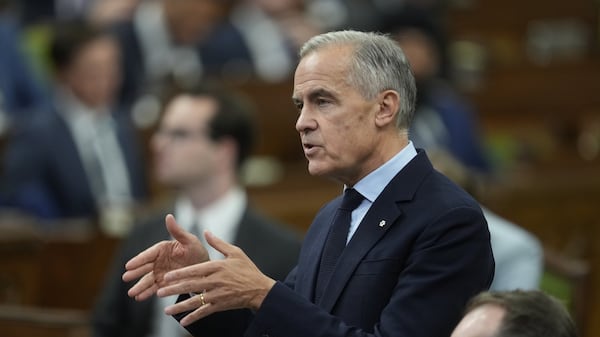
Comments from Halifax Mayor Andy Fillmore about the cost of bike lanes are renewing conversations over how the city should build out its cycling network. Speaking in an interview on Wednesday, Fillmore said he supports completing Halifax’s network of bike lanes but questioned the price of what he described as “gold-plated” designs, pointing to projects like the one on Almon Street. “They didn’t convince me that we need to continue with the gold-plated versions,” he said. “That’s as much as $4,500 per metre, and we can do something far less expensive… $1,000 per metre, or even less.” The mayor said his focus is on finding more cost-effective ways to complete the network while maintaining safety. “I don’t need convincing that we do need to complete the network,” Fillmore said. “I just don’t think we can afford to do a gold-plated network.” Filmore said this as Halifax continues to expand its cycling infrastructure, a key part of its broader transportation and mobility plans. David Trueman, co-chair of the Halifax Cycling Coalition, said there may be some common ground between city hall and cycling advocates when it comes to cost, but it cannot be at the expense of safety. “I think the mayor and I are a little more in agreement than we were in the past. We can agree on less expensive cycling infrastructure as long as it is safe,” Trueman said. Trueman said the coalition does not require raised bike lanes but insists on physical separation from traffic, such as concrete curbs. “Safety for us means there’s a concrete curb between us and traffic,” he said, adding that painted lanes alone are not considered safe by most cyclists. He also pointed to trade-offs tied to lower-cost designs, particularly the potential loss of on-street parking. “It often means the cost is going to be parking,” Trueman said, citing University Avenue as an example where maintaining parking added high costs to a project. “It’s costing $2 million extra to maintain that parking. That’s very expensive parking.” The debate over bike lanes in Halifax has often been divisive, with tensions between drivers, cyclists and residents over road space, costs and priorities. Still, Trueman said he noticed a shift in tone from the mayor during the latest comments. “I felt I was hearing a bit of a conciliatory tone,” he said, noting Fillmore’s stated support for completing the network. Advocates argue that expanding cycling infrastructure is part of the solution to congestion in the city. “Every bike on the road is one less car in traffic,” Trueman said. Cycling infrastructure currently represents a small portion of Halifax’s overall transportation spending, but the issue continues to draw significant attention as council looks ahead to future budgets. For more Nova Scotia news, visit our dedicated provincial page