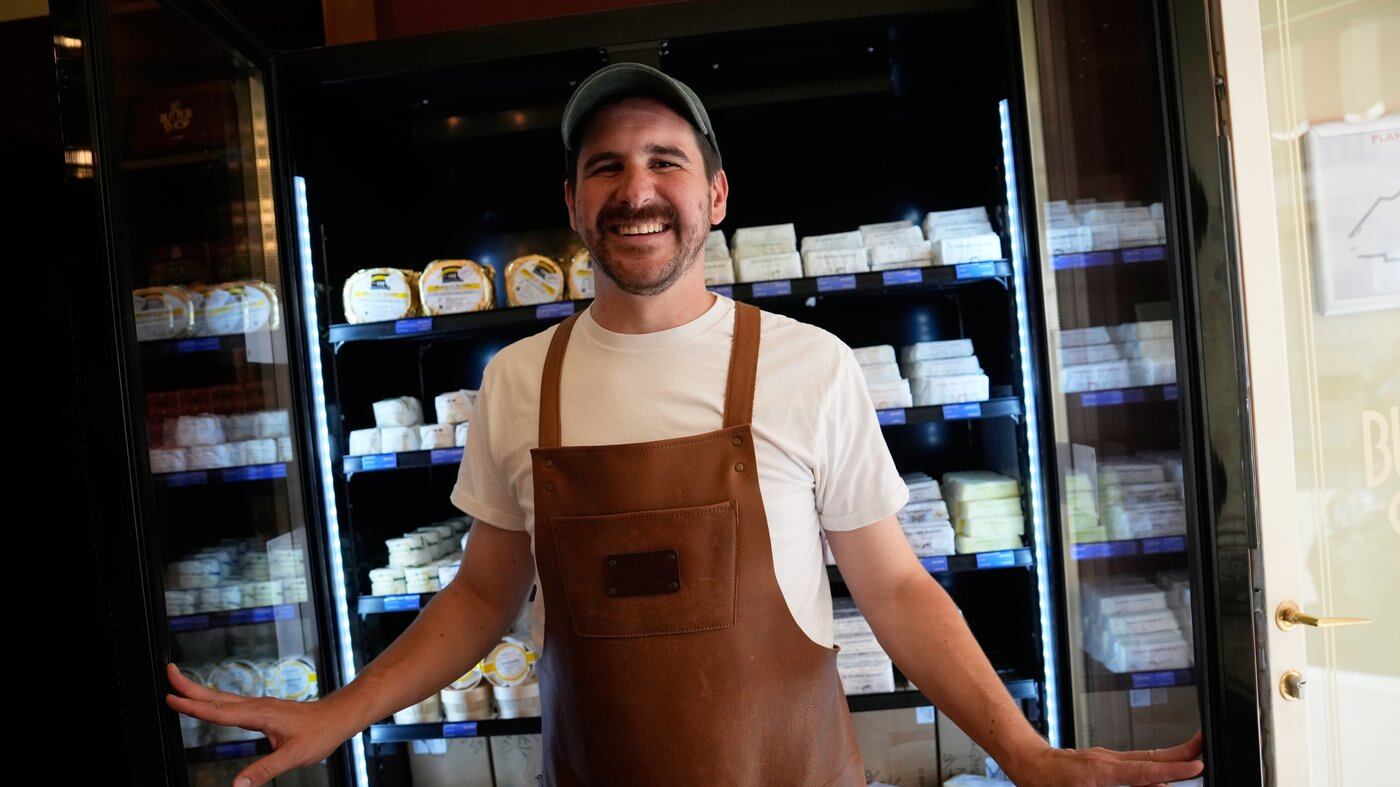
PARIS — The contradiction of the trim Parisian and the butter croissant now has a storefront. Le Butter Shop, billed as Paris’ first boutique devoted entirely to butter, opened last month a short walk from the Eiffel Tower — with 30 varieties from small family producers in Brittany, the Loire Valley and northern France. France eats around 8 kilograms (18 pounds) of butter per person a year, so says the agriculture ministry. It’s among the most in the world. Yet the home of Chanel and Dior keeps an obesity rate well below the average for wealthy nations — 14 per cent, compared to an average of 19 per cent for the developed countries that make up the Organization for Economic Cooperation and Development. At the new boutique, customers taste by the spoonful before buying anything from a 10-gram pat to a kilogram (2.2-pound) block: the classics, then shallot, pepper, seaweed, wild garlic, fine herbs and lemon with green pepper. At the sweet end: vanilla, raspberry, strawberry and chocolate. “Most people don’t expect to like a raspberry butter or to like chocolate butter,” said owner Erwan Leo, 34. “And when they try it, this is where they’re just like, ‘Oh wow, OK.’” Leo, who also runs a wine-tasting business, said butter should be used like wine, to make a meal better — “the goal isn’t to get drunk.” Tourists and locals are curious about the butter Mehreen Himayat, 25, and Salman Bin Ehsan, 27, of Dublin, Ireland — a country known for its rich golden butter — saw videos of the shop at home in Dublin, Ireland, before travelling to France. “We came here just to taste the butter,” Bin Ehsan told The Associated Press. Alexandra Incolano, a 36-year-old who lives near Paris, came to the shop with a specific mission. “I’m getting married on Saturday and I’m going to have a cheese centerpiece,” Incolano said. “I saw on Instagram that they had lots of great butters and I thought it could be a little something extra for my guests, a little surprise.” The reputation of French butter is also attracting visitors who work professionally with food. “I know that there’s some of the best butter in France, but I’ve never tried any,” said Aleksandr Balaban, a 31-year-old Estonian chef working in Norway. “I work in Norway, they really like salted butter, and my friend asked me to bring him some French butter as well.” The French butter paradox Leo said the secret to savouring fatty butter is to be like Parisians: Walk a lot, and practice moderation. “We don’t go beyond four tartines a day,” he said, referring to a French open-faced sandwich. Tasting butter works like tasting wine, he said: “You have to grab your spoon, you put it on your palate, on your tongue, it has to melt a little bit, and then the flavours are going to start coming one by one.” “The Italians choose olive oil, we choose butter,” Leo said. “We learn how to master it.” Neighbourhood supermarkets give butter a vocabulary: beurre doux, demi-sel and beurre salé, sometimes studded with salt crystals. Bakers fold it into croissants; cooks whisk it into sauces. Butter is the fat of France’s dairy-producing north and west, and of Brittany above all. Salt preserved it before refrigeration, and Brittany’s exemption from the gabelle, France’s old salt tax, kept Breton butter salted as much of the country went unsalted. The legacy lives on in crêpes, salted caramel and kouign-amann, whose Breton name means “butter cake.” Leo’s producers churn from selected cows and higher-fat milk; an extra two or three percentage points, he said, “really makes a huge difference.” The tiny shop has drawn crowds through social media and now has a staff of four. “From day one, it’s been crazy,” Leo said. “Most people come in with wanting to try one or two butters, they end up trying 25 butters because they’re just so curious.” Next up: a croissant-flavored butter, and perhaps violet. “This is limitless,” Leo said. Nicolas Garriga And Thomas Adamson, The Associated Press