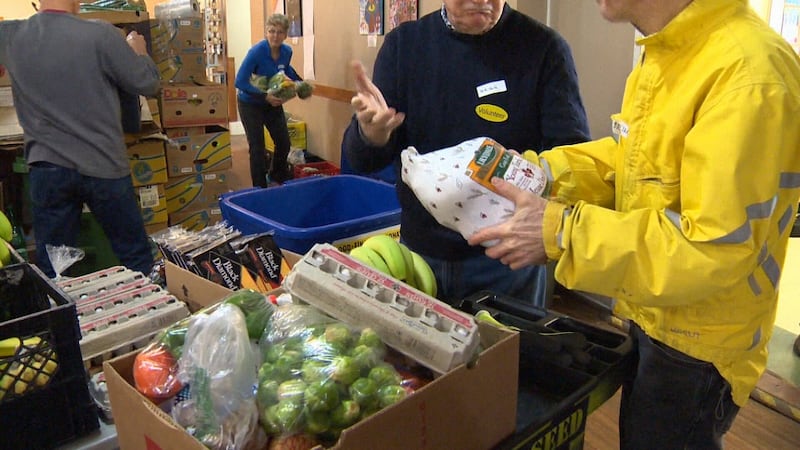
Food security leaders from Victoria, B.C., are in Türkiye for a United Nations climate conference, where they’re sharing local solutions to food waste. The UN says rotting food waste is responsible for up to 10 per cent of global greenhouse gas emissions. That’s five times more than the aviation sector. “You always like to think that airplanes are the culprit. But no, it’s food,” said Treska Watson, who leads the Mustard Seed Food Bank in Victoria. “We’re all wasting food that could be used in a better way and shared with more people.” Watson is one of three conference delegates from the Mustard Seed. Another delegate from the Capital Region Food and Agriculture Initiatives Roundtable completes Victoria’s food security cohort. Watson and her team are sharing their food rescue and redistribution efforts on the global stage. Every day, the Mustard Seed saves roughly 4,500 kilograms of food from Greater Victoria grocery stores and donors. That food is redistributed to tens of thousands of people in need. “All of the great work that we’re doing in our region is really well-established,” Watson said. “There are a lot of countries that are just starting on this journey that are just trying to understand how food rescue and food waste plays into global warming and carbon footprint.” Food waste goes beyond wilted greens in the back of the fridge. The UN says other sources include spoiled crops and overproduction in the food service industry. Food Banks BC said the province is experiencing the environmental effects of food waste and other contributors to climate change in real time. The association’s executive director, Dan Huang-Taylor, said worsening storms and wildfires are damaging crops and the local economy. He said those events put additional strain on food banks. “During the times of fires, we see an activation among food banks, which means moving truckloads of food around the province to communities that have been impacted,” Huang-Taylor said. “A lot of that flies under the radar about the role that food banks play during emergency weather events and just emergency events in general.” Food Banks BC hopes to work with the incoming provincial government to help producers redirect surplus food to areas where it’s needed.