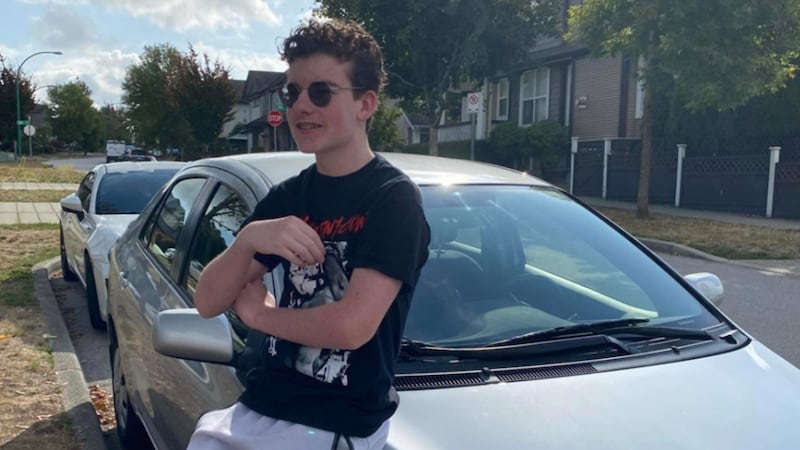
The mother of a 15-year-old autistic boy fatally shot by police in Surrey, B.C., told a coroner’s inquest Monday that she hopes her son’s death will lead to improvements in how first responders communicate with neurodivergent people in crisis. Crystal De Balinhard described the medical and developmental challenges her son, Chase, faced throughout his life, the circumstances leading up to his death and her family’s frustration over unanswered questions. She also acknowledged the difficult circumstances confronting the officers involved in the shooting, telling the jury that her family’s advocacy has never been about pitting them against police. “We know they didn’t go up there to hurt our son. It’s never been us against them. It’s just about training, because I know that nobody that was there had any autism-specific training,” a tearful De Balinhard told the court. Her testimony came on the opening day of a coroner’s inquest into Chase’s death on Feb. 9, 2025. The proceedings follow an investigation by B.C.’s Independent Investigations Office (IIO), which concluded the officers’ use of lethal force was legally justified and found no reasonable grounds to believe an officer had committed a criminal offence. Unlike the IIO investigation, the inquest is not intended to determine criminal or civil liability. Instead, a jury will examine the circumstances surrounding the teenager’s death and consider recommendations aimed at preventing similar tragedies. Remembering Chase De Balinhard was the first witness to testify Monday, introducing jurors to her son through photographs and stories about his personality, interests and relationships. She described Chase as a funny, kind-hearted teenager who loved practical jokes, superheroes, vintage toys, old movies and spending time with his family. He particularly enjoyed playing pranks on his mother, she recalled, including jumping out to scare her and participating in elaborate April Fool’s Day jokes. De Balinhard also described her son’s generosity, recalling how he once took money from the family’s emergency fund to purchase a toy for a neighbour’s dog because he considered it an emergency. She said Chase had a special affection for animals, including his beloved cat, Ava. Despite his developmental challenges, his mother described him as determined to participate in activities alongside his peers. He had recently discovered a passion for kayaking through an adaptive paddling program, competing in regattas and earning medals. De Balinhard said he was proud of his accomplishments and hoped to pursue the sport further. She also told jurors Chase once dreamed of becoming a police officer, following in the footsteps of his paternal grandfather, who served with the RCMP. As a child, he wore an RCMP costume and enjoyed meeting officers at community events. His mother said that, as he grew older, he also developed an interest in antiques and dreamed of owning a vintage toy or antique store. A lifetime of medical and developmental challenges De Balinhard testified that Chase lived with numerous medical and developmental conditions, including autism spectrum disorder, attention deficit hyperactivity disorder (ADHD), obsessive-compulsive disorder, XYY syndrome, significant visual impairment and a congenital heart condition. She described a childhood marked by delayed developmental milestones, difficulties with communication, anxiety, low muscle tone and challenges performing everyday tasks. According to his mother, Chase experienced significant academic difficulties and, at 15, continued to struggle with basic reading and writing. She said he sometimes relied on his phone to help him understand written information or compose messages. De Balinhard also described difficulties with fine motor skills and personal care, explaining that Chase continued to require assistance with some everyday activities. She testified that he had trouble processing multiple instructions at once. When calm, Chase might be able to follow several directions, she said, but when overwhelmed, he often needed instructions broken into simple, individual steps. His mother emphasized that the tone of a person’s voice was particularly important when communicating with him. She described loud voices, yelling, aggressive tones and crowded environments as triggers that could overwhelm her son. According to De Balinhard, Chase told her that loud noises and yelling physically hurt his body. When distressed, she said, he could become angry, swear or walk away, and sometimes had difficulty remembering what he had said during those moments. She testified that attempts to reason with him while he was overwhelmed were often ineffective and could escalate his distress. Strategies to help Chase cope De Balinhard told jurors her family had worked with counsellors and other professionals over the years to help Chase recognize signs of emotional distress and develop coping strategies. These included listening to music, playing video games, taking deep breaths and removing himself from overwhelming situations. Walking away was a particularly important strategy, she said, and something he had been taught to do from a young age. De Balinhard described how she would sometimes hug Chase, practise breathing exercises with him and repeat reassuring words to help him calm down. A written safety plan was also discussed during her testimony. The document outlined signs that Chase might be approaching a crisis, strategies he could use to regulate his emotions and people he could contact for help. De Balinhard was listed among those contacts, along with a counsellor and crisis-support resources. She testified that using his name, speaking calmly and allowing him space were important when he became overwhelmed. Her testimony provided jurors with a description of how Chase responded to distress in familiar settings, although it does not establish his mental state or ability to process instructions during the police encounter. The IIO previously reported that Chase did not comply with repeated police commands to drop what appeared to be a handgun. Concerns about school supports De Balinhard also raised concerns about the educational support Chase received as he grew older. She testified that he had substantial assistance during elementary school, but that support became increasingly limited after he entered high school. By Grade 10, she said, Chase was receiving very little assistance despite continuing to struggle with academic work, social communication and emotional regulation. His mother described years of efforts to obtain speech therapy, occupational therapy, behavioural intervention and other specialized services. She said Chase was not diagnosed with autism until 2018, despite earlier efforts by the family to investigate his developmental delays. De Balinhard testified that the eventual diagnosis made her son eligible for provincial autism funding, but that the family had missed earlier opportunities to access additional support. She also described an incident during physical education in which Chase became upset after being yelled at and struck by a Frisbee, before leaving the situation. These accounts reflect De Balinhard’s recollection of her son’s educational experience. The inquest is also expected to hear evidence from one of Chase’s teachers about his functioning and supports at school. Access to the pellet gun De Balinhard was questioned by inquest counsel about the origins of the air pistol Chase was carrying when he was shot. She testified that her husband, Rick, had inherited the air revolver from his father, who served with the RCMP. She said the family was not particularly interested in firearms and recalled that Rick and Chase had taken the air pistol out to shoot on one occasion while camping. According to De Balinhard, Chase had not shown much interest in it. She described the air pistol as being stored in a drawer in her husband’s office and said it was kept locked, with a key stored separately in a safe. De Balinhard maintained that the air pistol was not something routinely left accessible to Chase. Under questioning from counsel representing the RCMP, she was also asked about her husband’s firearms licensing. De Balinhard initially indicated she was uncertain about the requirements, but recalled that Rick had completed a firearms-related course. Her testimony did not establish precisely how Chase obtained the air pistol on the day of the shooting. The IIO previously determined the object Chase carried was a realistic-looking .22-calibre CO2 pellet air pistol, with a full CO2 cartridge and six pellets loaded in its magazine. The inquest is expected to hear further evidence about the air pistol, including its technical characteristics and the regulations governing its acquisition, storage and possession. Statements about suicide Counsel representing the RCMP also questioned De Balinhard about previous occasions when Chase had expressed suicidal thoughts or made statements about wanting to die. De Balinhard acknowledged that her son sometimes said things such as “I want to die” or “I wish I was dead” when he became frustrated or upset. However, she testified that she understood those statements as expressions of wanting a distressing situation to end. She said she had discussed Chase’s comments with members of his mental-health treatment team over the years. De Balinhard was also questioned about previous statements Chase had made concerning running into traffic or shooting himself. She acknowledged that he had made such statements, although she was uncertain about the precise dates. His mother said the issues had been discussed in clinical settings and that she had not believed he was at imminent risk at those times. Her testimony reflected her understanding of Chase’s previous behaviour, rather than an independent clinical assessment of his intentions on February 9, 2025. According to the IIO’s December 2025 report, Chase called 911 at approximately 2:38 p.m. that day and told the operator he had a revolver and was going to kill himself. During the 19-minute call, the call-taker asked Chase whether he trusted police. He responded that he did not. The call-taker then asked whether it was simply a lack of trust or whether Chase also felt he wanted to harm police. Chase replied, “Both,” according to the IIO report. The recording of the 911 call is expected to be presented as evidence during the inquest. Recovering from painful surgery De Balinhard also testified about a medical condition she said was causing Chase significant pain in the months leading up to his death. She told jurors Chase underwent surgery on December 3, 2024, for a pilonidal cyst near his buttocks. According to his mother, the wound remained open during his recovery and required ongoing treatment. She described repeated medical appointments, wound packing and painful procedures. De Balinhard said the condition made sitting and walking difficult and could cause bleeding with movement. She testified that Chase had been particularly distressed in the week before his death because of his medical treatment and discomfort. His mother described how physical pain, anxiety, sensory sensitivities and frustration could compound one another, making it more difficult for Chase to regulate his emotions. Her account provides additional context about his reported physical condition at the time of the shooting. However, the IIO report describes an officer observing Chase fleeing at a “full run” approximately two minutes before the fatal shots were fired. The report also includes an account from a civilian witness who described Chase walking shortly before the shooting and briefly tripping and falling. De Balinhard’s testimony about his medical condition has not independently established how his injury affected his movements during the police encounter. Recounting Chase’s final day De Balinhard described the weekend before her son’s death as a positive one for the family. She testified that relatives had been visiting and Chase had enjoyed spending time with them. On Feb. 9, she recalled taking a family member to the airport before attending a Super Bowl gathering. According to his mother, Chase remained home because he was uncomfortable sitting for extended periods while recovering from surgery. She described leaving him at home and later learning from friends that police were responding to an incident near a neighbourhood school. De Balinhard said she checked her son’s phone location and became concerned when it appeared to place him in the area of the police response. She drove toward the scene, where officers had blocked access to the neighbourhood. De Balinhard testified that she approached a female officer and explained that her 15-year-old autistic son’s phone appeared to be in the area. She recalled being asked for Chase’s name and sensing from the officer’s reaction that something was wrong. Through tears, De Balinhard described the distress of subsequently learning her son had died. She also told jurors she had wanted an opportunity to see Chase and say goodbye. The mother expressed frustration about the information she said the family received following the shooting, describing the experience of waiting for answers about her son’s death. These details were presented through De Balinhard’s testimony and have not yet been independently established through other witnesses at the inquest. IIO finds police use of force justified In its December 2025 decision, the IIO concluded that the officers who responded to Chase were acting lawfully and that the use of lethal force was justified under the circumstances. The agency reviewed evidence including statements from 18 civilian witnesses and 10 witness police officers, police records, radio transmissions, the 911 call, surveillance recordings and forensic findings. According to the report, members of the RCMP Surrey Provincial Operations Support Unit and Surrey Police Service attempted to apprehend Chase over approximately 22 minutes as he moved through a school field, townhouse development and nearby residential streets. Witness officers told investigators Chase was carrying what appeared to be a handgun, which he pointed at officers several times and, at times, held against his own head. The report states officers repeatedly attempted to communicate with the teenager and ordered him to drop the weapon. The senior officer on scene told investigators that his initial plan was to establish dialogue and do his best to de-escalate the situation. However, he described difficulties maintaining visual contact and establishing containment as Chase moved through a populated residential area. The IIO also reported that officers considered less-lethal intervention options, but said the circumstances, distances involved and perceived firearm threat limited their ability to use them. At approximately 3:17 p.m., according to the IIO, Chase turned and pointed the revolver directly at nearby officers. Two officers discharged their firearms almost simultaneously. Chase was struck by a single bullet to the chest and died at the scene. The IIO concluded the officers had objectively reasonable grounds to fear death or grievous bodily harm. Chief civilian director Jessica Berglund determined there were no reasonable grounds to believe an officer may have committed an offence, and the matter was not referred to Crown counsel for consideration of charges. The officer who fired the fatal shot did not provide an account to IIO investigators. Subject officers are not required to provide evidence during an IIO investigation. Autism-specific training to be examined Although the IIO found the officers’ actions legally justified, its report also examined police training related to interactions with autistic people. Investigators found none of the officers interviewed had received autism-specific training, and there was no evidence that the officer who fired the fatal shot had received such instruction. The IIO noted that officers had received general crisis intervention and de-escalation training, but that the training did not extend to recognizing signs of autism. The report also acknowledged that autism experts had described Chase’s lack of engagement with police as sensory overload. It stated that the sight of police uniforms and firearms, along with shouted commands, likely hampered attempts to communicate with him. However, the watchdog concluded that officers reasonably focused on the risks associated with what they believed was a real firearm, particularly as Chase moved through a populated area and repeatedly pointed the weapon toward police. The IIO concluded that officers had attempted to resolve the situation without harm. Mother calls for better communication During her testimony, De Balinhard called for improvements to the way emergency responders recognize and communicate with autistic people experiencing a crisis. She questioned whether contacting a parent or caregiver could help officers better understand a person’s communication needs, triggers and coping strategies. She suggested that a family member familiar with Chase might have been able to provide information that could assist police during the response. De Balinhard also raised the possibility of a voluntary registry allowing families to provide emergency services with relevant information about autistic children and their needs. She advocated for autism-specific training for 911 call-takers, police officers and other first responders. Her testimony did not establish whether contacting a family member would have been feasible or changed the outcome of the encounter. Despite her concerns, De Balinhard acknowledged the danger officers faced and said she understood that Chase’s actions had placed them in a difficult position. She emphasized that her family’s advocacy was not intended to assign blame to individual officers, but to identify opportunities to improve emergency responses and prevent similar deaths. What is the purpose of the inquest? The coroner’s inquest is a separate process from the IIO investigation. While the police watchdog examined whether officers may have committed a criminal offence, the inquest is a public, non-fault-finding proceeding intended to establish the circumstances surrounding Chase’s death. Under B.C.’s Coroners Act, inquests are mandatory in certain circumstances, including deaths that occur while a person is detained by or in the custody of a peace officer. A presiding coroner and jury hear evidence under oath to establish how, when, where and by what means a person died. The jury may make recommendations aimed at preventing similar deaths, but cannot make findings of legal responsibility or express conclusions of law. Any recommendations are not legally binding. What happens next? The inquest is expected to hear testimony from Chase’s treating psychiatrist, a teacher, the police emergency call-taker and civilian witnesses. Police officers involved in the response, including the two officers who discharged their firearms, are also expected to testify about their observations, assessment of the risks, available alternatives and decisions to fire or not fire. A psychiatric nurse assigned to Car 67, the police mental-health outreach team, is expected to explain what medical information was available during the response. The jury will also hear from emergency medical personnel, a forensic pathologist and representatives of the Independent Investigations Office. Additional expert testimony is expected to address autism, police use of force, crisis intervention and de-escalation training, firearms regulations and current Surrey Police Service policies. Presiding coroner John Knox is overseeing the proceedings at Burnaby Coroners’ Court. The inquest is open to the public and is also being livestreamed through the B.C. Coroners Service website. The broader circumstances of Chase’s death and questions about autism-specific police training were previously explored in CTV News’ five-part investigative series, Lost in Translation: The Death of Chase de Balinhard.