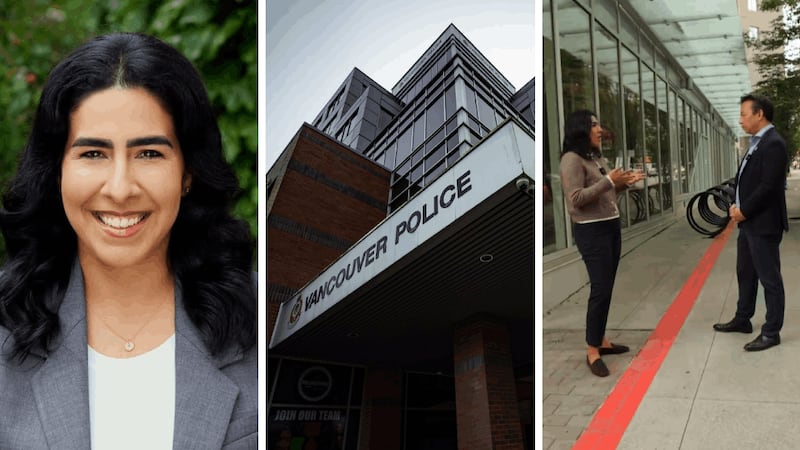
Ahead of Vancouver’s final game of the 2026 FIFA World Cup this week, Mayor Ken Sim reiterated a claim he’s made before about the city’s hosting costs. “We basically did the best deal—I think, ever—in the history of hosting World Cups,” Sim told CTV News on Tuesday. “We’re on the hook for $5 million.” In a city with an operating budget of $2.39 billion, that’s a drop in the bucket for local taxpayers. But how did the mayor come to that figure? As has been the case with other financial questions related to the World Cup, getting a clear answer has not been easy. Moshe Lander, a sports economist with Concordia University, was highly dubious of Sim’s claim, absent a detailed accounting of the final costs and revenues associated with the tournament. Lander said researchers have found time and again that the promised economic benefits of hosting massive global sporting events do not fully materialize—at least not in Canada. “This mayor, because of his soccer fandom, refuses to acknowledge what all of the academic evidence has suggested,” he said. “He has lied to the public since day one about what it’s going to cost.” Committee cites ‘projected’ revenue The gross cost of hosting Vancouver’s seven World Cup games was most recently estimated at between $685 million and $729 million, split between the municipal, provincial and federal governments. Vancouver’s share was estimated at between $320 million and $338 million. CTV News asked Sim’s office for clarification about the mayor’s remarks, and was provided a statement from the Vancouver Host Committee noting the city’s “direct contribution” to the World Cup was indeed only $5 million. So what about the other hundreds of millions of dollars in estimated spending? The committee pointed to a number of revenue sources that will offset Vancouver’s total costs, the largest being the temporary Major Events Municipal Regional District Tax, which is being applied to local hotels and short-term rentals to help fund the tournament. It noted the tax is “projected” to generate between $250 million and $260 million by the time it’s scheduled to be lifted in 2030. The statement also referenced revenue from the FIFA Fan Festival, facility rental fees paid by FIFA, and $100 million in federal funding provided to help with the estimated safety and security budget of $242 million, borne between the city and province. ‘Accurate’ or ‘unsubstantiated’? Asked via email to confirm Sim’s assertion that Vancouver will ultimately only be “on the hook” for $5 million, Vancouver Host Committee spokesperson Elayne Sun told CTV News: “That is accurate.” In response to follow-up questions, a different spokesperson acknowledged costs and revenues will not be reconciled until after the tournament. The municipal and provincial governments are “committed to transparency,” however, and plan to provide an update on “actual costs, revenues and economic benefits” in spring 2027, the spokesperson said. Lander compared Sim’s claim to a construction contractor who immediately quotes a dollar-specific amount for a job rather than providing a ranged estimate that accounts for uncertainties. “A contractor who comes into my home and says, ‘It’ll cost you $30,000 to renovate your bathroom’? You’re fired. I’m not even going to continue with you,” he said. “Be transparent with the voters,” Lander added. “Rather than making this unsubstantiated comment that nobody can verify, but similarly nobody can also disprove.” ‘Global branding exercise’ During his interview with CTV News, Sim said it’s “the province’s responsibility” to justify overall spending on the tournament—but called the 2026 FIFA World Cup a massively successful “global branding exercise” for Vancouver. “People have fallen in love with our city,” the mayor said. “They will be coming here in droves for $5 million. If we were to pay $100 million to try and run ads throughout the world, it would not be anywhere close to being this effective.” B.C.’s Ministry of Tourism, Arts, Culture and Sport declined to speak to the specifics of Vancouver’s costs, but confirmed the Major Events Municipal and Regional District Tax has generated approximately $105.7 million for the city since February 2023, with several years of collection left. “We remain confident in the funding model,” the ministry said in a statement. Lander noted the lack of transparency around the tournament is not unique to Vancouver, to B.C. or to Canada—with many financial questions still swirling around fellow host country the U.S. as well. “FIFA and the White House have gotten really cozy together, and they’ve almost created a climate of permissiveness where you don’t have to be transparent, you don’t have to be honest, you don’t have to be direct,” Lander said. “All I can think of is advice that was given to me by my parents when I was a kid: You are who your friends are.”