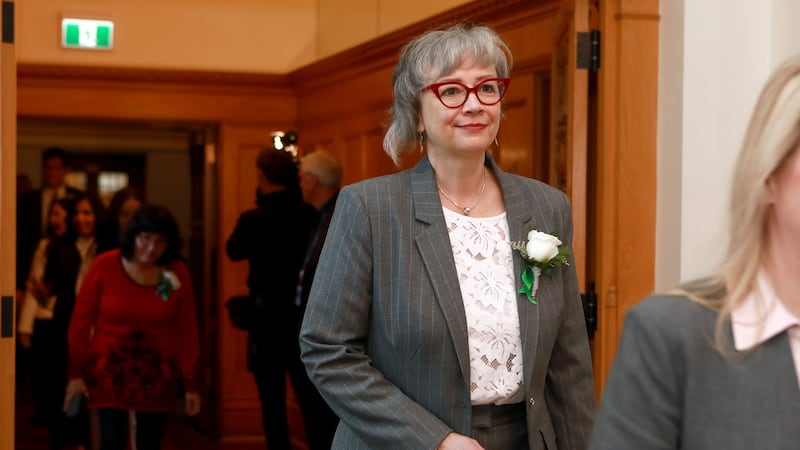
VICTORIA — British Columbia’s official Opposition says the new Conservative cabinet is getting ready to tear down existing housing plans after eliminating the Ministry of Housing and Municipal Affairs as a separate office. NDP interim leader Jennifer Whiteside says it is “deeply disappointing” to see the housing portfolio become part of the new Ministry of Local Government, Housing, Sport and Culture. She says the Conservatives’ decision appears to be the first step toward scrapping existing housing legislation. The former B.C. labour minister says in a statement that housing affordability is a generational challenge and B.C. deserves a government that is “fighting to fix it, not one that abdicates its responsibility.” Premier Lorne Doerkson said at a news conference Friday that his government will be working with the federal government in “every way possible” to develop housing. He said that he committed himself to combining some of the ministries and the housing ministry is one of them. Criticism also came from the B.C. Greens and their leader Emily Lowan. Lowan said she is concerned about the signal that comes from combining the housing portfolio with others. “British Columbians are struggling in an impossible affordability crisis, and in the worst housing crisis in a generation, this government has downgraded the housing portfolio, alongside labour,” she said. Doerkson promised during and after the campaign to repeal key aspects of the provincial housing legislation introduced by the former NDP government of David Eby. “We will return housing decisions to the people and the communities, who know their neighbourhoods so much better than Victoria,” he said during the inaugural meeting of the Conservative caucus after the election earlier this month. Doerkson was referring to the repeal of Bill 44, which New Democrats consider their signature piece of housing legislation. The legislation legalized higher densities on single-lot properties in municipalities with populations above 5,000 people, but also came with housing targets, which local governments have criticized. The future of the legislation now falls within the responsibility of first-time legislator Cathie Ounsted, a former municipal councillor in Greater Victoria, who will head the new ministry following her appointment. Whiteside said in her statement that British Columbians also deserve a government that reflects B.C.’s diversity. “It is shocking that women make up just one-third of cabinet,” she said. “(For) the first time in three decades, B.C.’s Chinese-Canadian community, the province’s largest visible minority group with nearly 600,000 people, has no representation at the cabinet table.” This report by Wolfgang Depner of The Canadian Press was first published Nov. 21, 2026.