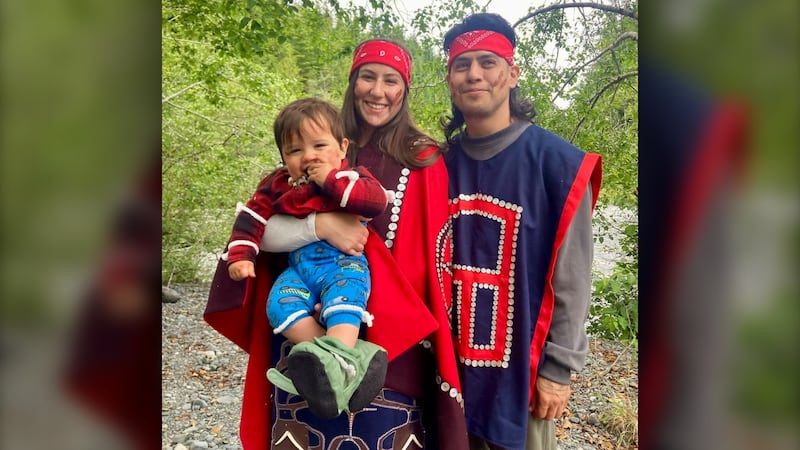
He died in April, but the parents of a Surrey baby still have his highchair at their dining table as they continue to plead with their health authority for answers around care that saw him sent home from their local hospital before ultimately dying in Alberta. Abrar Ahmed and his wife have been pursuing the Patient Care Quality Office at Fraser Health since July, when they filed a complaint following their 11-month-old son Salahaddin’s death. They say the health authority had only agreed to an in-person meeting, but then agreed to provide answers in writing. They’re still waiting. “Was there really something that prevented them from giving us our son the care that he needed? Was there something that was beyond their control? Or was it something that they really missed and our child suffered as a result?” asked Ahmed. “Our child, our only child, just kept deteriorating in front of our eyes. As parents, we really couldn’t do much about it.” When CTV News asked Fraser Health about the case, they expressed their condolences for the family’s loss but said they couldn’t share health-care details due to patient confidentiality. The health authority did acknowledge they are working with the care team on a response. “We recognize that some reviews can take longer than anyone would like, particularly in complex cases,” an emailed statement said, in part. The parents’ experience Ahmed described Salahaddin as a healthy, happy baby boy who had just started trying to stand on his own when he began vomiting soon after midnight on April 17th of this year. They rushed him to Surrey Memorial Hospital where his parents felt dismissed by the emergency department physician, who they say sent them home after examining the boy and brushing aside their requests for bloodwork as unnecessary—even though there were only a handful of patients there at the time. Several hours later, they found him unresponsive and took him back to the hospital where testing showed a dire situation. “His dehydration and his blood sugar were so low they couldn’t even find his veins, so they had to drill a hole in his leg and give the fluids through his bone,” explained his father. The couple credits an alert nurse for seeing their son’s condition, listening to their concerns, championing his case to physicians for getting attention several hours later when the little one was still unresponsive. By this point, they say he’d been in hospital for about 10 hours and was rushed to B.C. Children’s Hospital by ambulance. Those pediatricians performed multiple tests, said Ahmed, diagnosing Salahaddin as being in liver failure with a 50-50 chance of survival if he was able to obtain a liver transplant. B.C. doesn’t have the resources to do the procedure on children that small, so the family was airlifted to Stollery Children’s Hospital in Edmonton. Salahaddin died there shortly after he arrived. The fight for answers The Ahmeds requested and obtained hospital documentation in the aftermath of the tragedy, taking their time to draft a complaint to the Patient Care Quality Office with dozens of questions they wanted answered. Typically, responses are provided within 40 business days, but their case is an anomaly. The July filing of their complaint was well before there was any indication David Eby was contemplating a provincial snap election, so the delay can’t entirely be explained by the “caretaker mode” government agencies operate under during the period between the calling of an election and the swearing-in of a new cabinet. The case would’ve been making its way through the various departments and managers who handle such cases under the leadership of Josie Osborne, who had been minister of health until mid-August. When the cancer diagnosis of the finance minister saw Eby shuffle his cabinet, Osborne went to finance, and jobs minister, Ravi Kahlon, had a five-week stint as health minister until the election call. The inner workings of government are foreign to the Ahmeds, who want decision-makers to take seriously the concerns of patients and their caregivers. They’ve started a petition to implement a U.K.-style patient safety initiative that empowers requests for an urgent second opinion upon request. They hope it’ll be a legacy for the smiling boy with the dark curly hair who was their first and only child. “We really were completely dependent and completely at the mercy of people that were assigned to our son’s care,” said Ahmed.