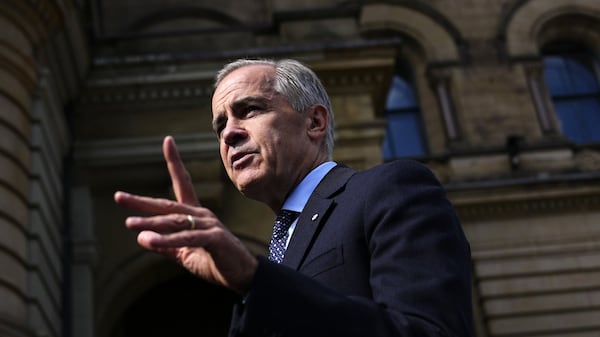
The entry of former federal cabinet minister Chris Alexander into the Toronto mayoral race appears to have chipped away at the support for Brad Bradford, a new survey suggests. The survey of 1,011 Torontonians was conducted by Forum Research on Wednesday, one day after Alexander confirmed that he was entering the race. It found that Chow would receive the support of 47 per cent of decided and leaning voters in a three-way ballot that includes Alexander, compared with 32 per cent for Bradford and 11 per cent for Alexander. Eleven per cent of respondents backed another candidate. Without Alexander on the ballot, Chow’s support rises slightly to 48 per cent while Bradford climbs to 36 per cent, leaving the mayor with a narrower 12-point advantage. “The lesson from 2023 for people on the right is don’t split the vote. That’s how Chow got in, a united left vote,” Forum Research president Lorne Bozinoff said in an interview with CP24 Breakfast. Bozinoff said Bradford entered the race hoping to emerge as Chow’s lone major challenger, but Alexander’s arrival has complicated that strategy. He argued that Alexander’s entry appears to have divided voters looking for an alternative to Chow. “Brad was the very first person in the race hoping no one else would get in,” he said. “In fact, (Alexander) does draw away from Bradford.” Alexander officially registered his candidacy Wednesday, one day after confirming to CTV News that he planned to enter the race. Bradford dismisses Alexander Earlier this week, Bradford downplayed Alexander’s candidacy, telling reporters that he had “never heard of” the former federal cabinet minister before rumours emerged that he was considering a run. “I literally didn’t know who he was when I first heard the rumours circulating,” Bradford said. Alexander, for his part, told reporters this week that Toronto is “slightly adrift” and needs “an outsider” to get the city back on track. Despite Alexander’s late entry into the race, Bozinoff said his early showing is notable given he has no municipal political experience. “He comes in at 11 per cent out of nowhere,” he said. Chow’s approval remains mixed The survey found 40 per cent of respondents approve of Chow’s job performance while 42 per cent disapprove, giving her a net approval rating of minus two. “On key municipal issues, Chow receives her strongest ratings on crime (-12 net approval) and property taxes (-12), while traffic congestion remains her weakest area, with 29 per cent approving and 52 per cent disapproving of her performance (-23 net approval). Housing affordability also remains challenging, at a net approval rating of -16,” the poll reads. Bozinoff said that Chow‘s “commanding lead despite approval ratings that are slightly underwater overall” suggest that “voters who have reservations about her performance still see her as the preferred choice for mayor.” Methodology Forum Research surveyed 1,011 Toronto residents aged 18 and older on July 29 using an interactive voice response telephone survey. 78 per cent of respondents were reached by cellphone and 22 per cent by landline. The results are considered accurate within plus or minus four percentage points, 19 times out of 20. The upcoming election will be held on Oct. 26.