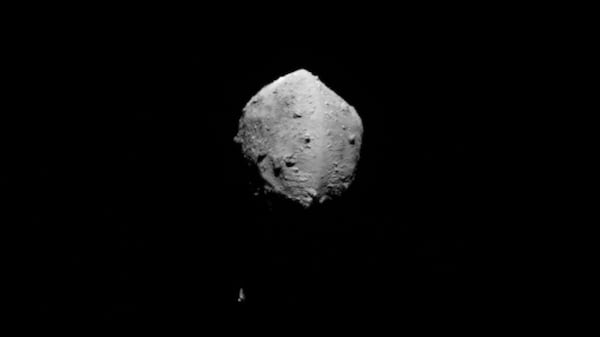
CAPE CANAVERAL, Fla. — A European spacecraft has begun close inspections of an asteroid rammed by NASA four years ago in a planetary defence test. The European Space Agency announced Wednesday that the Hera spacecraft is now studying Didymos and its moonlet Dimorphos from just 15 miles to 18 miles (25 kilometres to 30 kilometres) away. NASA’s Dart spacecraft deliberately slammed into little Dimorphos in 2022 to see whether such a defensive move might help save Earth from a killer space rock one day. The impact shortened the moonlet’s orbit around Didymos. More importantly, it nudged the moonlet into a slightly different path around the sun. Next month, the small car-sized Hera, launched in 2024, will venture even closer — just 12 miles (20 kilometres) away. ESA officials consider this a “crash site investigation” worthy of its finest robotic detective. Hera is carrying 25 science instruments as well as a pair of shoebox-sized Cubesats to survey Dimorphos even more closely and attempt to land on it. The Dart spacecraft — short for Double Asteroid Redirection Test — sent rubble and even boulders flying off Dimorphos, providing an extra kick to the impact’s momentum. The debris trail extended thousands of miles (more than 10,000 kilometres) into space for months. Some of that debris could still be in the vicinity, according to scientists. Dimorphos is an estimated 500 feet (151 metres) in diameter. Didymos is roughly 2,560 feet (780 metres) in diameter. ___ The Associated Press’ health and science coverage receives financial support from the AP Fund for Journalism and private foundations. AP is solely responsible for all content. Find AP’s standards for working with philanthropies, a list of supporters and funded coverage areas at AP.org. Marcia Dunn, The Associated Press