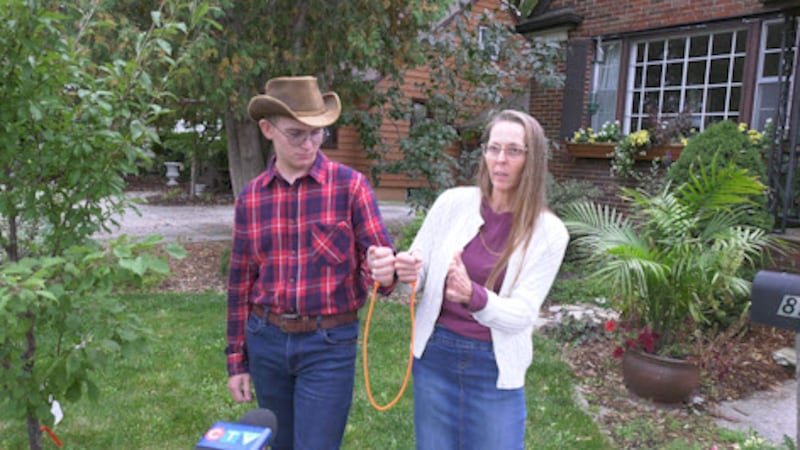
Decades after their second-degree murder conviction in 1994, the Quewezance sisters can hope again to walk free, according to their lawyer. In 1994, the two sisters were convicted of second-degree murder in connection to the 1993 death of 70-year-old Anthony Dolff of Kamsack, Sask. They were sentenced to life in prison. They have been fighting for a judicial review of their second-degree murder convictions since 2021, citing a miscarriage of justice. “You had an 18-year-old and a 21-year-old young Indigenous woman — both victims of the residential school process — completely in the power of an RCMP detachment full of white police officers, all male,” their counsel, Toronto-based lawyer and activist James Lockyer, told CTV News on Friday. He added that the sisters’ confessions at the time were not recorded and argued those should not have ever been heard by the jury. “We already had a strong basis, in my opinion, for the minister to find a miscarriage of justice when I filed an application with him back in December of 2021,” Lockyer said. Nearly five years later — a long but “not abnormal” period, according to Lockyer — Canada’s Minister of Justice and Attorney General Sean Fraser ordered a new appeal in the case of the sisters on Thursday. In the announcement, Minister Fraser explained that an in-depth review of the case found reasonable grounds to conclude a miscarriage of justice did occur. As a result, the case will be returned to the courts for the new information to be considered. “As Minister of Justice, I have the authority under the Criminal Code to order a new trial or appeal when new evidence shows a miscarriage of justice likely occurred,” Fraser said in the announcement. The Quewezance sisters’ lawyer was notified a few days prior to the announcement. “It comes as something that’s extremely welcome. And, you know, anytime something goes well in my business, it’s a surprise. So, it was a lovely surprise,” he said. Fraser’s conclusion came as new information was identified, but details of the new evidence remain unknown. “I’m sort of bound by an undertaking that I signed with the minister’s office. [The evidence] will come out, of course, during the appeal, before the Saskatchewan Court of Appeal,” the lawyer explained. Whatever the nature of this new information is, Lockyer is more optimistic than before. “The minister’s work has enhanced what I view as signs, or obvious signs, of a miscarriage of justice in the case of both women,” he said. However, the decision to return the Quewezance case to the courts doesn’t mean a final decision has been made regarding their future. “My decision does not decide guilt or innocence, as that will rest with the courts,” Fraser clarified in his statement. “Our responsibility is to make sure Canadians can trust their justice system, and that means, in rare cases, returning cases to the courts for new information to be considered.” The sisters are more than 50 years old and are among the longest-serving female inmates in the country. Their case still carries significant public interest. In Lockyer’s opinion, it’s partly because it involves two young Indigenous women. “To me, [this case is] a good example of how the justice system in the 90s and up to the present day doesn’t deal fairly with the Indigenous,” he said. “In fact, not many people know that at the last count, 51 per cent of the women in federal penitentiaries are Indigenous women. That’s an extraordinary statistic.” He said the Quewezance case has the potential to change that. “This case could be used for conducting a Canada-wide inquiry into why more than half of the female population in our penitentiaries is Indigenous women,” he said. Before such an inquiry can be realized, however, a decision has to be made, which Lockyer doesn’t expect to happen soon. “We will be filing fresh evidence with the Court of Appeal. The Crown may or may not respond with their own evidence. We may or may not wish to cross-examine the other side’s evidence. Once that process is done, we have to file briefs with the Court of Appeal, and then the appeal is heard,” he listed the steps ahead of them. “We’re not going to be doing this appeal this year, that’s for sure.” As for the near future, Lockyer will also be “going to have another go at bail” for the sisters, who are back in the system for having violated their curfews. With files from Stacey Hein and David Prisciak