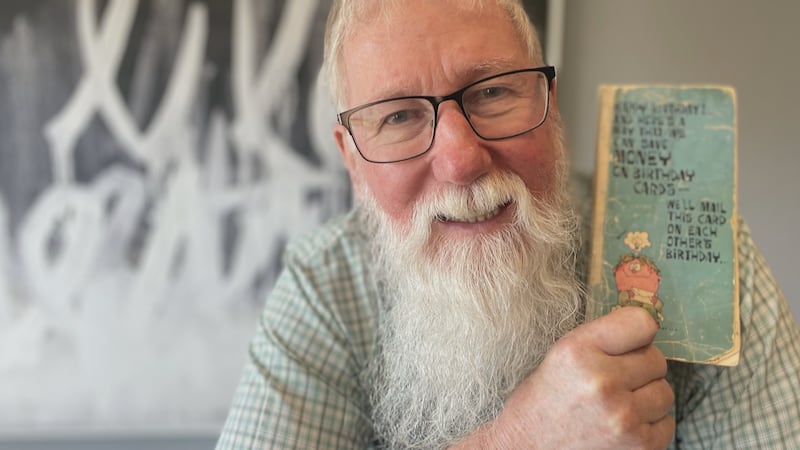
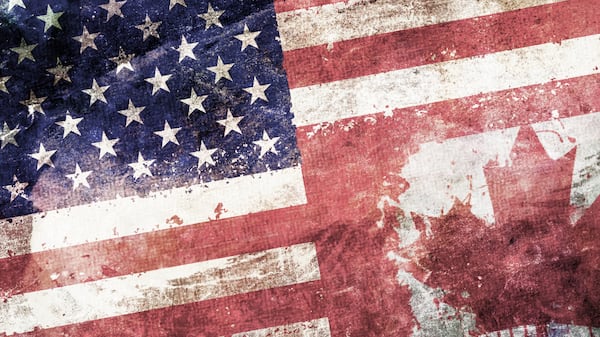
Capital Dispatch is a weekly newsletter, sent when Parliament is in session every Friday. To stay on top of what’s happening on the Hill, you can sign up to receive the latest political news and insights directly in your inbox, here. ‘Technical’ recession talk, long awaited AI strategy, and new Trump concessions? With just two sitting weeks left, Prime Minister Mark Carney’s government is under increasing pressure on a few fronts. From delivering on all the policy promises they made before Parliament goes on a two-month hiatus, to addressing a stalling economy while the Americans eye trade concessions, here’s what went down in Ottawa this week. The week that was This week was Conservative Leader Pierre Poilievre’s first chance to press the prime minister on last Friday’s major economic news: that Canada is in a “technical recession” due to two consecutive quarters of economic contraction. And press he did. In the House of Commons – on the one day Carney showed up for question period – online, and in scrums with reporters. “Today, the prime minister wouldn’t even answer your question. You asked him point blank: are we in a recession? And he refused to answer that question,” Poilievre told reporters outside the Liberal cabinet room on Tuesday. “What he should have said is that ‘yes, we are in a recession.’” He made these comments on the heels of the prime minister acknowledging weaknesses in the Canadian economy while also defending the federal government’s economic agenda. In doing so, he did not use the word “recession.” The Conservatives tried to force an emergency debate on the issue on Monday, but the Speaker ruled it didn’t meet the requirements. Instead, the official opposition has opted to use nearly every question they have in QP this week to press the Liberals on it. “Will the leader of the only G20 country in recession please stand up?” Poilievre started Wednesday. To which the Speaker noted “that is not a question.” Carney then quipped that because it was the opposition leader’s birthday, he’d give him the question slot back. “Mr. Speaker, I appreciate the birthday wishes. I am 47 years old, but that is 50 with inflation. What I really want as a birthday gift from the prime minister is someone who will actually answer the question,” Poilievre shot back. While his Conservative opponent reacted north of the border, his American counterpart in the White House also took note of the recession headlines. U.S. President Donald Trump took to Truth Social Monday night to post the words “51st state!” with a link to a Bloomberg news article titled “Canada Dips Into Technical Recession for First Time Since 2020.” The post was reshared by U.S. Ambassador to Canada Pete Hoekstra. This of course, generated a range of reactions in this country, which if you missed you can recap here. Speaking of the Americans, trade talks and new tariff threats were also front-and-centre this week. Canada-U.S. Trade Minister Dominic LeBlanc ravelled to Washington on Tuesday, along with Canada’s Chief Trade Negotiator Janice Charette, for what became a 45-minute meeting with U.S. Trade Representative Jamieson Greer. Ahead of the sit-down, he issued a letter to both Greer and his Mexican counterpart Secretary of Economy Marcelo Ebrard indicating Canada wants to renew the countries’ trilateral trade deal for another 16 years and opt out of an annual review process. “Canada recognizes that either or both other parties to the agreement may wish to propose areas where improvements may be warranted to strengthen North American competitiveness,” LeBlanc wrote. “In parallel, discussions with the United States on addressing sectoral tariffs will be essential,” the letter also stated. Speaking to reporters following his meeting in Washington Tuesday, LeBlanc said the D.C. sit-down gave officials “an opportunity to take stock of progress” in the negotiations, and to “respond to some longstanding issues that the United States has raised” with Canada. “I’m eternally optimistic,” LeBlanc said, when asked by CTV News’ Abigail Bimman whether he believes a renewal — as opposed to a review — of the deal is feasible. “I think it’s in the economic interest of North America.” That optimism, though, was met just hours later with a new tariff threat. Greer’s office released a report late Tuesday saying Canada and numerous other countries could soon be facing a 10 per cent tariff for failing to prevent the importation of goods made with forced labour. The investigation into forced labour under Section 301 of the Trade Act was launched in March, after Trump’s tariff agenda was dealt a legal blow by the U.S. Supreme Court, in striking down his so-called “fentanyl” tariffs. Carney was quick to come out the next morning to address the threat – the tariffs are subject to a review period before coming into effect – and said the move comes as no surprise and downplaying concern. “It’s something that the U.S. has been planning for a few months,” he said, noting the important caveat that the proposal includes a carve-out for CUSMA-compliant goods. “I want to say as well that the issue, the motivation of the U.S. action … is something that we share. Canada has a very strong legislative regime against forced labour in supply chains. We don’t want any element of forced labour coming in, goods and services, and we want to use our influence to eliminate this practice of forced labour and child labour,” Carney said. “We have been preparing ways to reinforce the regime that we have. We made some changes earlier this year on things that, candidly, were not as effective. So, there’s ways we can change things legislatively. We’ll be proposing that to the House in the coming weeks before the House rises.” Lastly, just a quick note on some Ottawa chatter. This week the Toronto Star reported that the prime minister’s edict to Liberal MPs is that he doesn’t want to be challenged, and that over several caucus meetings Carney allegedly lashed out at certain members. The next day, yours truly and some other reporters put the piece to caucus members on their way in to West Block. Here’s a sampling of what some had to say, all who stopped denied ever seeing him yell at someone in a meeting. “I enjoy a very good relationship with Mr. Carney. I’m glad that we can disagree and still have a good working relationship,” said Liberal MP Doug Eyolfson. “He is someone who is used to being in a boardroom, and I appreciate the back and forth with him,” said Liberal MP Anthony Housefather. Asked how he would describe the prime minster’s leadership style, Liberal MP Sean Casey said “confident,” and then took a long pause before continuing. “He has a good way with people. I would absolutely say that. And it’s, it’s genuine, like he’s a no bullsh*t kind of person,” Casey said. “Tough when appropriate but not always tough, not tough for the sake of being tough.” Asked then if it was better than under Justin Trudeau, Casey – who was vocal about his desire for the former Liberal leader to resign – said “well, the general public seems to think so and the mood in caucus is better, but everybody loves a winner.” Not to be missed AI strategy pledges new jobs, lacks safety details After months of delay, the federal government has unveiled its AI strategy. It outlines a vision focused on job creation, sovereignty and increased AI adoption. But the plan lacks details on how Canadians will be protected from the technology’s potentially adverse effects. The strategy sets several specific goals such as creating up to 90,000 AI-related jobs and work opportunities for young Canadians by 2031, helping create up to 250,000 new jobs through AI adoption by 2031, boosting AI among businesses from 12 per cent today to 60 per cent by 2034, building a “world-leading” supercomputer to boost sovereign infrastructure by 2031, and providing all Canadians with access to free AI literacy training. As colleague Stephanie Ha reports, the strategy says it aims to protect Canadians, particularly children, against AI risks and online harms. While it proposes new consumer privacy legislation to enshrine a right to privacy and safeguard children’s information – along with a modernization of safety laws – the plan is vague on a timeline and what specific measures will be put forward to do so. Canada orders CRTC review streaming decision Amid widespread backlash and the fast-approaching deadline to review the Canada-U.S.-Mexico Agreement, the federal government is directing the Canadian Radio-television and Telecommunications Commissions to review its recent decision to triple the amount it charges digital streaming giants to contribute to Canadian content. As colleague Spencer Van Dyk reports, The order comes after pushback from broadcasting associations and as the U.S. administration continues to point to the Online Streaming Act as a trade irritant. Digital streaming giants — including American companies such as Netflix and Disney — were previously required to contribute five per cent of their Canadian revenues to domestic content. The federal government has yet to collect any of those funds, however, with a number of streaming companies fighting the decision in court. Late last month, the CRTC announced its decision to triple the amount, from five per cent to 15. “This is not the time to raise the costs for Canadians,” Carney said Wednesday. NDP tables bill to require floor crossers to face voters And, this week NDP parliamentary leader Don Davies introduced a private member’s bill that would force floor crossers to face voters before switching parties. The bill wouldn’t prevent MPs from leaving their caucus or changing their political affiliation. Instead, it would require any MP who wishes to join another caucus to either run under their new party banner in a byelection or sit as an independent until the next general election. As The Canadian Press’ David Baxter reports, Davies is not optimistic about the Liberal government passing the bill, but hopes parliamentarians come together to help restore faith in the system. “When MPs cross the floor, they unilaterally override the decision made by voters,” he said. “That has serious consequences for the integrity of our democracy.” The week ahead The big event happening in Ottawa next week is of course installation of Louise Arbour as Canada’s next governor general on Monday, June 8. The occasion is taking place in the Senate and will feature the presentation of honours, an address by the prime minister, and Arbour’s first speech in the viceregal role. The guest list includes Canadian VIPs, the ceremony will feature artistic performances, and the event will be followed by Arbour inspecting the Guard of Honour and laying flowers at the National War Memorial. Ahead of her installation as Canada’s 31st governor general, Arbour travelled to London to meet King Charles at Buckingham Palace, who approved her appointment. CTV News will have a live special covering the event hosted by Vassy Kapelos, starting Monday at 9:30 a.m. ET across platforms. Covering the latest political news from CTV’s parliamentary bureau in Ottawa, Rachel Aiello offers exclusive analysis on political developments straight from Ottawa.