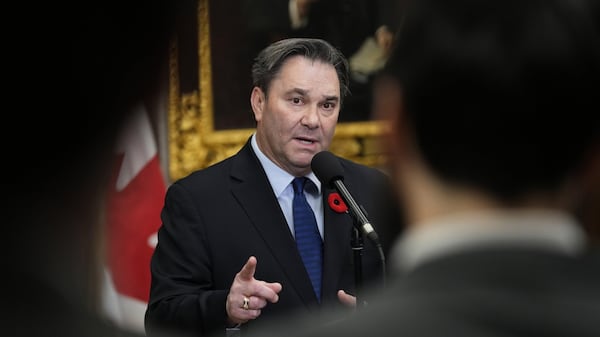
The province of Ontario has launched what it calls the ‘Roadmap to Protecting Ontario’s Forest Sector.’ It says the strategy is aimed at strengthening the forestry industry, as it struggles to persevere due to American duties and tariffs. The ‘roadmap’ was announced in Toronto and is built on three core pillars: supporting workers and businesses, boosting global competitiveness and expanding long-term demand for forest products. Kevin Holland, an associate minister of forestry and forest products, said the plan reflects extensive consultation across the province. “Last year, we put on almost 10,000 kilometres across the province, engaging with the sector, communities and Indigenous partners about what they saw we needed to be doing and how we needed to be adapting to what the realities of today are,” said Holland. The associate minister added that more detailed measures tied to each pillar are expected in the coming weeks. However, leaders in northern Ontario said the need for action is immediate. “We were talking about building houses a year ago and here we are a year later still talking,” said FONOM president Dave Plourde. “The forestry industry has faced challenges for the last decade. It’s time to act and I think it’s important to be bold.” The province said it has already invested $350 million into the forestry sector since 2020. Meanwhile, Mushkegowuk—James Bay MPP and the NDP’s shadow minister for natural resources and forestry Guy Bourgouin, said more immediate steps could help stabilize the sector, particularly through tools like power purchase agreements. “We have a lot of fibre available with biomass and the chips we produce,” he said. “If we could get that (power purchase agreements), it would stabilize mills, it would stabilize other industries that are so dependent on getting rid of their chips.” “The government is not willing to provide that and that’s sad,” added Bourgouin. While the roadmap is designed to benefit all of Ontario, the province acknowledges that one in four communities in northern Ontario rely on the forest sector.