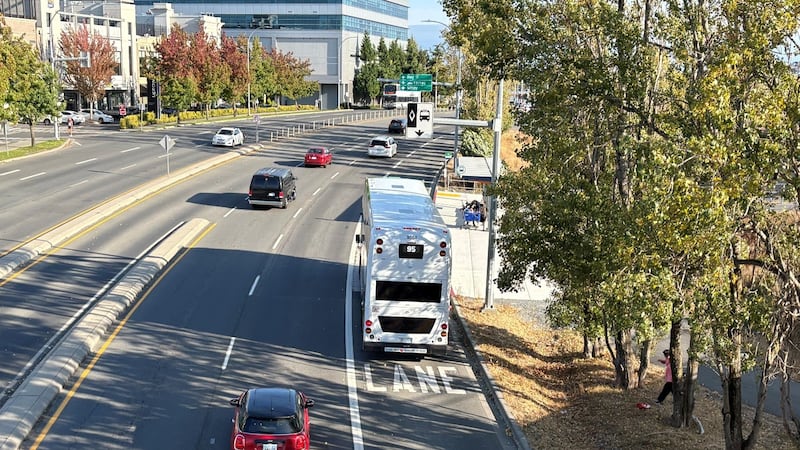
Bus routes across Montreal’s West Island are being overhauled as part of what transit officials call the largest redesign of the city’s bus network in decades. Nearly 80 routes are changing, affecting close to half the island. Instead of focusing on bringing riders downtown, the redesigned network is meant to better connect neighbourhoods to the REM. But for some West Island residents, the changes are raising concerns, particularly where new bus routes are planned along quiet residential streets. Michael Lebel, who was born and raised in Beaconsfield, said the process feels backward. “The STM is not meant to choose routes to benefit their systems. They’re supposed to choose routes that benefit their citizens,” said Lebel. In Beaconsfield, the redesign includes a new bus route that would pass through residential streets. Caroline Malcolm, who has lived on Montrose since the 1970s, says a bus pad was installed last summer about 140 metres from her home. She worries the change could put pedestrians at greater risk, including children, seniors and pet owners. “I wonder where the legal liability will be if someone does get hurt. And I’ll have to be very careful walking with my dogs,” Malcolm said. Malcolm also questions how the decision was made. “There’s no transparency, there’s no collaboration, there’s no real in-depth consultation with the actual residents living here,” she added. The STM says the redesigned routes are intended to improve access to the REM and insists safety was a key consideration. Sébastien Gagné, the STM’s director of studies, says the route through Beaconsfield is limited in scope. “It’s only like 12 departures a day, which is not that a lot compared to the cars that are already on that street. That and our drivers are professionals,” Gagné said. The bus network redesign has been in development for years, with input from more than 150 partners across the island. To help riders adapt, the STM has launched a trip simulator that allows users to better understand how the changes may affect their travel. Christopher Kranjec, the STM’s director of planning and customer experience, says the tool is designed to help riders prepare. “Really have a specific understanding of the impact there will be for them, in terms of time, in terms of route,” Kranjec said. Beaconsfield Mayor Martin St-Jean says the city trusts the STM’s analysis, calling the agency “the expert authority on transit safety.” The STM says it will continue to monitor the new bus routes and make adjustments if necessary. But for residents like Lebel, that assurance doesn’t go far enough. “Is this something that citizens need? It doesn’t fall in line with suburban living,” he said. Lebel fears that by the time the STM determines the changes were a mistake, the impact on the neighbourhood may already be irreversible.