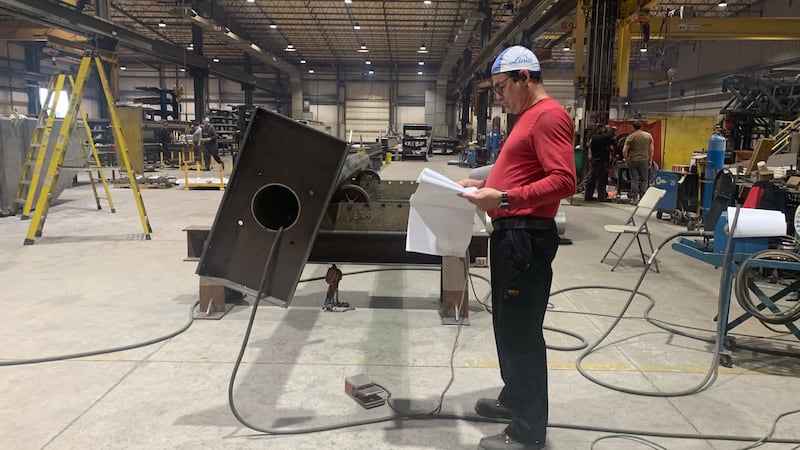
At Aeris Packaging in Lachine, Michael Leiberman has built a business around specialty packing. He aims to keep costs down - but come next week, that could get much harder. Starting Tuesday, Sept. 8, Canada will impose tariffs of up to 50 per cent on some U.S. imports. It’s Canada’s dollar-for-dollar response to the United States. The move comes after failed trade talks between the two countries led to 50 per cent tariffs on many Canadian goods. “A percentage of [business] relies on the U.S. supply chain, which has been a challenge because of the tariffs and countervailing tariffs,” Leiberman says. “If I’m importing a product that is under the tariffs that costs me a dollar. Now that product costs me $1.50. How do you pass that? How do you go to a customer and say, ‘I got to charge you $0.50 more?’” It’s a question among many small business owners, according to the Canadian Federation of Independent Business. Spokesperson Jasmin Guenette says British Columbia, Ontario and Quebec will be hardest hit. “Businesses in manufacturing, businesses in construction are going to be highly impacted by the counter tariffs because they import materials and inputs and so on, but wholesale and retail are going to also be highly impacted,” Guenette says. The federal government has announced 7.5 billion dollars in new measures to support Canadian workers and businesses as a result. Still, Leiberman says years of trade disputes have already forced him to adapt. “We’re still dealing with tariffs that were paid from 2016 that have not been returned to us and in 2020 it happened again. It’s forced us in some cases to move our manufacturing into the United States for the product that sold in the United States. I don’t think it’s wrong to counter tariff - I think it’s OK. But what is the cost to the Canadian economy?” Leiberman asks.