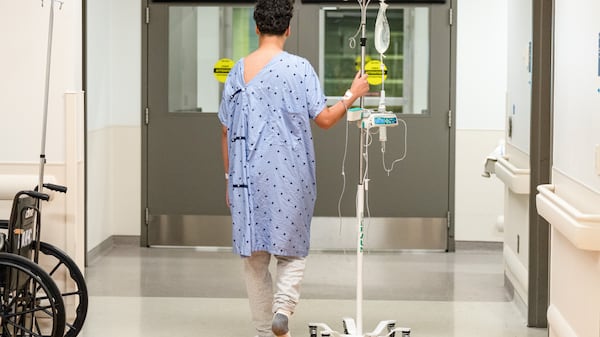
A coalition of children’s hospitals and child health advocates is urging the federal government to make the health and well-being of children and youth a national priority, warning that Canada’s current approach is falling short. A recent report from Children’s Healthcare Canada calls on Ottawa to develop and fund a national strategy for children and youth, pointing to gaps in primary care, lengthy surgical wait times and declining mental health among young Canadians. “Status quo is not an option,’ the report highlighted. “Canada is slipping in terms of the outcomes for children and youth and their health, and we’re really concerned about that,” said Sarah Bell, chief operating officer of BC Children’s Hospital and chair of the Children’s Healthcare Canada board of directors. The report highlights several concerning figures, including an estimated 1.5 million children without access to primary care. More than half of children are also waiting longer than clinically recommended for surgeries, while more than a quarter of youth aged 12 to 17 rate their mental health as fair or poor. Bell said children represent about 23 per cent of Canada’s population but often lack a voice in decisions affecting their health and well-being. “Our role here is really to bring to light the needs of children,” she said. “You know, 23 per cent of our population are children. They don’t vote, and they need a voice.” There had been hope that a private member’s bill introduced by Independent Senator Rosemary Moodie could help address some of those concerns. Bill S-212, the National Strategy for Children and Youth Act, sought to establish a national framework for improving the health and well-being of young Canadians. “Canada has no national vision for all eight million children,” Moodie said. “We are the only OECD country that doesn’t annually collect our data on health and well-being of our children, our policies work in silos without measurable outcomes.” However, the bill was recently left to fall off the House of Commons agenda, effectively ending its progress through Parliament. Moodie said the lack of voting power among children makes it particularly important for governments to advocate on their behalf. “Children do not vote. That is a big drawback for their power of their voice in our democratic process,” she said. UNICEF Canada is also calling on the federal government to take action, arguing that investments in children and youth are essential to the country’s long-term future. “We see this Canadian government very focused on the future, on building a strong Canada, and we don’t think that’s possible without clear investments in children and youth,” said Rebecca Davidson, chief programs officer at UNICEF Canada. Recent UNICEF data ranks Canada 22nd out of 37 wealthy countries for children’s health and well-being. The organization also points to Canada’s ranking of 33rd out of 44 countries for adolescent suicide rates. “We have a very high adolescent suicide rate,” Davidson said. “The data is telling us that children and young people are not okay in Canada.” UNICEF Canada plans to bring young people facing these challenges to Ottawa next week to present policy recommendations and continue its push for a national strategy. Bill S-212 dropped from order papers Bill S-212 originated in the senate, introduced by Senator Moodie in May of last year. The bill passed in the Senate in March and was introduced in the House of Commons. It went through first reading but eight months later was dropped from the order papers after the bills sponsor, a liberal MP from Nova Scotia, wasn’t present in the house when the bill came up for debate, twice. CTV News sought clarification from the office of the Secretary of State for Children and Youth Anna Gainey. “The process for the consideration of Private Members’ Business is well established in House of Commons procedure and practice, and proceeds accordingly,” her office said in a statement. CTV News also asked the Health Minister’s office about the bill and the governments plans for a National Strategy, Marjorie’s Michel’s office said they had nothing to say about either and instead pointed to it’s current efforts around youth health and mental health. “The health and well-being of children and youth are essential to the future of our country, and our government understands that we need to give children the best possible start in life. That’s why we’re investing in the future to support the health and well-being of young people and their families, through programs like the Canadian Dental Care Plan, the National School Food Program, and the Youth Mental Health Fund,” a statement from Minister Michel said in part.