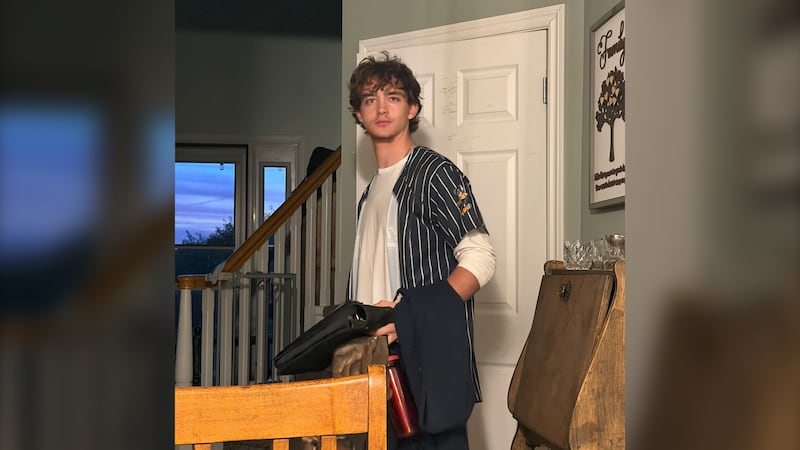
Edmonton has experienced record levels of rainfall over the summer, which has caused damage to infrastructure and flooding. Yellowhead Trail has flooded several times this year, with some vehicles becoming stuck in underpasses. During one of the storms, Braden Scherger was driving home with friends when they came across a flooded underpass at 82 Street. “I’ve never seen that much water under an underpass,” he said. “Of course, you see it on social media, but it’s a lot different when it’s right in front of you.” In a video he shot, a car can be seen driving into the water and getting stuck, but they decided not to chance trying to drive through. “We were in a half-ton pickup truck, but you could see the water was visibly a hood deep,” Scherger said. “You’re not going to make it out of there unless you’re lifted. But, there’s people in the water, you don’t know if there’s sinkholes, or the waves or the current can push it.” What to do if you come across a flooded underpass The unknown of what you could be driving over on a flooded street is part of the reason John Sibbons, a senior driving instructor for AMA, recommends not trying to drive through in situations like that. He only recommends driving through flooded streets or underpasses when you can see the road surface under the water and if you’re driving slowly. “We don’t want to go at a higher speed because that’s just going to create a wake, and of course, it’s going to affect other drivers that are perhaps on the opposite road coming through as well.” If your car does get stuck, he recommends leaving the vehicle if the water level continues to rise, especially if it starts to get into the car. “What you have to worry about (then) is yourself and whoever else is in your vehicle with you,” Sibbons says. “The safest thing to do is to get out of your vehicle and move away to higher ground.” He also advises not to give in to pressure from other drivers who may be behind you, honking or encouraging you to try driving through flooded roads. “The guy behind you honking his horn might be in a nice big truck, he’s got that clearance, he can get through safely,” Sibbons said. “If that is the case and he wants to (try), pull over out of the way on the side of the road so that those people who want to take that chance can.” The cost of repairs from water damage Being stuck underwater can do damage to a vehicle. The extent of the damage depends on, in part, how deep the water was, how long the vehicle was under water and if the driver tried to start the vehicle while it was submerged, according to Rafael Bahobeshi, manager at Optimum Auto Service. “Do not try to crank the vehicle because starting the vehicle actually allows the water to go up through the air intake, to go into the engine, and air compresses,” Bahobeshi said. “Water will cause it to hydrolock, causing the connecting rods to break … causing major engine issues.” Hydrolocking happens when liquid gets into the engine’s combustion chamber, which prevents the pistons from working and causes an engine to seize. Depending on the type of damage, the cost of repairs can range from several hundred dollars to around $2,000 to deal with water in the filters and to repair minor electrical issues, according to Bahobeshi. If the vehicle has extensive electrical issues or the engine needs to be replaced because of hydrolocking, the cost can range from $5,000 to $15,000, he adds. This was the case for at least one vehicle that’s come to Bahobeshi’s shop recently, the cost of the engine replacement was enough for the vehicle to be written off as a total loss. Beyond these issues, he says corrosion and water contamination in vehicles fluids can cause long-term problems if they aren’t caught early. “It’s human nature for people to want to drive through the water, but depth perception of the water is going to vary,” Bahobeshi said. “You might assume (the water) might come halfway up the rim, but it only takes one pot hole deep enough for water to enter the air intake system and damage the electricals, and that in itself will cost you thousands.” With files from CTV News Edmonton’s Miriam Valdes-Carletti