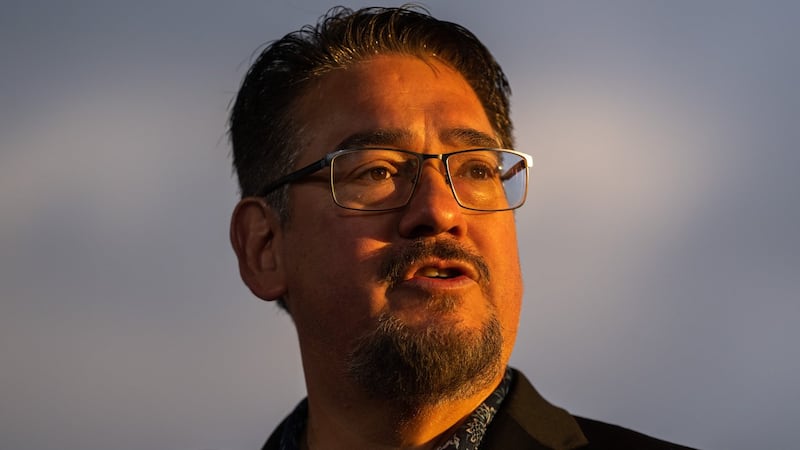
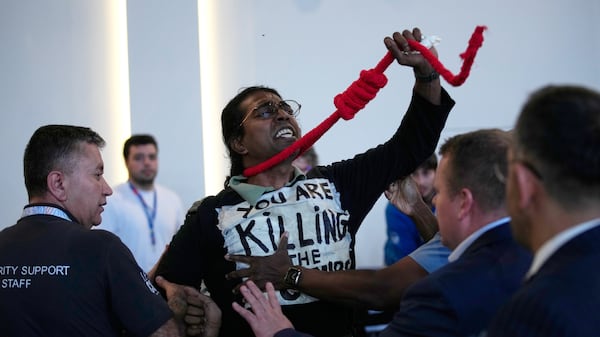
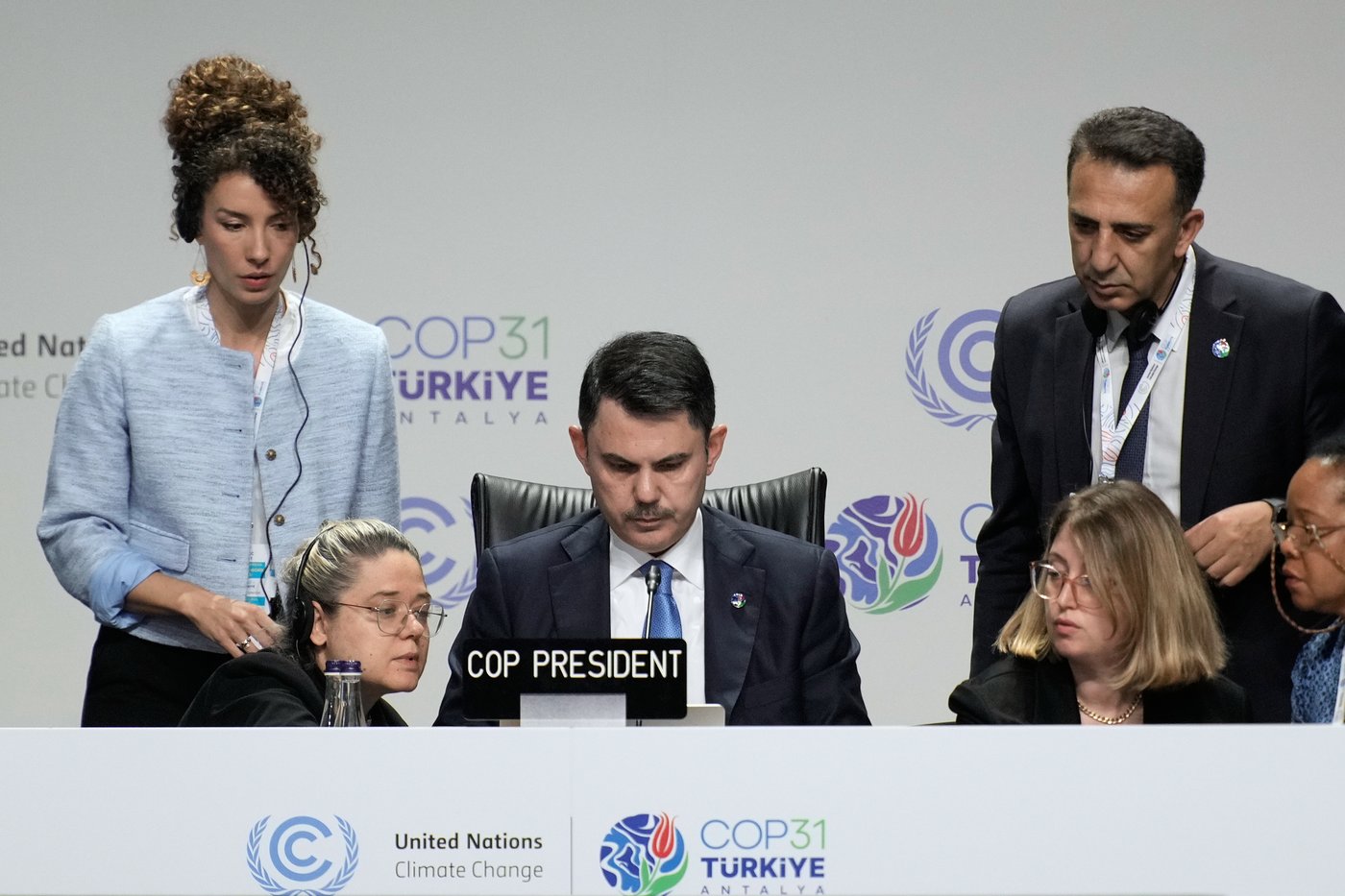
Despite more than 50 hours of additional negotiations, attempts to reach a consensus at COP31 failed on Sunday, ending hopes the annual conference could present a unifying document to rally countries around the world in the fight against climate change. Aly Hyder Ali is the Senior Program Manager for Oil and Gas with Canada’s Environmental Defence. He attended COP31 in Antalya, Turkiye, and he says he is angered and disappointed by the inability of global leaders to come together on the issue. “You do expect there to be some consensus and some urgency from these 200 countries that have arrived with the intention of fighting climate change, with the intention of finding solutions,” he said. “With the intention of moving beyond to a world where we’re not struggling with climate change day in and day out.” The failure to come to a final agreement, otherwise known as a cover decision at COP conferences, is being blamed on two issues. The first has to do with a reference to fossil fuels. Oil producing countries like Russia and Saudi Arabia successfully lobbied to exclude those words from the final communique, sparking a heated response from many countries, including the 27-member nations of the European Union. Ireland’s Environment Minister Darragh O’Brien said the omission was “unconscionable.” “We will not endorse a cover decision or an Atalya pact,” he said, “that does not even mention fossil fuels, which is a key driver of climate change. And we will not accept negotiating backward in time.” Instead of fossil fuels, the final communique had explicit language on carbon capture and storage for industrial polluters, which some delegates described as an attempt at greenwashing oil and gas. “Carbon capture is a false climate solution most of the time globally,” said Mike Morrice, the recently elected leader of Canada’s Green Party. “When it’s been implemented, emissions have actually gone up.” “All this technology captures,” he said, “is public money for foreign owned oil and gas giants.” The other issue that divided delegates in Turkiye was the lack of financial commitment to help developing countries deal with climate change. Back in 2021, during COP26 in Glasgow, Scotland, it was agreed that wealthier countries would send billions of dollars to poorer countries to help fund climate adaptations. It was an acknowledgement that much of the historic climate impacts were the result of industrial activities carried out by richer countries. And an acknowledgment that poorer countries, with less carbon emissions, suffered the most severe effects of climate change with limited resources to adequately respond. At COP31 in Turkiye, Canada committed $13-billion over five years for climate related support. But the UN’s goal of raising $1.2 billion for its Climate Adaptation Fund came up very short. Just over $50 million was committed, slightly less than 4.2 per cent of what the UN had hoped. “It’s just a shame that wealthy countries that are the most responsible for the climate crisis … did not pay what they owe, and did not commit to any stronger actions,” said Hyder Ali. In a statement, Canada’s Environment Minister Julie Dabrusin said COP31 was not what Canada had hoped for but reaffirmed the country’s commitment to the Paris Agreement and the UN’s climate change process. “We have one year until COP32,” she said. “It is incumbent upon all parties to use that time to reflect on this process and make sure we can achieve tangible outcomes that move us forward and advances the global transition to electrification and net-zero.” The next UN Climate Conference will be held next year in Addis Ababa, Ethiopia. It will be left to delegates at that conference to pick where COP31 could find no consensus. Until then, activists here in Canada are urging the federal to look at its own actions to address climate change. “Countries like Canada are expanding fossil fuels domestically, expanding or pushing forward a million barrel a day pipelines, the Pacific Link, or advancing LNG projects, or building carbon capture projects, while on a global stage, demanding other countries do better,” said Hyder Ali. “You can’t have both.” With files from The Associated Press