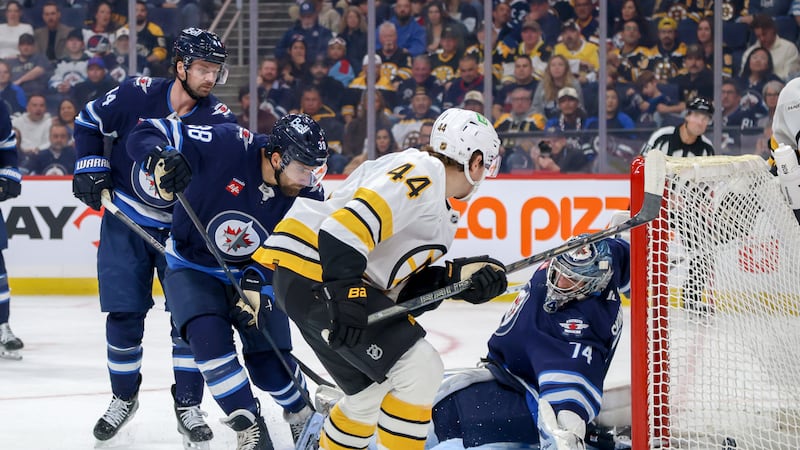
This is part two of a three-part W5 investigation series. Part three will be released Thursday. You can read part one here. Watch the W5 investigation “If I’m Ever Found Dead” on our CTV News YouTube channel. Warning: Graphic content. When 28-year-old Keyana McNeil, of Vancouver, learned that a young Canadian woman had been brutally beaten to death at a resort in Mexico, she nearly passed out. Her first thought: It could have been, it nearly was, me. In 2023, the brutalized body of 23-year-old Kiara was discovered in the laundry room of an all-inclusive resort in Playa del Carmen, Mexico. Her boyfriend, Ryan Friesen from Dawson Creek, B.C., was found fast asleep beside her body, his fists swollen. A Mexican court initially found him not guilty of femicide. Early in 2026, the acquittal was overturned with a judge finding Friesen guilty of killing Kiara, a decision he is now appealing while free in Canada. Keyana dated Friesen before he met Kiara. In an exclusive interview with W5, she says the pattern that ended Kiara’s life is one she survived herself, years earlier. “I should have spoken up and been loud about it when it happened to me,” she said, “so that people could get an idea of who he truly is.” ‘I accepted my death’ Keyana describes an on-again-off-again relationship that she says escalated from control into repeated, severe physical violence over roughly three years. “Choking, hitting, pushing,” she said. “He attacked me brutally.” In one incident, she says, Friesen dragged her by her hair into a bathtub and turned on the shower because she was covered in blood. “And then he sat there and continuously called me names, told me I was worthless.” She says she believed in that moment that she might not survive. “I accepted my death and I gave up trying to fight back. And I just went numb, limp and just said, ‘OK, I might die here.’” Isolation, manipulation and control Beyond the physical violence, Keyana describes years of psychological abuse and shared text messages from his phone number describing her as a “waste of skin” and threatening her. “I was isolated from any support, family, friends,” she said. “He would purposely destroy relationships so that… he was the only person I had.” Keyana says she barely recognizes the person she was back then. “I was not me when I was with him,” she said. “I am quite strong as a person, but with somebody like him, you start questioning who you are.” She calls him “a master manipulator.” Neighbours who didn’t come Keyana says that on more than one occasion, people were close enough to hear what was happening and no one intervened. She says Friesen had two roommates in the house at the time of the bathtub incident. “I was yelling for help. I was trying to be loud so that they would hear me and nobody came to the door. Nobody checked on me,” she said. She says Friesen’s status as an athlete may have shaped how people saw him. “Everybody just thought he was fantastic,” she said. “I was like, ‘What, ‘cause he’s good at hockey?’” A break-in and a court order Keyana described one night at her parents’ home when she says she discovered Friesen hiding inside her bedroom closet. “It looked like he (was) on something.” Keyana says her father chased Friesen from the house. Court records show that in 2018, Friesen was charged with assaulting Keyana. She claims Friesen pressured her to tell authorities that she had instigated the physical altercation, in exchange for a promise that he would leave her alone. “I just wish I was stronger then, to know that I should just stick with what was the truth,” she said. The charge was ultimately dropped and a no-contact order was issued in 2019. Keyana says Friesen violated that order at least four times, ranging from unwanted contact by phone and on social media to showing up in person. In one instance, she says, he hid in the bed of her father’s truck outside her workplace. “He jumped out when I had stopped at a stop sign,” she said. Keyana says she called police every time. “And each time they said there’s nothing we can do.” The detail that haunts her Keyana says her life with Friesen mirrors what she’s since learned about Kiara’s. Both women, she says, were isolated from family and friends. Both described extreme jealousy and control. Both documented their injuries in photographs. One survived. One did not. Keyana says the similarity that haunts her more than any other was what she learned about how Kiara died. She says that after violent episodes, Friesen would simply go to sleep beside her, as though nothing had happened. “He flipped out. He was violent,” she said, describing one incident. “And then at the end when he was done, he fell asleep right beside me and I stayed up wondering why that happened, wondering if I did something. And he was just asleep.” Asked if this happened more than once, she said: “Multiple times ... it was like a regular thing.” An eerie text Friesen was initially found not guilty in Kiara’s death on Sept. 17, 2024. He immediately returned to Canada. Just one day after the verdict, Keyana says she received a single-word text from his number: “Hey.” She didn’t respond. She says the message reignited fears she has tried to move past. “I even slept with a knife beside my bed for a period of time, once he got back,” she said. ‘I don’t believe he’s changed’ Keyana says the fear has never fully left her, even years removed from the relationship. “I’ve had moments where I go and check all the rooms in the house in the middle of the night. I sleep with my closet open,” she said. She describes recurring nightmares: “Feeling like I’m running and can’t get away from him,” she said. “I wake up and I’ll have my heart racing, and I will go make sure everything in the house is OK, all the doors are locked.” She carries guilt, she says, over not speaking out sooner, a guilt amplified by what happened to Kiara. “Maybe if I would have said something and been more vocal, somebody would have known and maybe she wouldn’t have been with him.” Femicide Mexico was the first country in Latin America to make femicide a specific crime in the penal code. The crime carries a sentence of between 50 and 80 years’ imprisonment. Under Mexican law, a murder is classified as a femicide if it meets certain criteria, including a history of intimate partner violence against women. Keyana has one message to the judges in Mexico who are right now deciding whether to uphold Friesen’s guilty verdict. “He will do it again if he can,” she said. “Somebody like that doesn’t just change. That was proven from my experience to Kiara’s. That’s who he is.” Friesen has not responded to W5’s request for comment but in a previous statement through his lawyer has maintained his innocence. There is no timeline on a decision from the Mexican courts on Friesen’s appeal but if the guilty verdict is upheld, the extradition process to return Friesen to Mexico for sentencing would begin. You can read parts 1, 2 and 3 of W5’s previous investigative series on Kiara Agnew’s murder, and Part 1 on the legal fight surrounding Ryan Friesen here. You can also watch W5’s “If I’m Ever Found Dead” on CTV News’ YouTube channel. W5 is the multiplatform investigative unit of CTV News, continuing its decades-long commitment to covering tough, relevant stories.