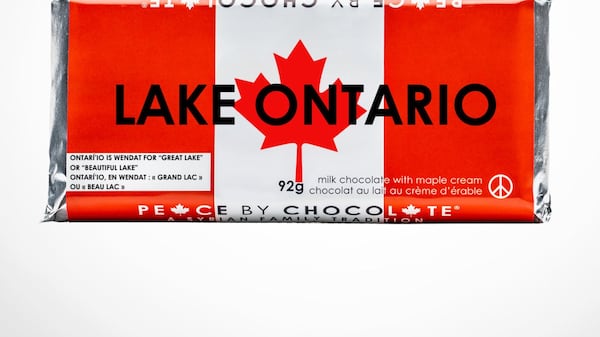
Alberta’s government is weighing whether to impose retaliatory tariffs on the United States as the trade war escalates. The debate comes as calls grow for the province to postpone or cancel its planned October referendum on separation from Canada. Finance Minister Jason Nixon said Thursday Premier Danielle Smith’s newly created cabinet committee on tariffs will meet for the first time, with the potential economic impact of counter-tariffs expected to be a major focus. Nixon was speaking as he released Alberta’s first-quarter fiscal update, which projects a $2-billion surplus for the 2026-27 fiscal year—an $11.4-billion improvement from the $9.4-billion deficit forecast in the February budget. The minister said the improved fiscal position doesn’t mean the province has a blank cheque to respond to the trade dispute. “We are watching that closely because, obviously, that changed days before we went into this forecast, and so we aren’t going to speak too much to specifics yet,” Nixon said. “The reality is it’s just changing so fast, and so we’re trying to create a situation with this budget that we create space to be able to deal with whatever may come. “The best thing we can do right now is not overreact—to take our time and come up with the best strategy that’s going to help Canadians and move our economy forward in a positive way long term.” Smith is chairing the cabinet committee alongside Jobs and Economy Minister Joseph Schow and Nixon. The premier said Wednesday the group would hear from ministers responsible for different sectors before deciding how Alberta should respond. Nixon said he would not get ahead of that discussion but suggested Saskatchewan’s approach could offer a model. “I do like Premier Moe’s approach a little better than some of the other approaches that I’ve seen,” Nixon said. Retaliation could hurt Alberta, Nixon warns Saskatchewan Premier Scott Moe announced this week his province will impose a 50 per cent levy on U.S. alcohol beginning Sept. 8, matching the tariff applied by the U.S. to Canadian alcohol exports. The province has clarified the measure will be a 50 per cent markup when American alcohol is sold to retailers, rather than a tariff imposed at the border. Moe has also ruled out export taxes on Saskatchewan’s natural resources, including oil and potash, warning those measures would hurt Canadian industries and jobs. Nixon said Alberta needs to be similarly cautious about measures that could ultimately hurt the province more than they hurt the U.S. He also said the government’s early analysis suggests Alberta is somewhat less exposed to the latest U.S. tariffs than some other provinces. “Our bigger concern in the short term is frankly in our counter-tariffs,” Nixon said. “That’s where we see potentially bigger impacts on Alberta’s economy.” Alberta NDP Leader Naheed Nenshi, however, says the province needs a tougher negotiating strategy, arguing Alberta has already given up leverage in its dealings with Washington. He pointed to Alberta’s decision earlier this year to lift restrictions on American alcohol, saying the province received nothing in return. “This is not how you negotiate with anybody. Particularly, it’s not how you negotiate with a bully. It’s not how you negotiate with someone who can’t be trusted.” Nenshi added Alberta should instead be working with Ottawa and other provinces on a co-ordinated response. “It’s time for all of us to be on Team Canada. It’s time for Canada to show unity.” For now, Nixon said his focus as finance minister will be on determining how Alberta can provide relief if the tariff situation worsens, including working with the federal government to ensure support reaches sectors that need it. “The surplus does create a situation where we have more opportunities to be able to adjust or step in if needed to be able to help Albertans and Alberta’s economy,” he said. Progressive Tory Party of Alberta Leader Peter Guthrie said on social media this week the UCP’s stance is “difficult to comprehend.” “Now, with the United States using its full trading power against Canada and threatening Alberta’s economic well-being, this government wants our strongest levers to remain off the table,” he said. “They say we can’t risk Alberta jobs and prosperity, but that’s exactly what is already under threat. “You don’t respond to economic intimidation by conceding your bargaining power to the government threatening you.” Calls grow to postpone referendum The trade dispute is also becoming intertwined with Alberta’s planned referendum on its place in Canada. Albertans are scheduled to vote Oct. 19 on 10 referendum questions, including one asking whether Alberta should remain a province of Canada or whether the government should begin the legal process required to hold a future binding referendum on separation. Forever Canadian founder Thomas Lukaszuk has asked Smith to postpone the vote, arguing the province should be focused on national unity while Canada confronts the United States. In an open letter to Smith, Lukaszuk said the referendum debate should be deferred “in light of the recent unprovoked trade war launched by U.S. President Donald J. Trump.” “We submit that this is not the time for unnecessary domestic conflict; this is the time for Albertans to stand together with our fellow Canadians and collectively rally against this unprecedented economic threat,” the letter said. Lukaszuk said Alberta should instead join the rest of the country in presenting a united front to Washington. “This referendum and this conversation about separatism is just playing to the hand of the U.S. administration, and we’re seeing it being mentioned and brought up right now,” he said. Nenshi echoed those comments, saying the province should be focused on the trade dispute instead. “We never should have had it in the first place,” he said. “It is a distraction from the terrible record of this government. It’s going to cost us nearly $200 million.” He also pointed to Quebec, where Parti Québécois Leader Paul St-Pierre Plamondon has said he would not hold an independence referendum while Trump remains president. “I don’t usually agree with Plamondon, but he’s right here because it weakens us all,” Nenshi said. Quebec decision puts pressure on Alberta St-Pierre Plamondon said his party would still consult Quebecers about independence during a first mandate if elected but would not hold a referendum before Trump leaves office in January 2029. He said the issue of Quebec’s political future requires conditions that allow for an informed and calm debate, rather than being shaped by American politics. That decision has drawn renewed attention to Alberta’s Oct. 19 vote, particularly as U.S. Commerce Secretary Howard Lutnick has himself linked Canada’s political timeline to the trade negotiations. Speaking about Canada’s upcoming elections and Alberta’s independence resolution, Lutnick suggested Canadian politicians could return to Washington looking for a deal once the votes are over. “There’s the sovereignty party trying to run, and they’re in the lead in Quebec, and so this was Mark Carney manufacturing something that would try to keep them from winning, and then Alberta has an independence resolution. These are elections in October,” said Lutnick. “So he (Carney) is making this a political thing for Canada, and my guess will be that as soon as his elections are over, you’re going to see a plane full of Canadian negotiators find out and go, ‘Come on, come on! We’ll give it to you before your election.’” Smith says referendum remains on track Smith has rejected calls to cancel or postpone Alberta’s referendum, saying she believes the vote is an opportunity to make the case for remaining in Canada. “I think this is an important time for us to be looking at the benefits that come from being a part of Canada,” Smith told reporters Wednesday. “That’s what I’ve been advocating. It’s why I’m voting to remain.” Smith has also said she wants to work with Prime Minister Mark Carney and other premiers to address Alberta’s grievances while making the case for national unity. “What I’m working toward is giving Canadians and Albertans hope again that the country can work as it was always intended,” she said. For now, the government’s immediate attention is on the tariff response. Nixon said Alberta’s cabinet will assess potential measures while keeping the door open to further negotiations with Washington.