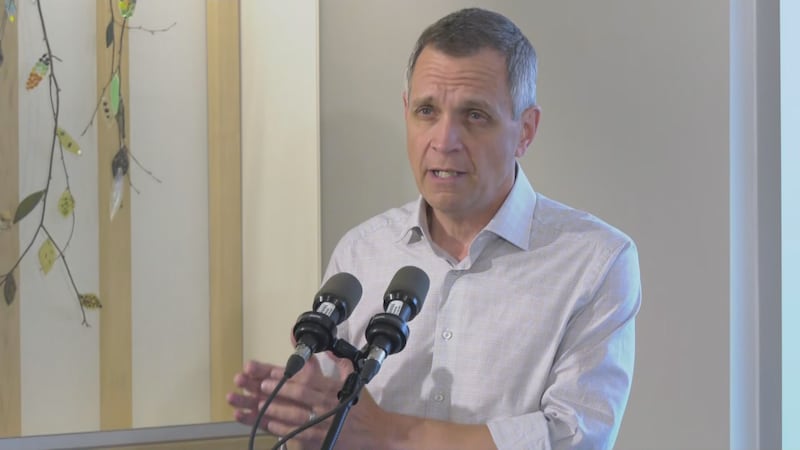
TORONTO — As Canada’s big banks face increasing competition from smaller digital platforms, BMO says its digital self-directed investing platform will begin offering commission-free trading on all stocks and exchange-traded funds. BMO InvestorLine will be the first direct investing brokerage owned by one of Canada’s five big banks to eliminate commissions on stock and ETF trades. It is also eliminating brokerage account administration fees and lowering option trading costs by reducing contract fees and scrapping commissions. The changes are effective Sept. 14. The bank said the announcement reflects its commitment to expanding access to digital investing for all Canadians, especially with more people managing their finances digitally. BMO said the move would lower the cost of self-directed investing without compromising access to the tools, research and supports it offers, including AI-generated news and market summaries that investors can read. While seasoned investors may not have felt that fees and commissions were necessarily an impediment, younger clients have often viewed them as a barrier, said Silvio Stroescu, president and CEO of BMO InvestorLine, in an interview. “Especially younger investors, they see pricing as a friction — whether it’s pricing in terms of the commission they pay for their trades, for the transactions, whether it is pricing for certain fees or having a minimum balance, for example,” he said. “The pricing friction comes in a form of, ‘I love your platform, I love your tools, but I’m still paying a lot for a commission and based on the size of my portfolio, that adds a drag to me.’” Upstart rival Wealthsimple already offers commission-free trading on stocks, ETFs and equity options. The same goes for Questrade and U.S. online trading platform Robinhood Markets Inc., which officially expanded into the Canadian market with the closing of its acquisition of cryptocurrency firm WonderFi in June. It comes as no surprise that a big bank like BMO would seek to compete in this space given the success of those firms, said Claire Célérier, Canada Research Chair in household finance at the University of Toronto’s Rotman School of Management. “We are in a period where we see more and more financial institutions participating in this trend, where retail investors are increasingly participating in markets that are relatively hot,” Célérier said in an interview. Stroescu said BMO’s advantage over its competitors comes in the “breadth” of its digital tools. “If you’re an active trader, you have active trader capabilities that are specific to you as a more sophisticated trader,” he said. “If you’re starting off new, you have education embedded in the workflow to help you along the way.” But Célérier cautioned that increased access can also come with added risk, as “unsophisticated investors” — often younger in demographic and less financially experienced — are more prone to losing money when trading more actively. Célérier said investors may notice differences with BMO’s version of the model, as big banks tend to be “more careful about investor welfare,” resulting in a more conservative set of products they offer. “What Wealthsimple and Robinhood and so on are doing is they’re increasingly selling products where investors are taking some leverage, or option products or even prediction market products,” she said. “These are products that are leading retail investors to take a lot of risk. Most of the time, they lose money on these products and in fact, the platforms are making money on these products.” Célérier said other large banks may follow suit on the zero-fee trading trend if the market stays hot in the coming years. Some, however, may decide to stay away in order to “protect” their clients. “I’m not sure they will all follow,” she said. “Clients may benefit more from other services than just a total cancellation of trading fees because if it leads them to trade more, they make more mistakes.” --- Sammy Hudes, The Canadian Press This report by The Canadian Press was first published Sept. 9, 2026.