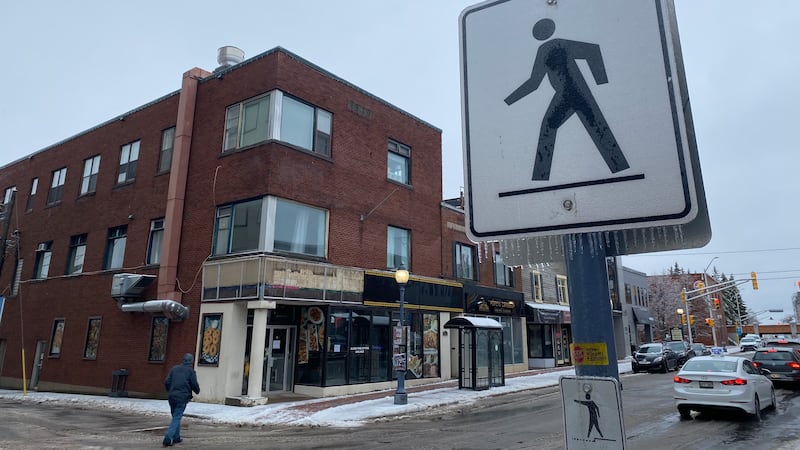
A group of business owners in Guelph, Ont. are calling on the provincial government to do more to address the mental health and addictions crisis in the city’s downtown core. The Downtown Guelph Business Association and Guelph Chamber of Commerce say businesses are increasingly dealing with open drug use and overdoses outside their storefronts, raising safety concerns and driving customers away. For Denise Mansur, owner of Ms. Meri Mak Boutique, the situation is part of the reality of running a downtown business. While Mansur is celebrating the launch of her own clothing line, with some of her designs set to appear at Toronto Fashion Week, the ongoing challenges in the downtown core are taking a toll on her business. “A lot of people are afraid to just come downtown and support us, which obviously hits our bottom line,” Mansur said. She has witnessed repeated overdoses and open drug use around her store, often leaving Mansur and her staff to deal with the aftermath. “I don’t know if the people are alive or not when the ambulance comes and takes them,” she said. “If they vomited back there, if there’s blood back there, I’m responsible for that cleanup.” All of that has taken an emotional toll. “Not knowing if someone’s dead or alive is a very emotional thing to go through,” Mansur said. The Downtown Guelph Business Association and Guelph Chamber of Commerce have sent a letter to Premier Doug Ford calling for increased provincial funding for addiction treatment beds and medically-supported housing. They say Guelph needs more clinical detox beds and facilities offering around-the-clock support for people struggling with addiction. Mansur said the goal is not to stigmatize the people, but to ensure they can access the help they need. “This is a moment in their life,” she explained. “I don’t think this is exactly who they are 100 per cent. I do believe that everyone needs compassion and everyone needs help.” In a statement to CTV News, a spokesperson for the minister of health pointed to the province’s $560-million investment into 29 Homelessness and Addictions Recovery Treatment (HART) Hubs. The province said the hubs, including one in Guelph, are replacing what it describes as a “failed approach to drug injection sites,” referring to the Consumption and Treatment Sites (CTS) it closed in favour of HART Hubs. “As of early October, HART Hubs reported serving more than 62,000 clients,” the spokesperson said, in part. But Mansur questions whether the current approach is making a difference on the ground. “What I’m seeing is not working,” she said. “I think it seems like it’s gotten worse.” CTV News also reached out to the Royal City Mission and Hope House, which provides support to people in need in Guelph’s downtown core, but did not receive a response. Mansur’s hope is that increased support for people struggling with addiction will also create a safer, more welcoming downtown core that allows local businesses to thrive.